
Europe
Selective — see noteIndustrial cooling & ventilation for Ireland
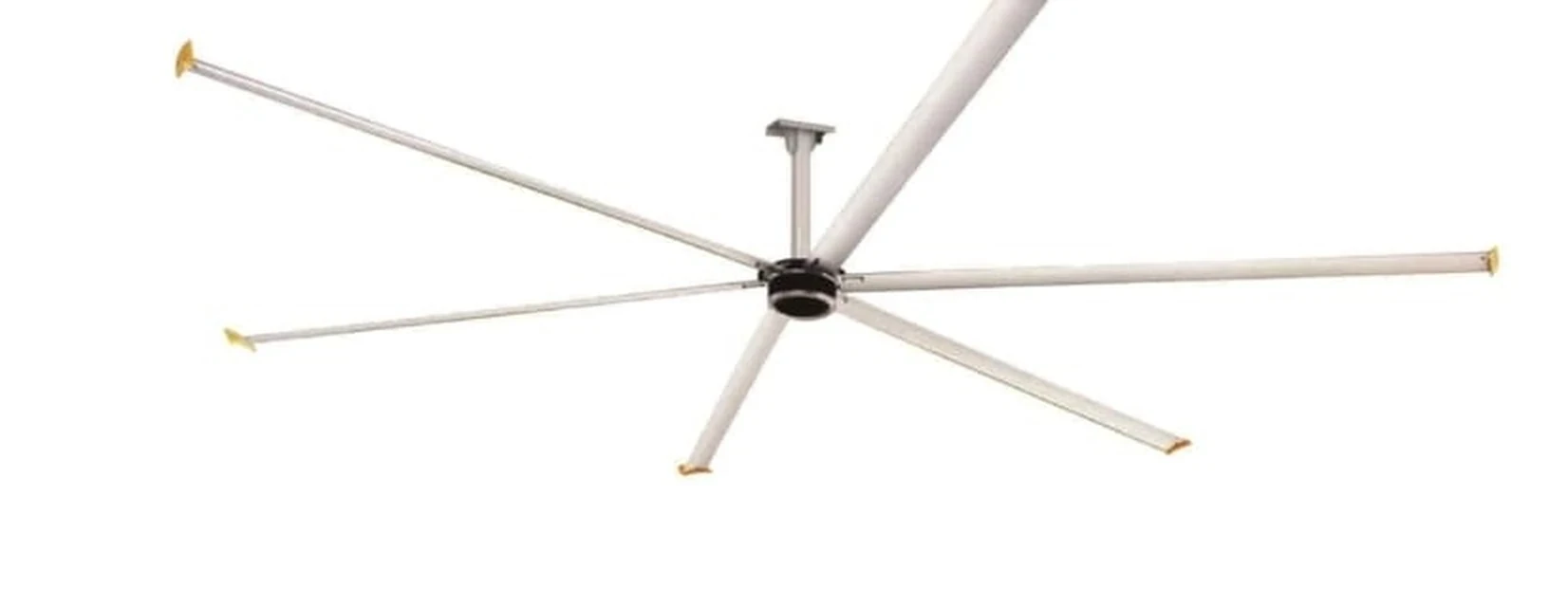
Irish industry is concentrated in tall modern buildings — the pharma and biologics plants around Cork harbour and Ringaskiddy, medtech in Galway and Sligo, dairy and food halls in Tipperary and Kerry, and the distribution sheds along the M50 and at Dublin Port. In a heated 10–12 m hall the air under the roof deck commonly sits 8–12 °C warmer than at floor level, which is the gap Ayzair HVLS fans close.
Climate suitability — the honest version
Mild damp maritime — 8–20 °C through the year, afternoon humidity seldom below 70%
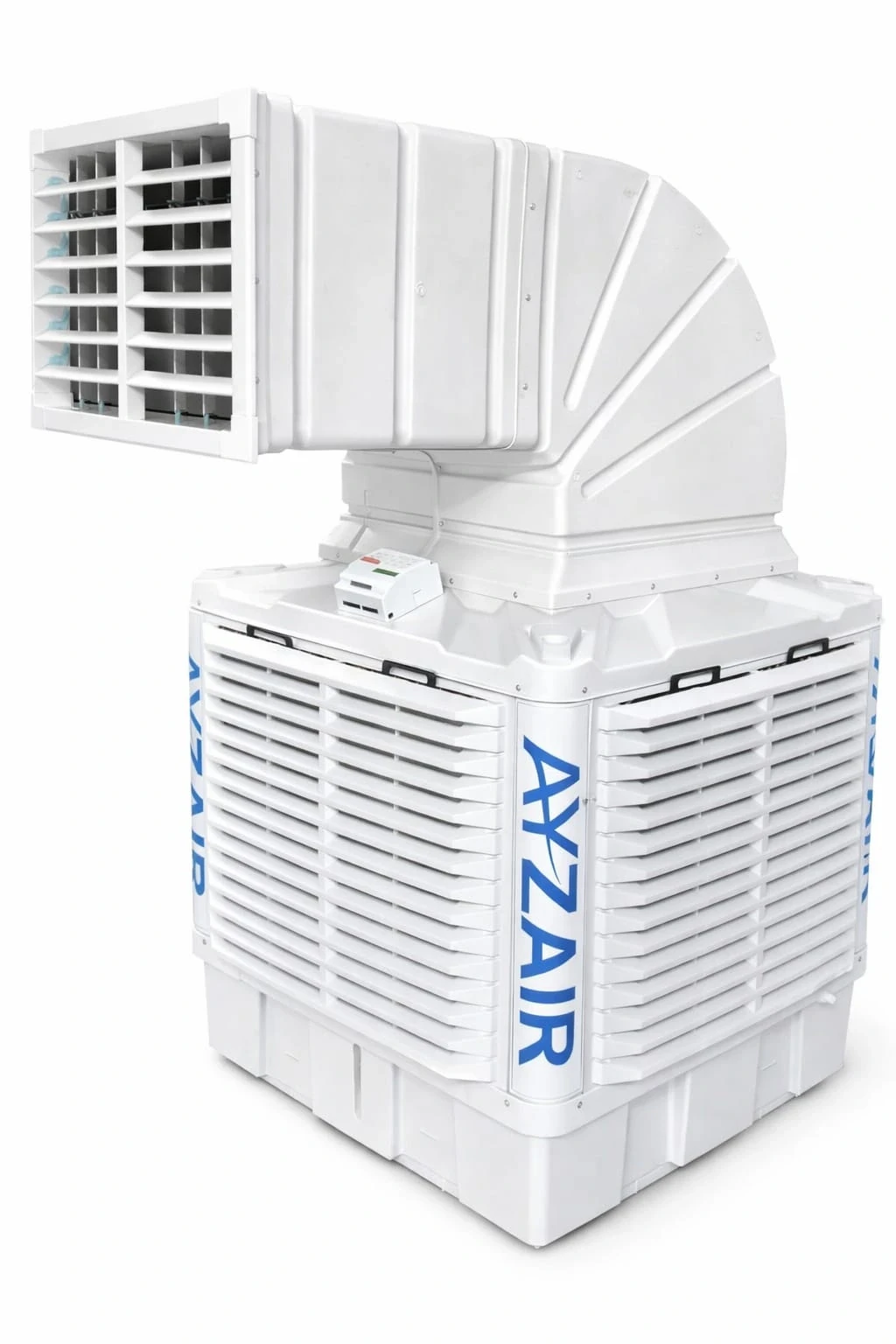
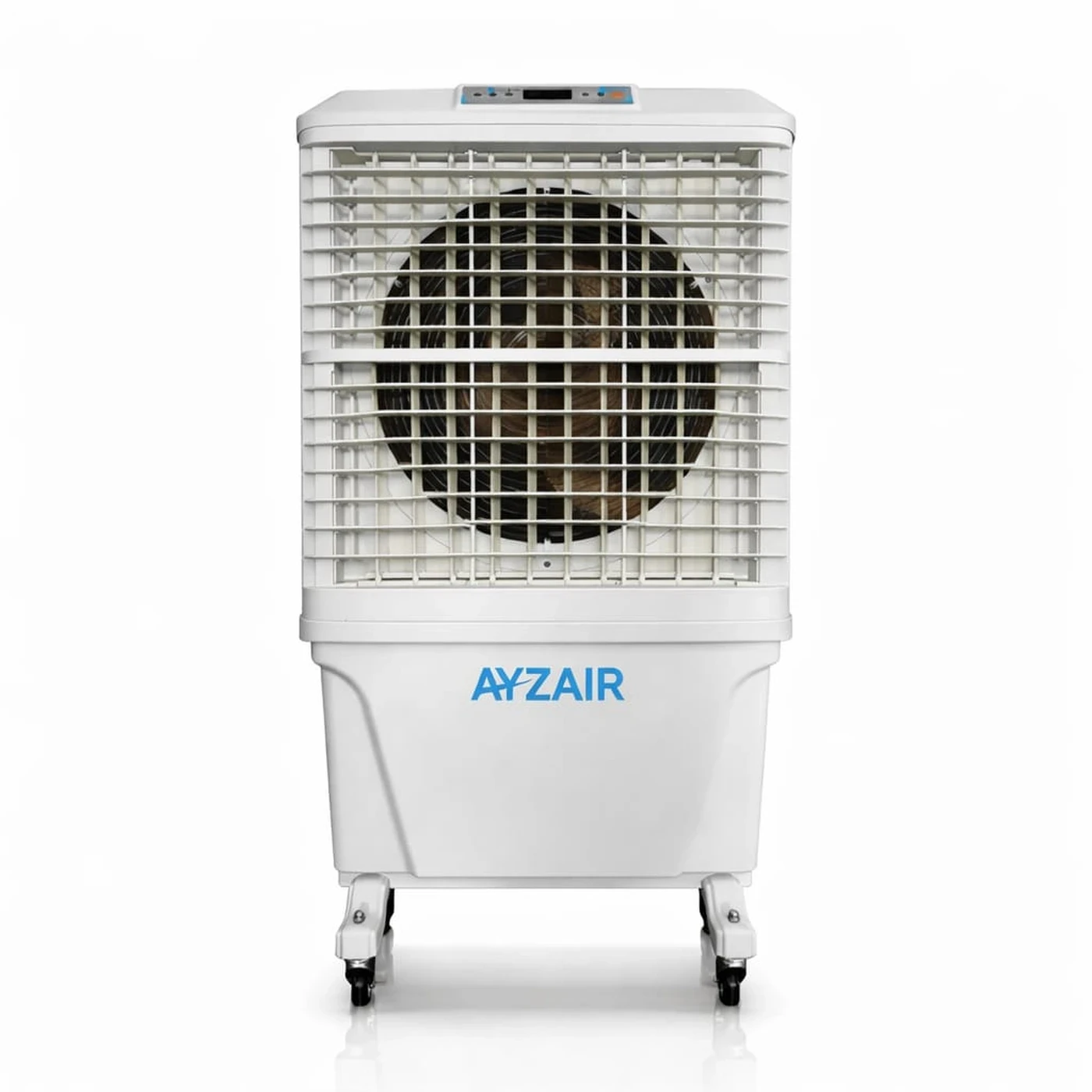
Evaporative cooling does not work in Irish air and we will not quote it here. At 75–85% relative humidity the wet-bulb depression is a degree or two, so a wetted pad adds moisture to a building already fighting condensation and returns almost no cooling. What does pay in Ireland is winter destratification with HVLS fans, plus extract ventilation for process heat and moisture.
Dublin Port
Primary destination port
24–32 days
Sea transit from India
10–20days
Production lead time
5terms
EXW · FOB · CIF · CFR · DDP on request
The complete range
All six Ayzair families, supplied to Ireland.
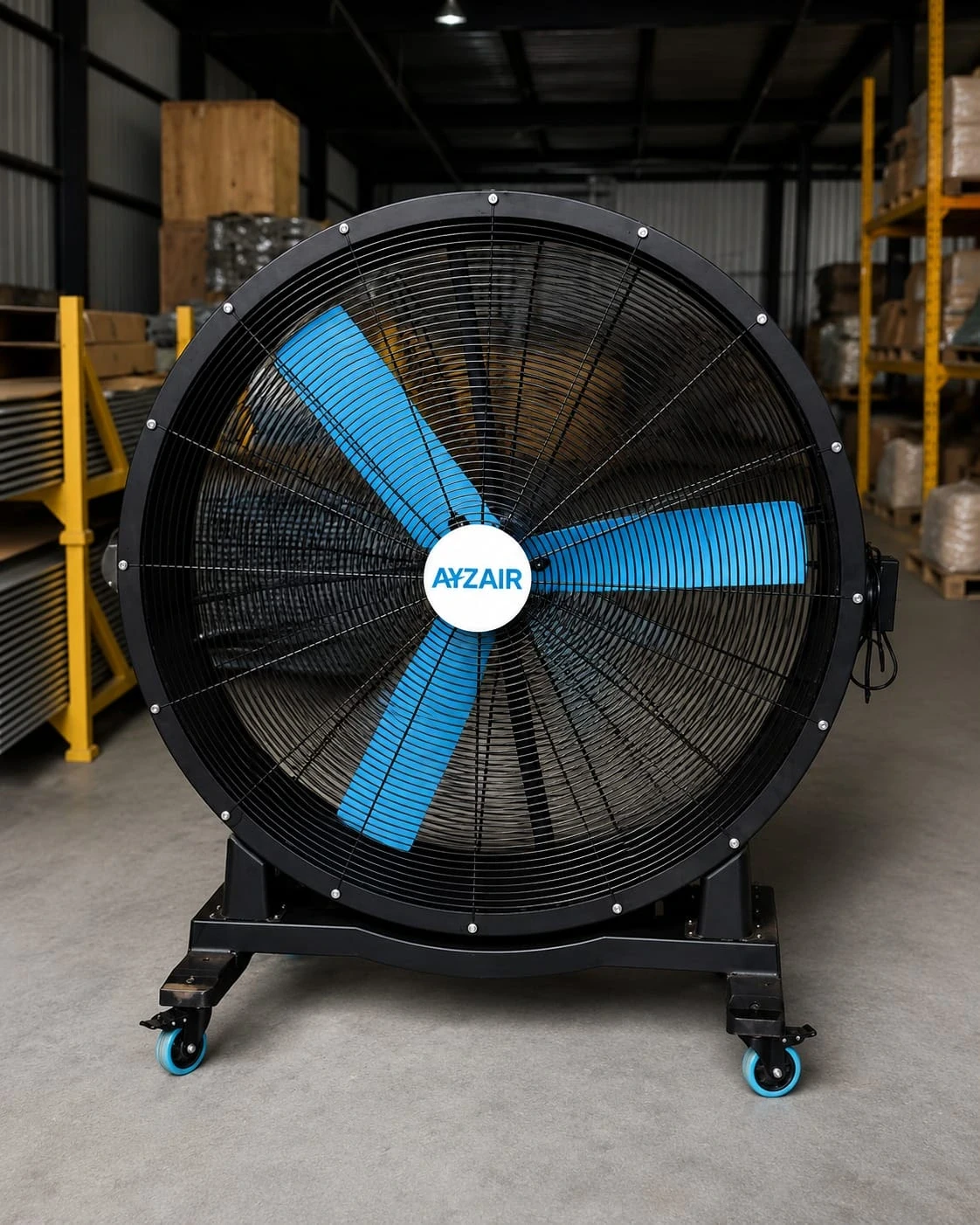
Every product we make is available in Ireland — thirty-four models across six families. They are ordered here by how well each one suits the local climate and the industries that dominate this market, but nothing is off the list.
Industries
Who buys from us in Ireland.
Logistics & compliance
Shipping to Ireland.
| Destination ports | Dublin Port · Cork (Ringaskiddy) · Belfast for northern sites |
| Sea transit | 24–32 days from Nhava Sheva, usually transhipped in northern Europe |
| Incoterms | EXW · FOB · CIF · CFR · DDP on request |
| Container loading | HVLS fans ship knocked down — 20 ft: up to 6 at 24 ft · 40 ft HQ: up to 14 |
| Production lead time | 10–20 working days |
- 230 V single-phase and 400 V three-phase at 50 Hz is standard Irish supply and matches our motors directly.
- Our fans carry CE marking to the Low Voltage and EMC Directives, and we supply the declaration of conformity and technical file with each shipment. Where a buyer needs anything beyond that, we provide the documentation and let your own assessor confirm it.
- Damp air is the design constraint, not heat — specify IP-rated motors and expect condensation management rather than cooling to be the ventilation problem.
Ireland enquiry
Get a proforma invoice for Ireland.
Tell us the models and quantities, or just describe the building and let us size it. You will receive USD pricing, your Incoterm, a container loading plan and a confirmed lead time — within one working day.
Export desk
Answers
Supplying Ireland — common questions
Cannot find what you need? Call +91 80871 10156 or WhatsApp us — an engineer, not a call centre, picks up.
Ask on WhatsAppWould an evaporative cooler do anything useful in Ireland?
No. Irish afternoon humidity rarely drops below 70% and is often above 85%, which leaves a wet-bulb depression of one or two degrees. You would be adding water vapour to the air for no measurable temperature drop. We would rather say that than take the order.
What does destratification actually save on an Irish heating bill?
Ireland heats buildings for seven or eight months a year, and in a 10–12 m hall roof-level air typically sits 8–12 °C above the floor, so a large share of the heat output never reaches anyone. Running HVLS fans slowly through the heating season flattens that profile and commonly returns 20–30% of heating energy, with cold spots at loading doors and picking faces largely removed.
How low can the roof be before HVLS stops making sense?
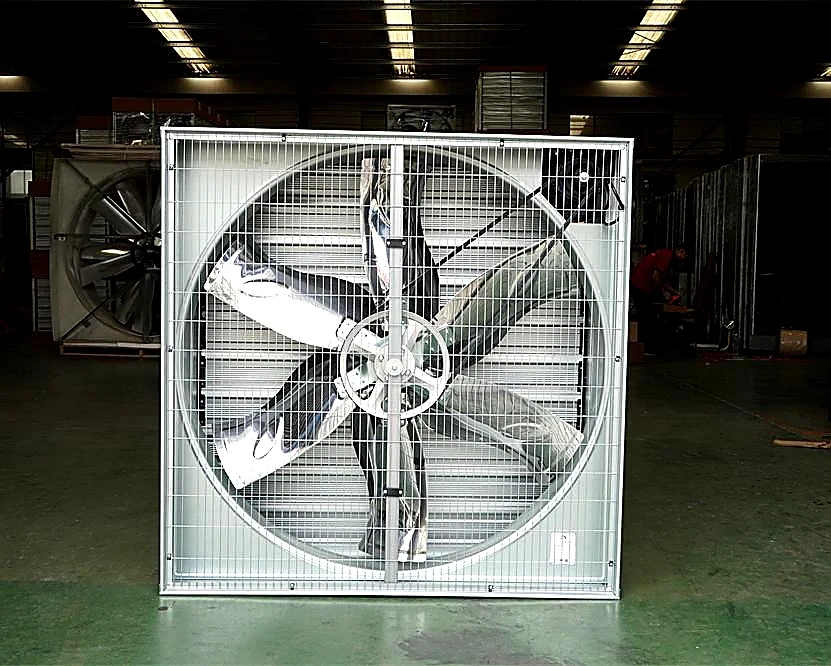
Seven metres clear beneath the fan is our minimum. Below that the downward column has no room to spread and you get a draught under the fan instead of a circulating body of air. Many older Irish units at 5–6 m are better served by wall-mounted Hammer extract fans, and we will tell you that when you send the building height.
Nearby markets
Also in Europe
Next step
Shipping to Ireland?
Send your requirement and we will confirm the freight route, transit time, landed cost and whether our products genuinely suit your climate — before you commit.