
Central Asia & CIS
Selective — see noteIndustrial cooling & ventilation for Georgia
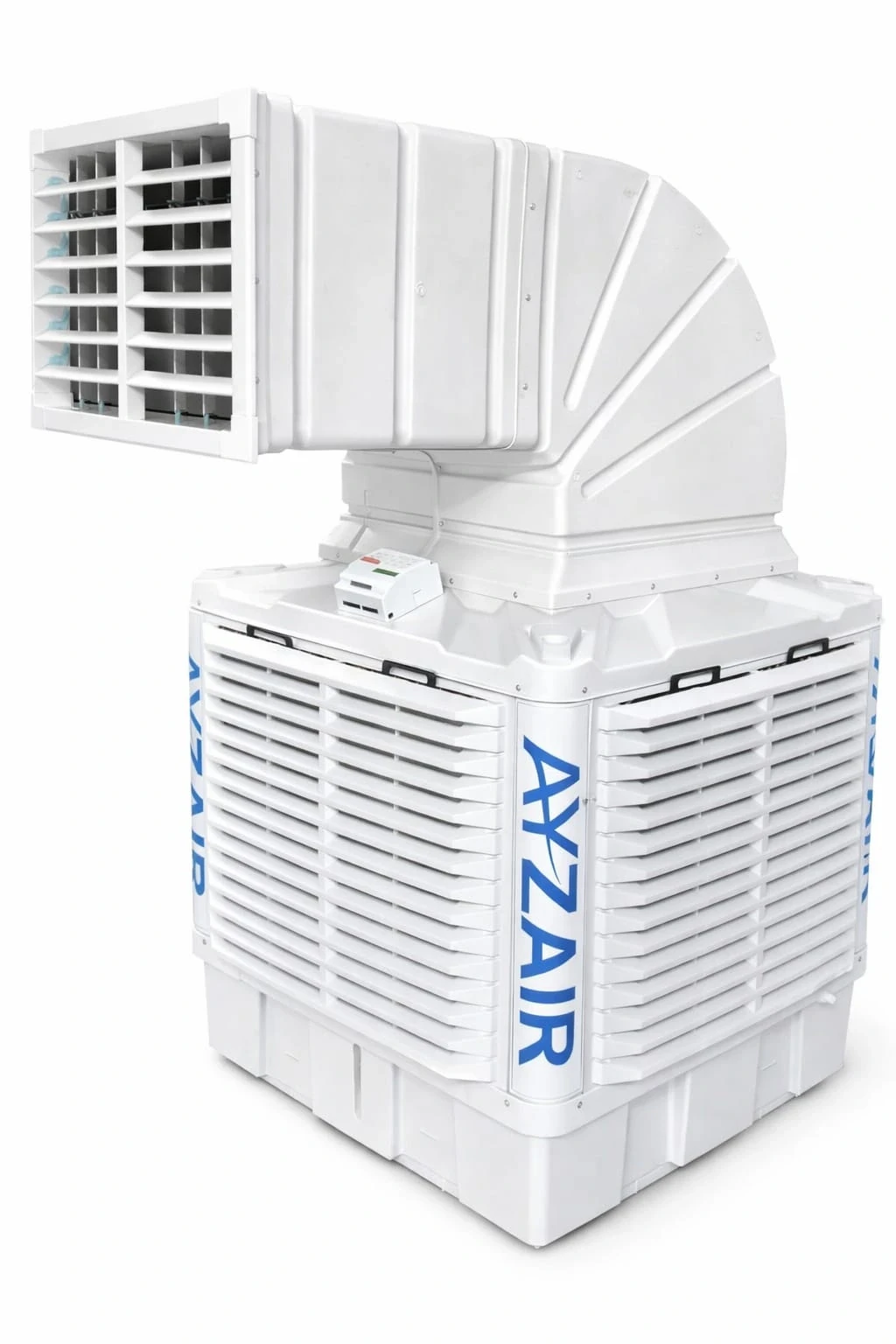
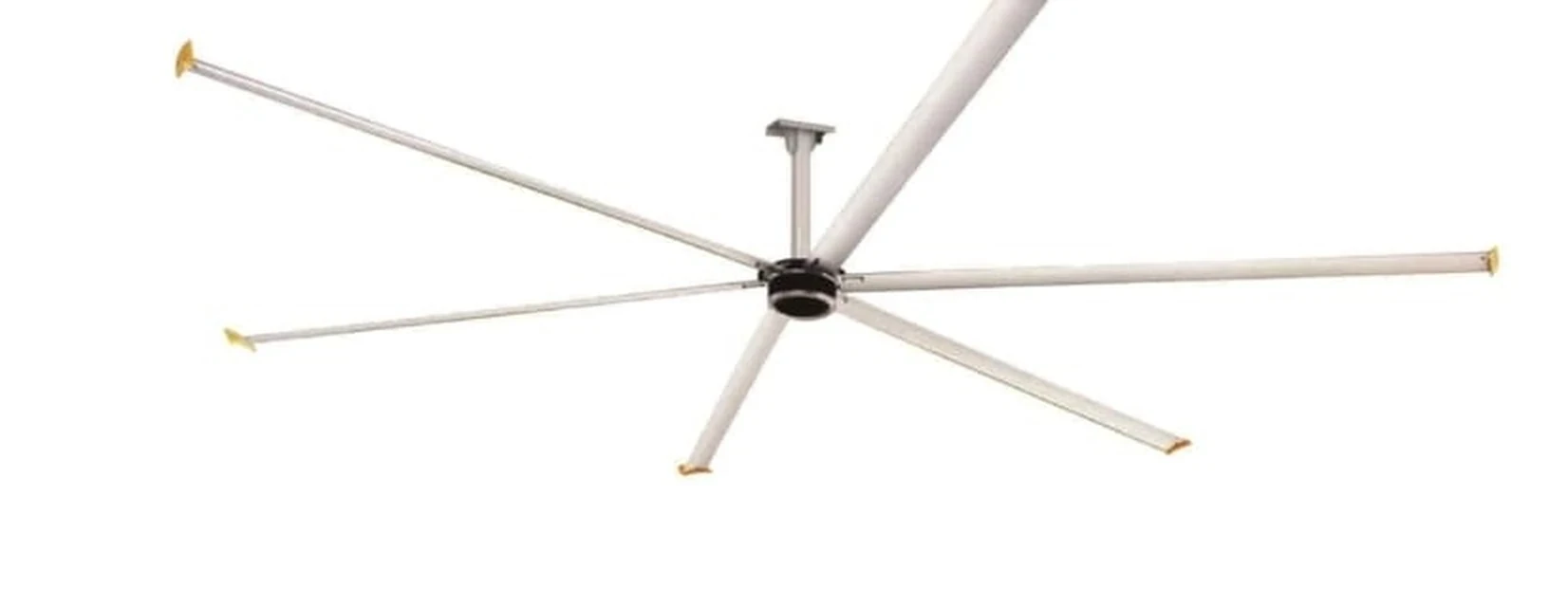
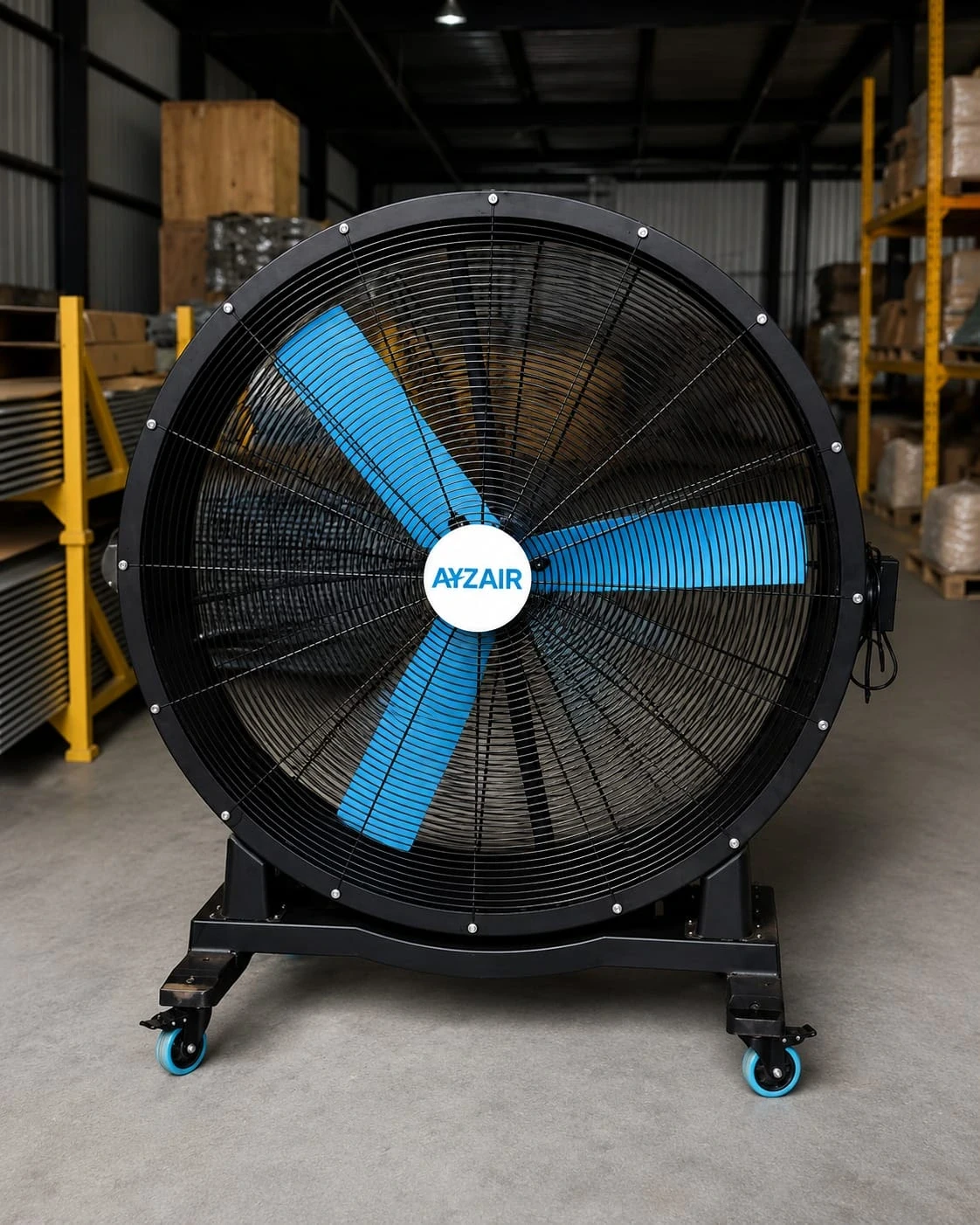
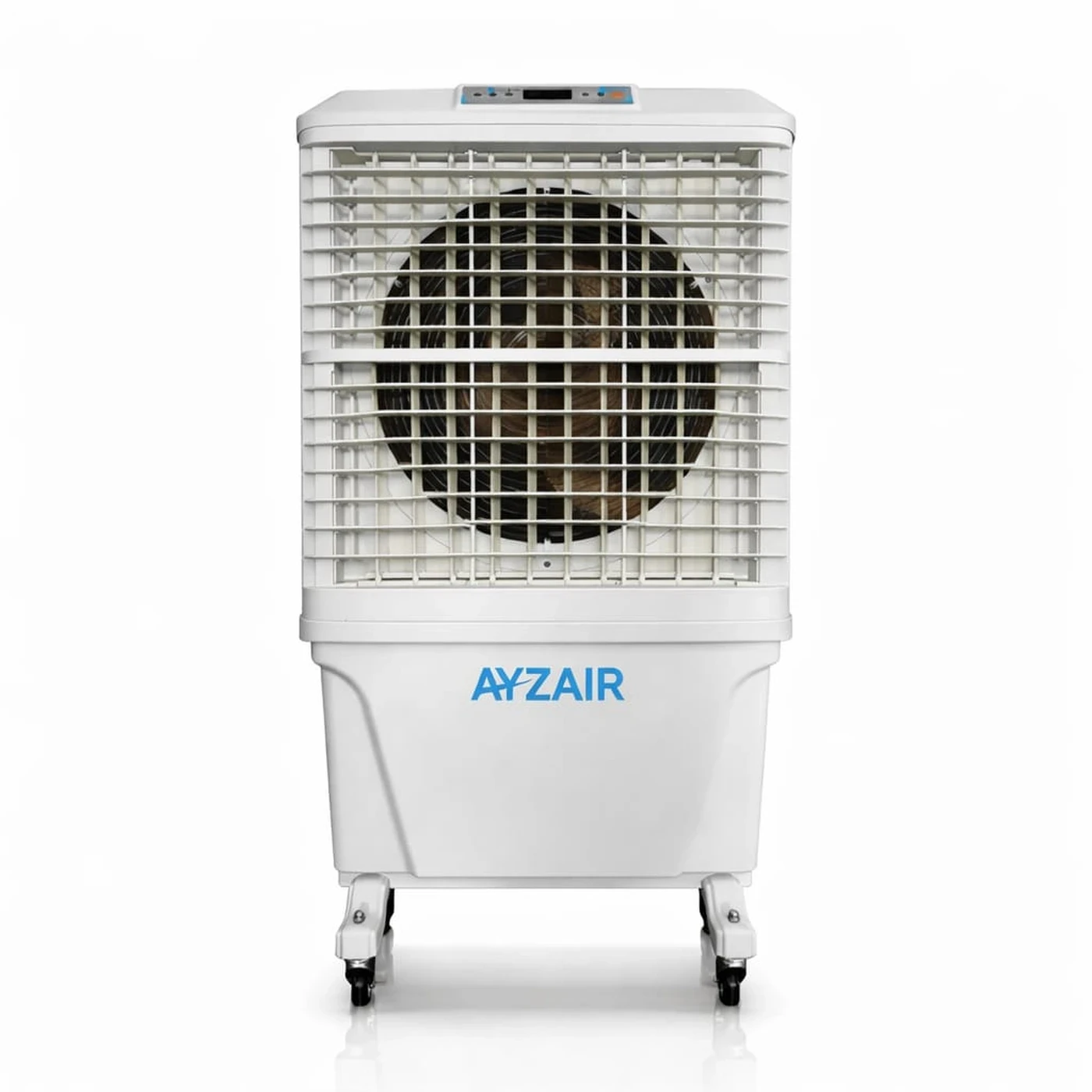
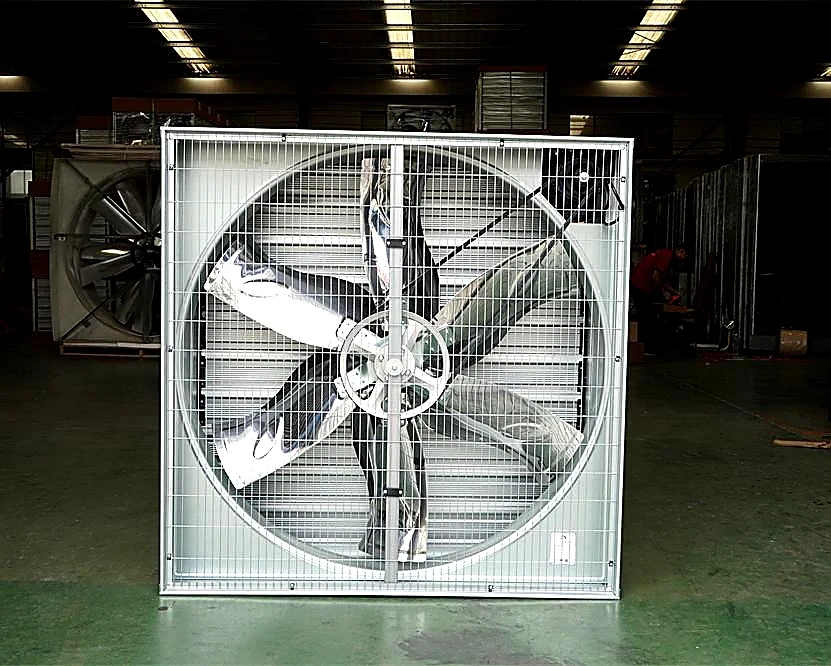
Georgian industry concentrates in a narrow band — the metallurgical and chemical works at Rustavi, ferroalloys at Zestaponi, the Hualing free industrial zone at Kutaisi, and the warehousing and vehicle trade around the Poti free zone. The coast and the inland valleys need different equipment, and we quote them differently. Ayzair supplies HVLS ceiling fans and heavy hammer exhaust fans across both, with evaporative coolers specified only where the inland humidity actually supports them.
Climate suitability — the honest version
Humid subtropical on the Black Sea coast, 32–35 °C continental summers inland at 35–45% humidity
On the coast, evaporative cooling is the wrong product and we would rather say so than sell it. Poti and Batumi sit above 70% relative humidity through a summer afternoon, so a wetted pad has almost no wet-bulb depression to work with and adds moisture to air that already has too much. There the answer is HVLS fans for floor-level airspeed and hammer exhaust fans for air change. Inland is a different climate: Tbilisi, Rustavi and Gori run 32–35 °C at 35–45%, which supports a 7–10 °C drop and makes a ductable cooler worth specifying.
Poti for containers
Primary destination port
24–32 days Nhava Sheva to Poti, then road inland to Tbilisi or Rustavi
Sea transit from India
10–20days
Production lead time
4terms
EXW · FOB Nhava Sheva · CIF Poti · CFR Batumi
The complete range
All six Ayzair families, supplied to Georgia.
Every product we make is available in Georgia — thirty-four models across six families. They are ordered here by how well each one suits the local climate and the industries that dominate this market, but nothing is off the list.
Industries
Who buys from us in Georgia.
Logistics & compliance
Shipping to Georgia.
| Destination ports | Poti for containers · Batumi |
| Sea transit | 24–32 days Nhava Sheva to Poti, then road inland to Tbilisi or Rustavi |
| Incoterms | EXW · FOB Nhava Sheva · CIF Poti · CFR Batumi |
| Container loading | 40 ft HQ: up to 14 HVLS fans at 24 ft diameter · 20 ft: up to 28 ductable coolers |
| Production lead time | 10–20 working days |
- 380 V three-phase and 220 V single phase at 50 Hz, identical to our standard build.
- Georgia has aligned much of its technical regulation with EU directives under the DCFTA, so the documentation brokers ask for here generally follows the CE pattern — technical file, test reports, declarations. We supply all of it and let your broker confirm the route. We hold no Georgian national approval.
- Poti handles the container traffic and is the practical discharge port for machinery; Batumi carries more bulk and oil. Salt and sustained humidity at both argue for coated casings and stainless fixings on anything installed in the port zone.
- Georgia is also the freight corridor into Armenia, so a Poti consignment can be split for onward road delivery to Yerevan if you are supplying both markets.
Georgia enquiry
Get a proforma invoice for Georgia.
Tell us the models and quantities, or just describe the building and let us size it. You will receive USD pricing, your Incoterm, a container loading plan and a confirmed lead time — within one working day.
Export desk
Answers
Supplying Georgia — common questions
Cannot find what you need? Call +91 80871 10156 or WhatsApp us — an engineer, not a call centre, picks up.
Ask on WhatsAppWill evaporative coolers work in Batumi or Poti?
No, and we will not quote them for a coastal site. Summer afternoons there hold 70% relative humidity or more, which leaves a pad almost nothing to evaporate into — you would get two or three degrees and a damper building. For warehouses and workshops on the coast the honest specification is HVLS fans to move air over people and hammer exhaust fans to clear heat and fume by air change.
What about Tbilisi and Rustavi, further from the sea?
Inland is workable. A hot Tbilisi or Rustavi afternoon is typically 32–35 °C at 35–45% relative humidity, which gives a 7–10 °C drop across the pad — modest next to Yerevan or Ashgabat, but real. We would still size HVLS fans and extraction first in a tall hall and treat the coolers as supply air to specific work areas rather than whole-building cooling.
Is destratification worth it in a Georgian winter?
In a heated hall, yes, though the saving is smaller than in Russia or Kazakhstan. Tbilisi winters hover around freezing rather than well below it, so expect to recover perhaps 15–20% of heating energy in a 10 m building rather than the 30% a Siberian shed would see. Send us the heated volume, roof height and floor area and we will put a number to it before you commit.
Nearby markets
Also in Central Asia & CIS
Next step
Shipping to Georgia?
Send your requirement and we will confirm the freight route, transit time, landed cost and whether our products genuinely suit your climate — before you commit.