
Installations & despatch
Our equipment, on real buildings.
Not renders. Eight ductable coolers on a 16,000 sq ft auto-component plant at Chakan, a container being loaded for Saudi Arabia, and fans on working floors. Each caption explains the method as much as the machine, because how a unit is mounted decides whether it is still running well in year five.
Reference project
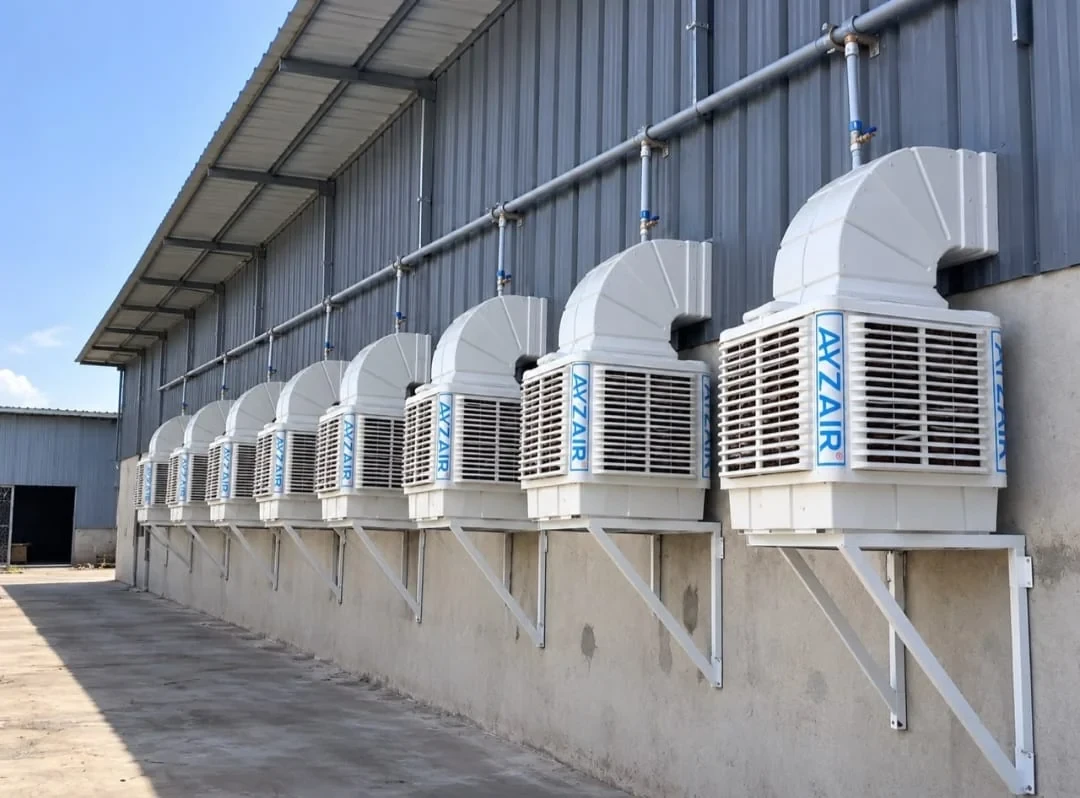
Sebros Auto, Chakan — 16,000 sq ft on eight units.
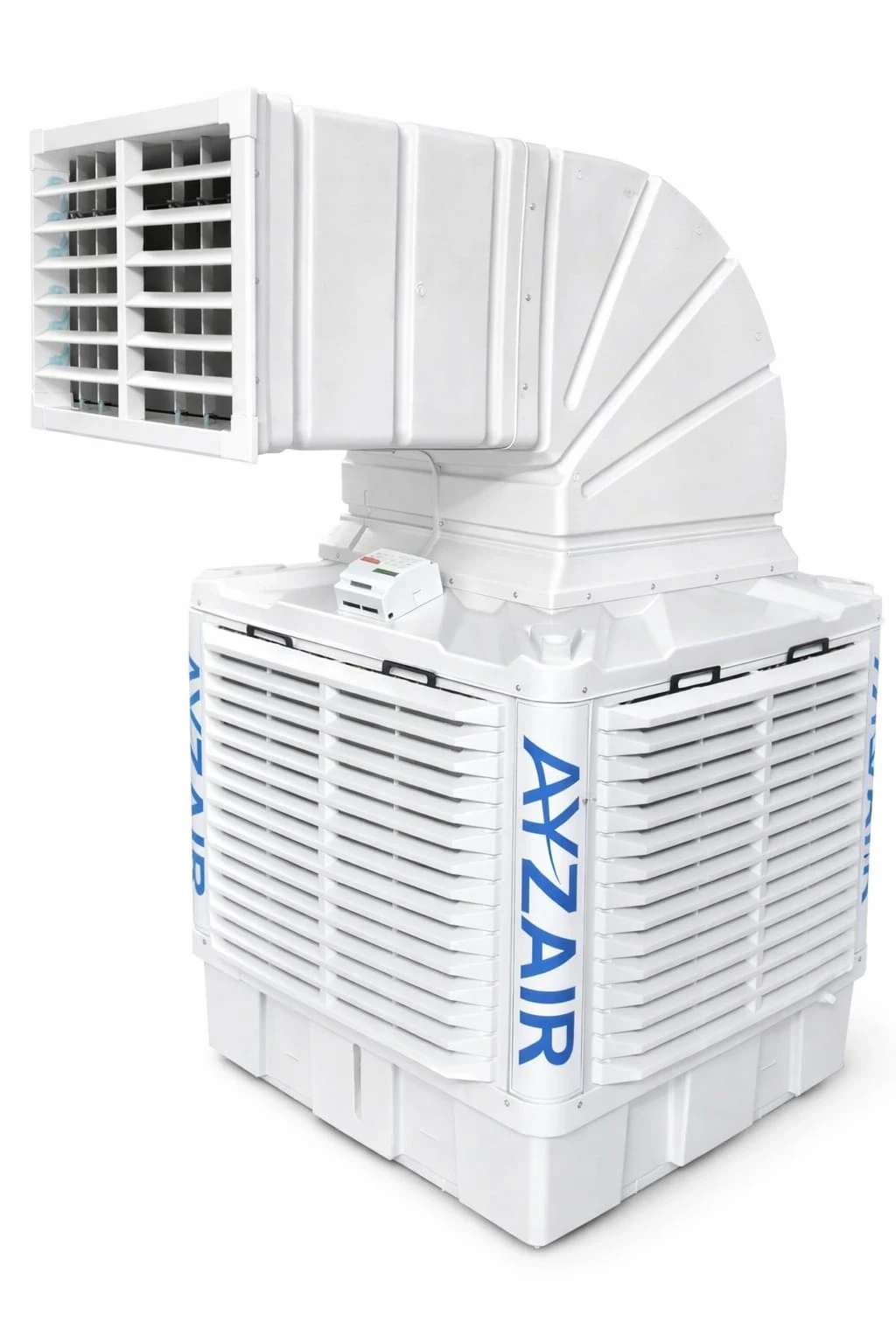
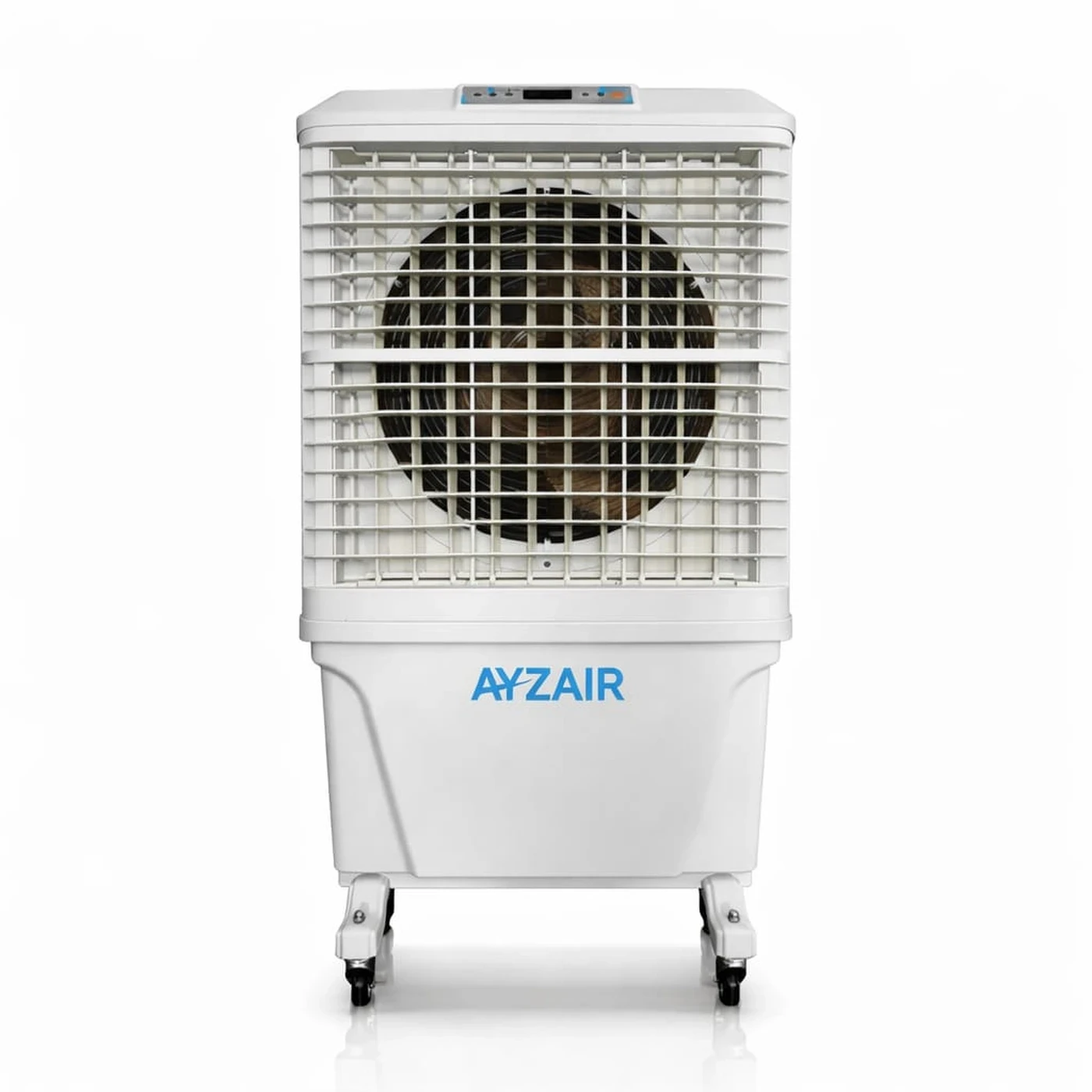
An auto-component manufacturer on the Chakan belt, roughly twenty minutes from our own plant. The shed is a standard industrial bay with machining and assembly running through it, and the whole floor is served by eight wall-mounted ductable coolers.
16,000sq ft
Floor area cooled
8units
Ductable coolers, wall mounted
2,000sq ft
Served by each unit
~16kW
Total connected load, about 2 kW a unit
Why eight and not four
Coverage is not the only number that matters. Eight smaller units spread along the wall put fresh air in at even intervals down the length of the bay, instead of two strong draughts at one end and dead air at the other. It also means losing one unit to service costs you an eighth of the airflow, not a quarter.
Why the wall and not the roof
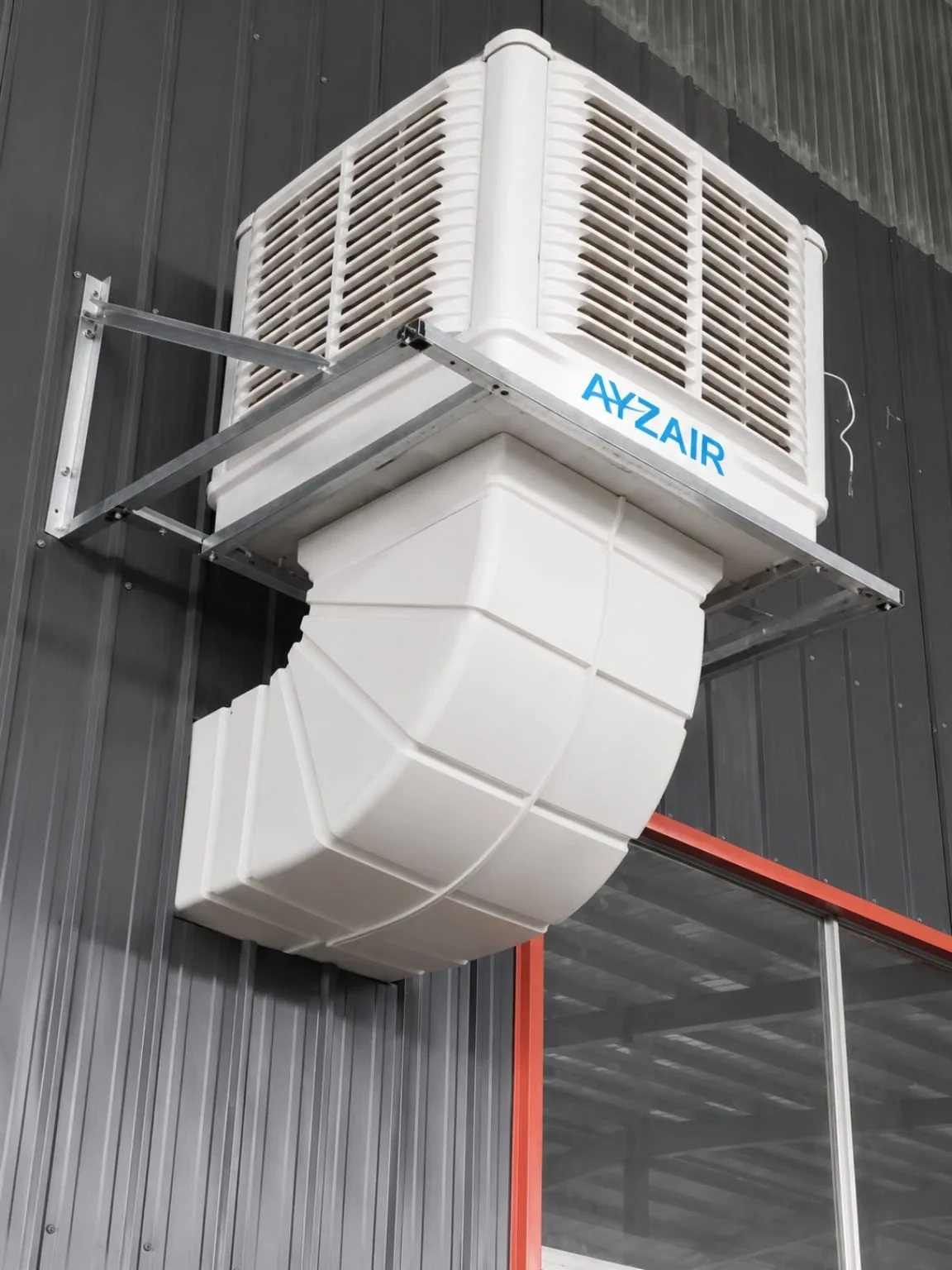
The bend pipe goes through the cladding, so no roof sheet was cut on a building that has to stay watertight through a Pune monsoon. Pads and pumps stay reachable from a ladder, which is what keeps a system actually maintained rather than nominally maintained.
What it costs to run
Around 2 kW a unit, so roughly 16 kW for the whole floor. A refrigeration system sized for the same 16,000 sq ft would draw several times that, and would need the sanctioned load raised before it could even be switched on.
Published with the customer’s permission. More about our Pune and Chakan coverage.
6families
Manufactured in Pune
34models
Across the range
10–20days
Manufacturing lead time
40countries
Supplied and quoted
On site
What the installations actually look like.
Every caption describes what is in the photograph — the mounting, the water route, the structure. Customer names appear only where a customer has agreed to be named, so you will not find a wall of borrowed logos here.
Eight coolers on a 16,000 sq ft shed
Sebros Auto Pvt Ltd, an auto-component manufacturer at Chakan, Pune. Eight ductable units on galvanised wall brackets, each discharging through the wall into the shop floor behind. One common water line runs the length of the wall with an isolation valve per unit, so any single cooler can be shut off and serviced while the rest keep running.
How a single unit sits on the wall
The cooler carries its own weight on a galvanised bracket bolted to the structure, and the moulded bend pipe passes straight through the cladding. Nothing penetrates the roof, so there is no sheet to cut and nothing to leak in the monsoon, and the whole unit stays reachable from a ladder.
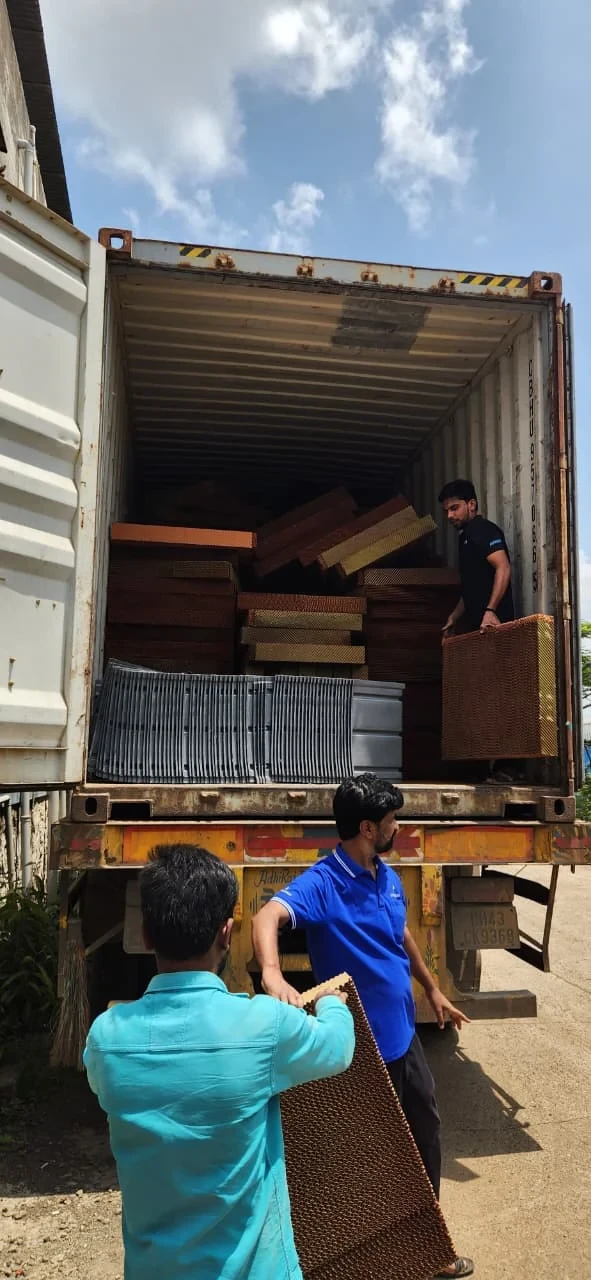
Loading a container for Saudi Arabia
Cooling pads, bases and cabinets stacked into a container at our own plant, bound for Saudi Arabia. Export consignments are packed by our own team rather than a third party, so the count on the packing list is the count that goes in and the fragile faces are loaded where nothing can crush them.
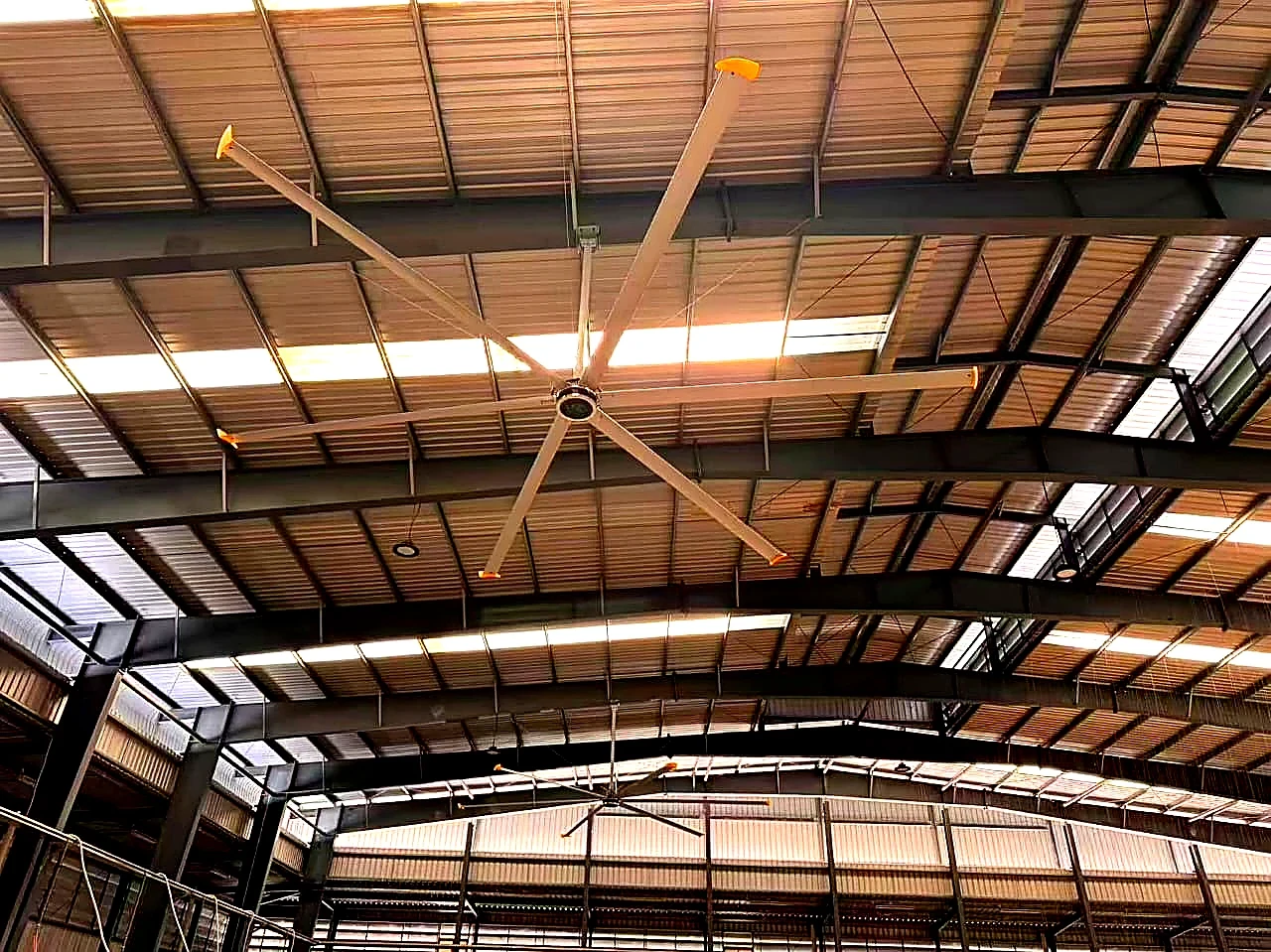
A 24 ft HVLS fan under a warehouse roof
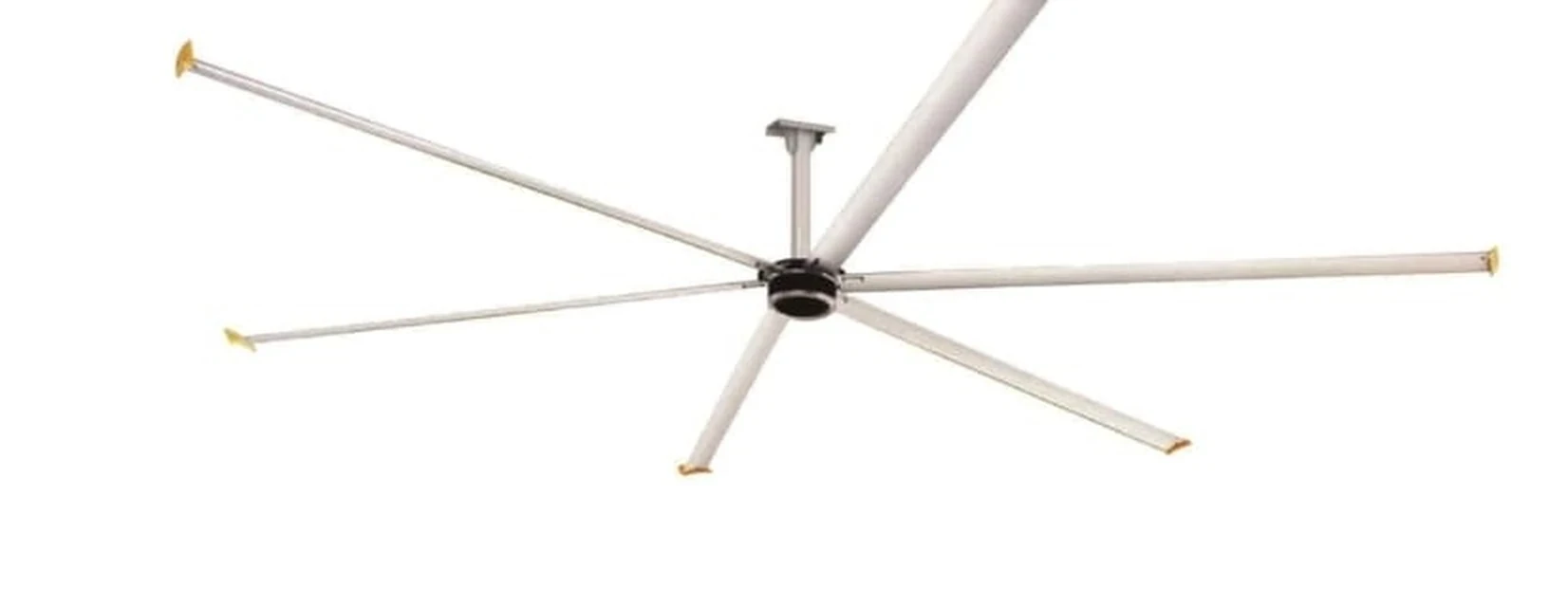
Mounted to a primary structural member — never to purlins or sheeting — with the supplied hardware and redundant safety cables. The mounting load figures and the fixing drawing go out with the quotation so the structure can be signed off before the fan arrives.
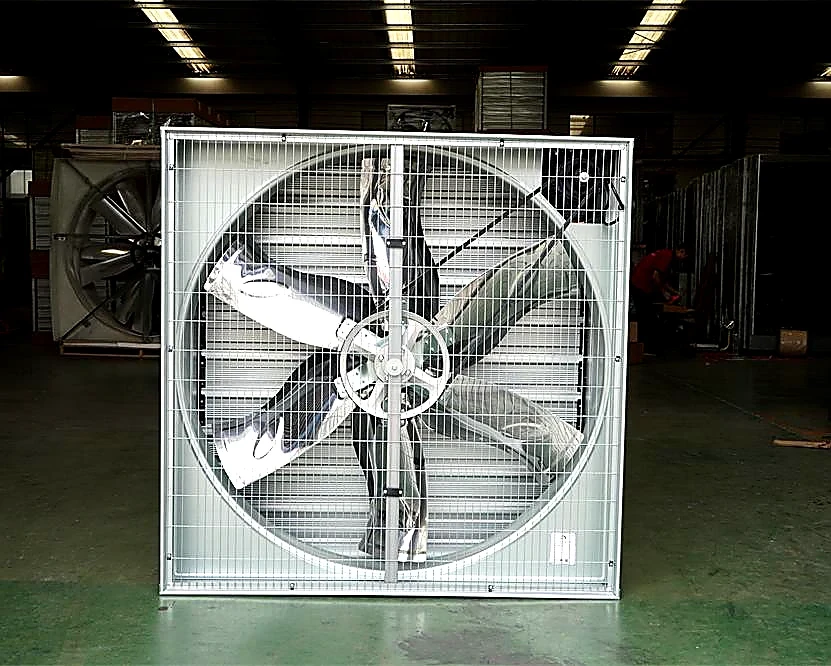
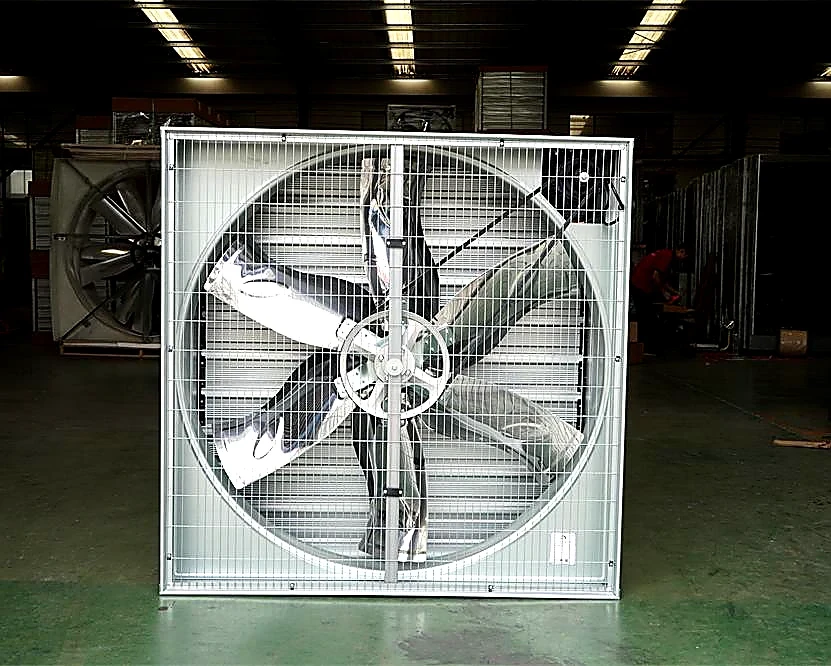
Hammer exhaust fan in a factory wall
Wall-mounted extract pulling heat, fume and moisture straight out of the building. Exhaust is normally sized alongside the cooling, because a cooler pushing fresh air in needs somewhere for the old air to leave.
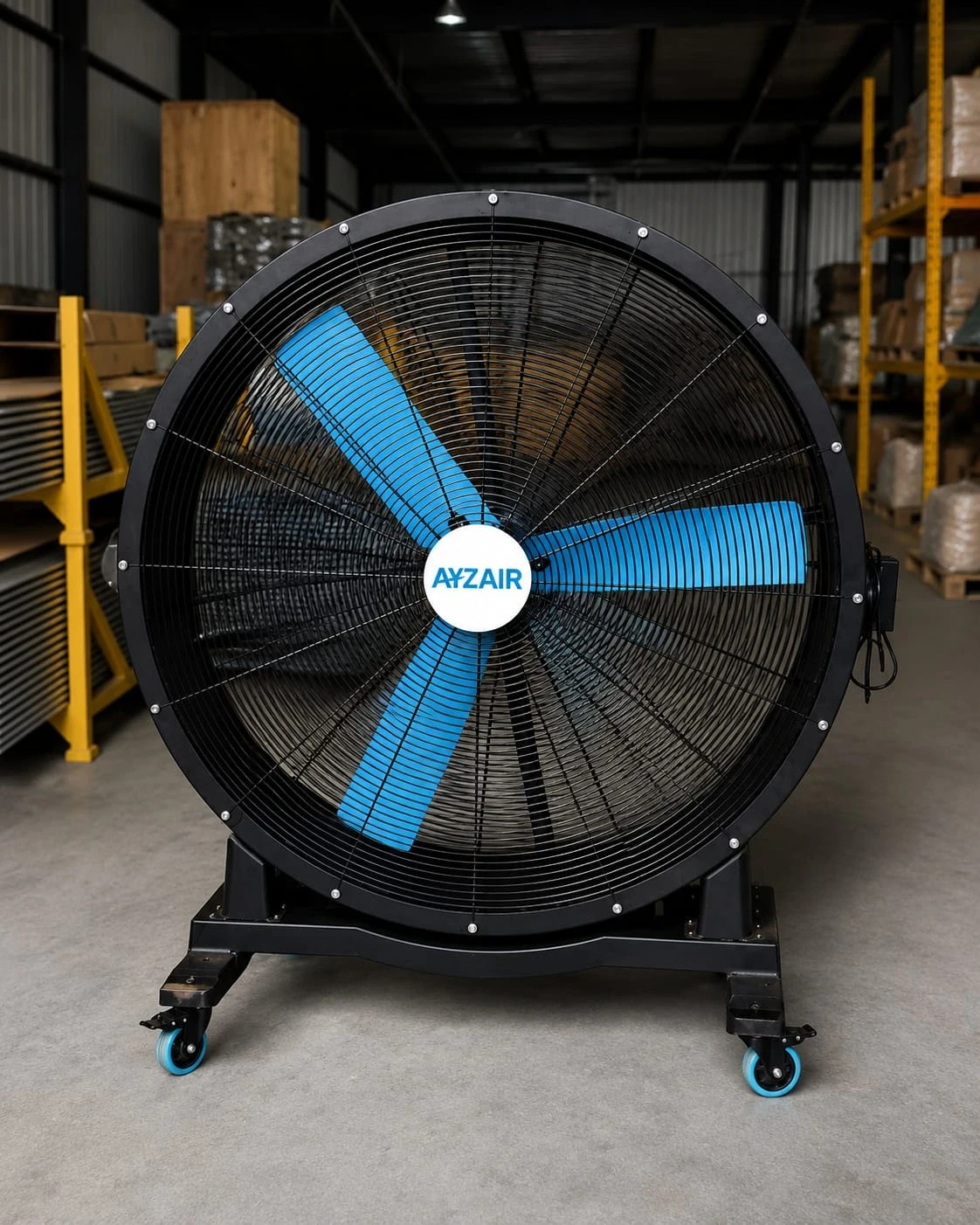
Model 1500 where the work moves
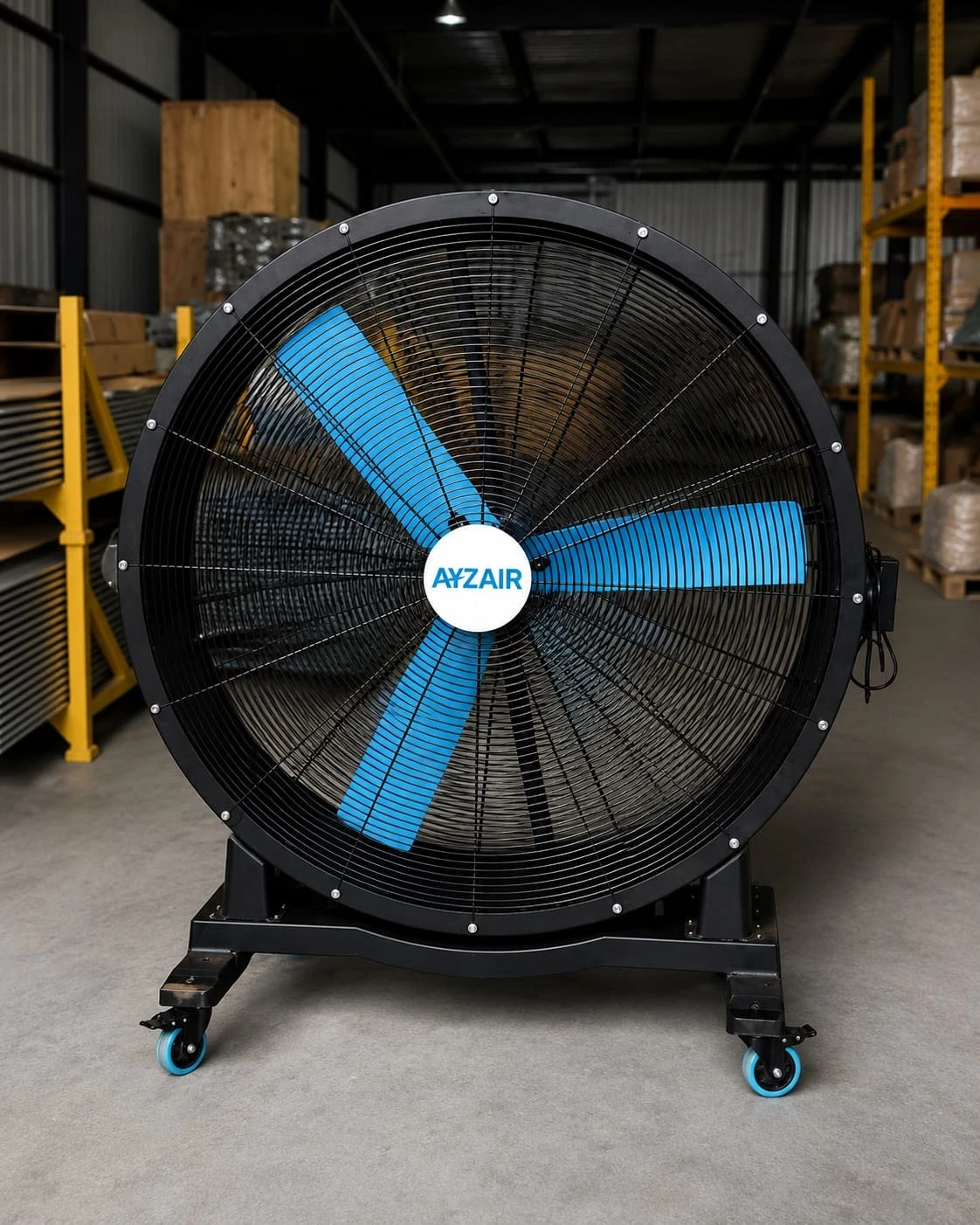
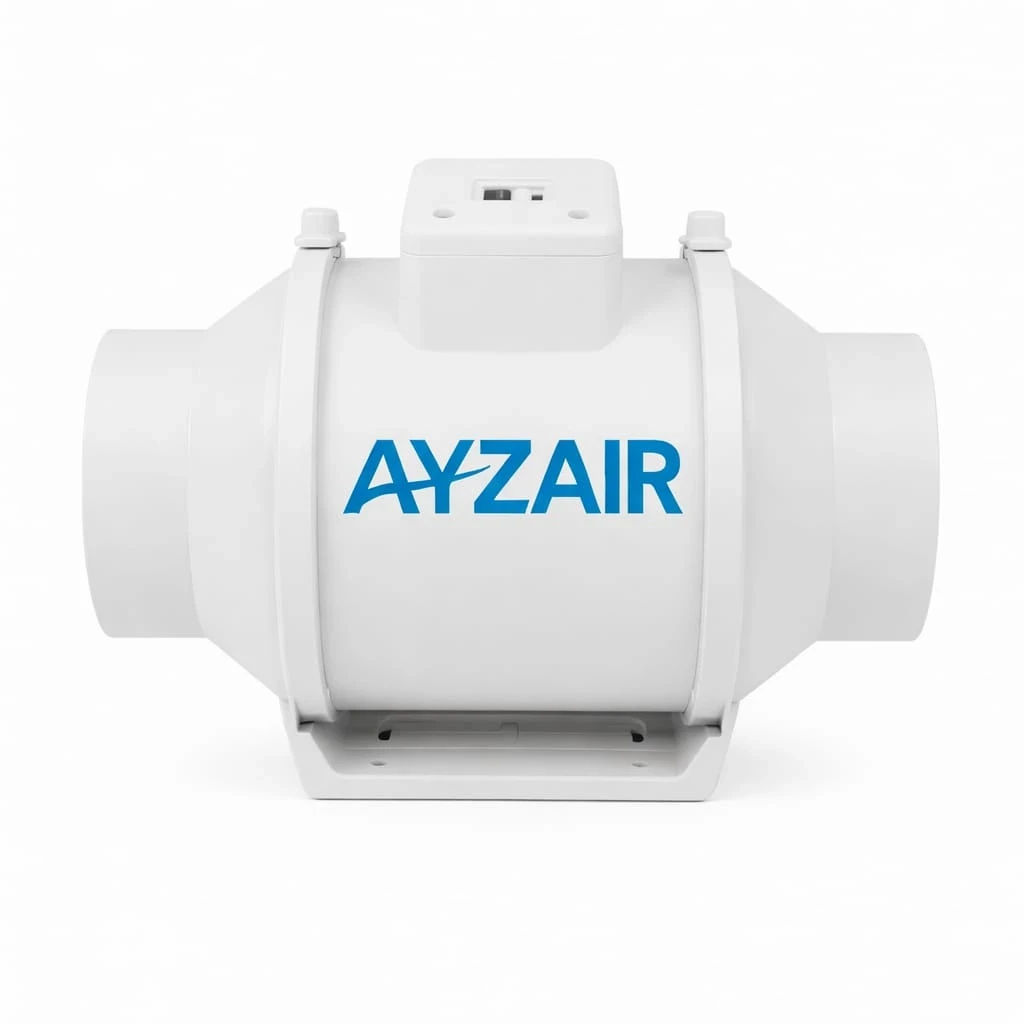
A 1.5 m fan on wheels drawing 370 W from an ordinary socket. It covers the case a fixed installation cannot — a crew working one bay for a shift, a loading dock in the afternoon sun, a maintenance shutdown.
Why wall mounting
No roof penetration,
A ductable cooler can sit on the roof or on the wall. On Indian and Gulf sheds we prefer the wall wherever the layout allows it, and the photographs above show why.
Nothing is cut into the roof
The bend pipe goes through the cladding, not the roof sheet. No kerb to flash, nothing to leak when the monsoon arrives, and no penetration to re-seal in five years.
Service without roof access
Pads, pump and float are reachable from a ladder or a small platform. Roof-mounted units mean a permit, a harness and often a shutdown just to change a pad.
The load goes into the structure
A galvanised bracket carries the unit into a column or a main member, rather than spreading weight across roof purlins that were never designed for it.
One water line, one valve each
A single line along the wall with an isolation valve per unit means one cooler can be dropped for service while the shed stays cool.
Leaving the factory
Packed by the people who built it.
Export orders are loaded at our own plant at Chakan. Pads travel flat and protected, cabinets are stacked so nothing bears on a moulded face, and the container is sealed against a packing list our own team has counted.
Loading at Chakan, Pune, for Saudi Arabia. Containers go out through Nhava Sheva or Mundra on EXW, FOB, CIF or CFR terms.
Ask for a reference
Want to speak to someone who already runs it?
Tell us your industry and roughly where you are. Where a customer has agreed to take reference calls we will introduce you, and either way you will get sizing and a quotation for your own building within one working day.
Answers
Installation — common questions
Cannot find what you need? Call +91 80871 10156 or WhatsApp us — an engineer, not a call centre, picks up.
Ask on WhatsAppEight units for 16,000 sq ft — is one unit per 2,000 sq ft the rule?
It is a fair starting point for a standard industrial bay, but it is a starting point and not a rule. The real driver is air changes per hour, so roof height matters as much as floor area — the same 16,000 sq ft under a 9 m roof holds far more air than under a 6 m roof and needs more airflow. Heat load changes it again: a machining shop or a furnace bay needs more than a storage shed. Send the area, the height and what happens inside and we will size it properly.
Can I visit a site that already has Ayzair equipment running?
Often yes. Around Pune there are installations on the Chakan and Bhosari belts we can usually arrange a visit to, subject to the customer agreeing, and the Sebros Auto installation shown here is one of them. For export enquiries we can put you in touch with a buyer in your region who has agreed to take reference calls. Tell us your industry when you enquire, because a reference in your own trade is worth far more than one in a different building.
Do you install, or do we arrange it?
Across Maharashtra our own team installs and commissions. Elsewhere in India installation runs through our dealer network with our engineer on the first site of any large order. For export we supply mounting drawings, wiring diagrams and a commissioning checklist, with remote support during installation, and your local contractor does the physical work.
How long does a typical installation take?
A wall-mounted bank of ductable coolers like the one shown here is usually two to four days on site for the brackets, ducting, water line and electrical connection, depending on how much of the water and power infrastructure already exists. A single HVLS fan is a few hours once access equipment is on site.
What has to be ready before the equipment arrives?
For evaporative coolers: a water point with reasonable pressure, a drain route, and a wall or structure that can carry the bracket load. For HVLS: a primary structural member at the fan position and a three-phase supply at the control point. We send the load figures, water demand and electrical schedule with the quotation so all of it can be arranged in parallel with manufacturing.
Do you have references from outside India?
We export to the Gulf, Africa, South and South-East Asia and Europe, and we are happy to discuss what has been supplied into a market close to yours. We do not publish customer names without written permission, so please ask on your enquiry rather than expecting to find a logo wall here.
Next step
Send us your building
Floor area, roof height and what happens inside. Our engineers will size the system, mark the unit positions and return a quotation within one working day — at no cost and with no obligation.