
Russia
Industrial cooling and ventilation in St Petersburg
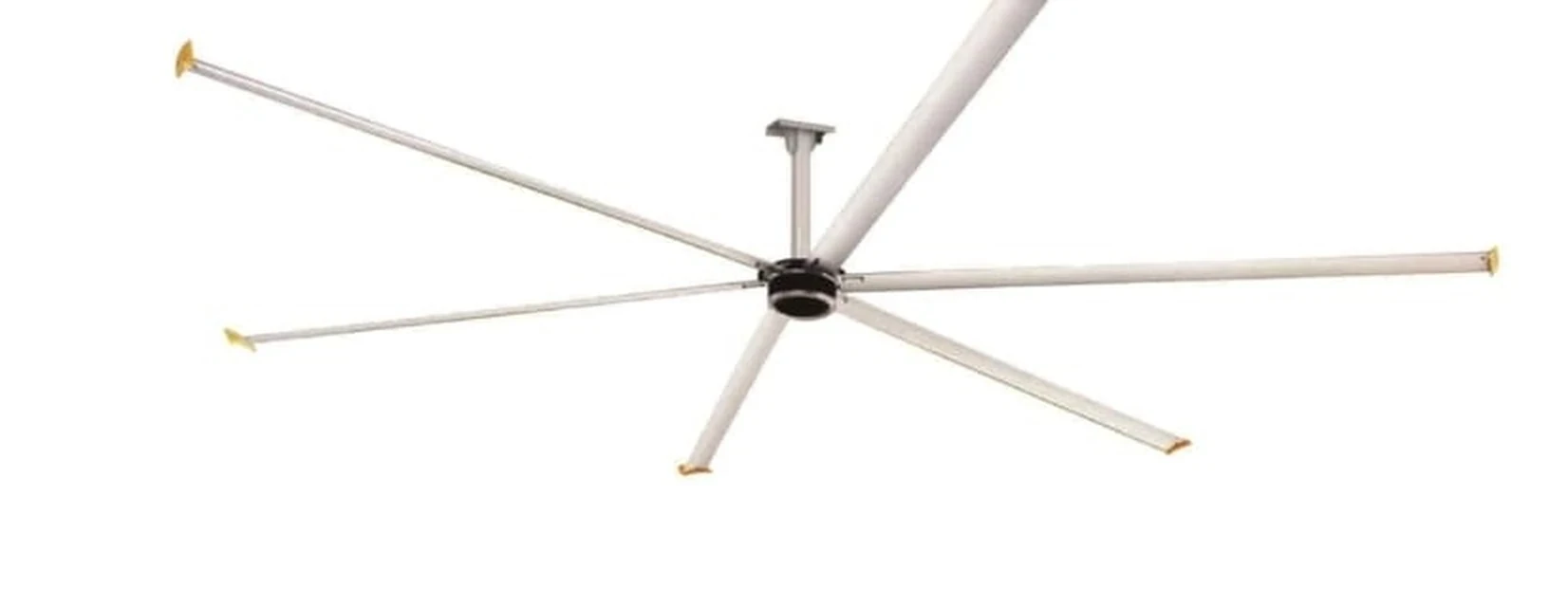
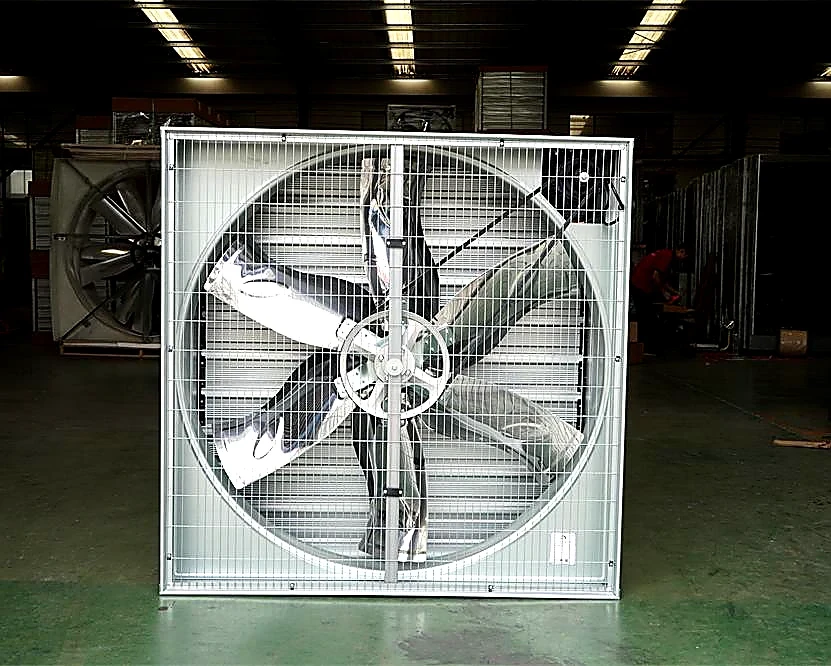
St Petersburg is a manufacturing port with a damp climate, and both halves matter to what gets specified. Shushary in the south holds automotive assembly and the supplier parks that grew up around it, Kolpino carries heavy machinery and the Izhorskiye works, Gorelovo and Obukhovo mix engineering, food plants and brewing with distribution warehousing, and the shipyards and port terminals along the Neva add their own tall, draughty sheds. The Gulf of Finland keeps relative humidity high through most of the year while winter temperatures sit well below zero, so buildings suffer two problems simultaneously: heat collecting uselessly under the roof, and moisture condensing on cold steel and on stored steel stock. Air movement addresses both, because a stagnant layer is what allows condensation to form in the first place. HVLS fans handle the mixing, and wall or roof mounted exhaust fans pull damp air out of paint shops, wash bays and finished goods stores.
St Petersburg climate — the honest version
The Gulf of Finland keeps St Petersburg damp all year, with relative humidity often above 80 percent, a winter averaging around -6 °C and a heating season of seven months, so buildings face trapped roof heat and condensation on cold steel at the same time.
Most cargo for St Petersburg now routes through Novorossiysk at roughly 18 to 24 days from Nhava Sheva, followed by rail or road north; where a direct Baltic service is running, your forwarder can confirm the schedule and the saving on the inland leg.
6families
Complete range supplied here
34models
Every model available to order
10–20days
Production lead time
24hrs
Sizing and quotation
The complete range
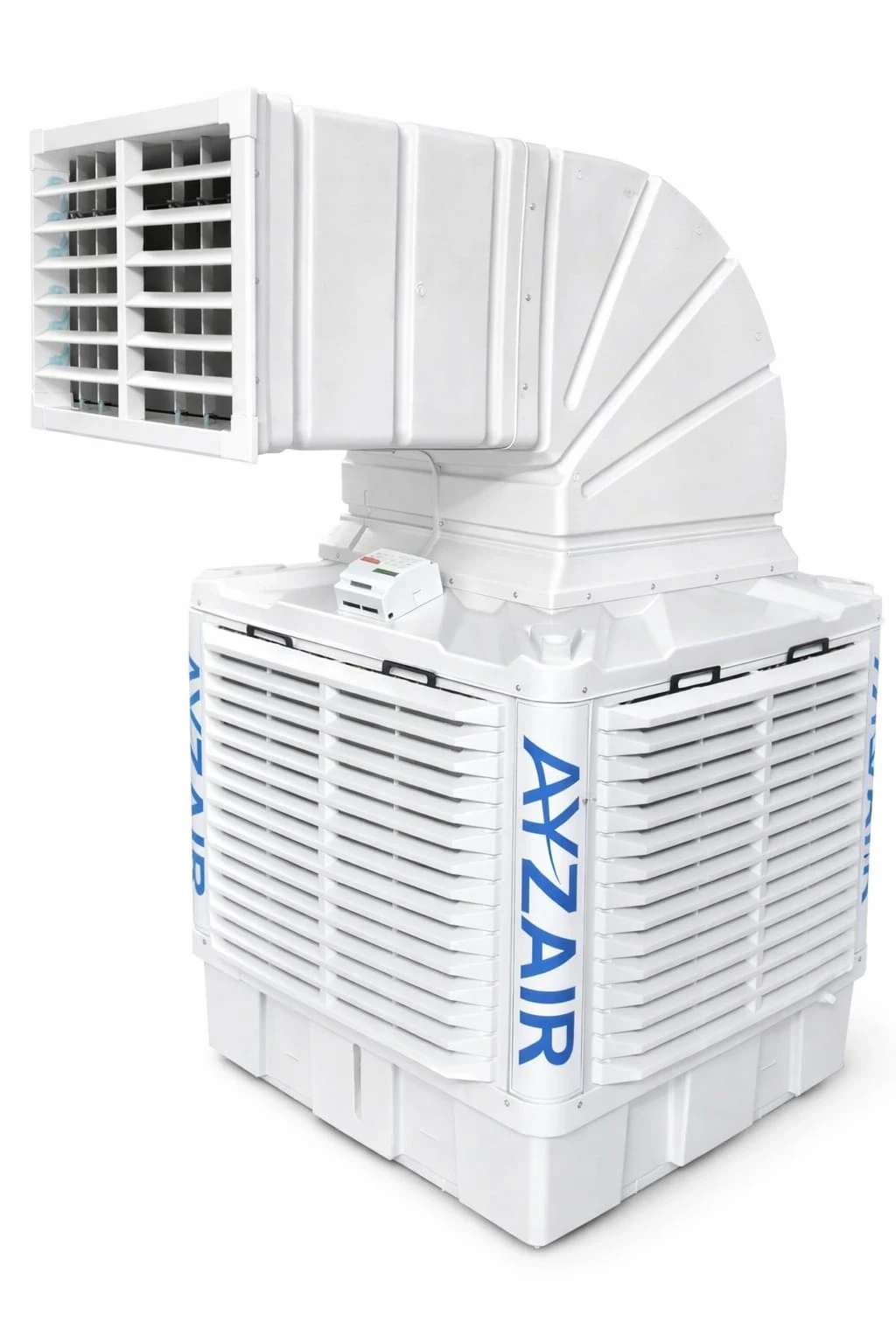
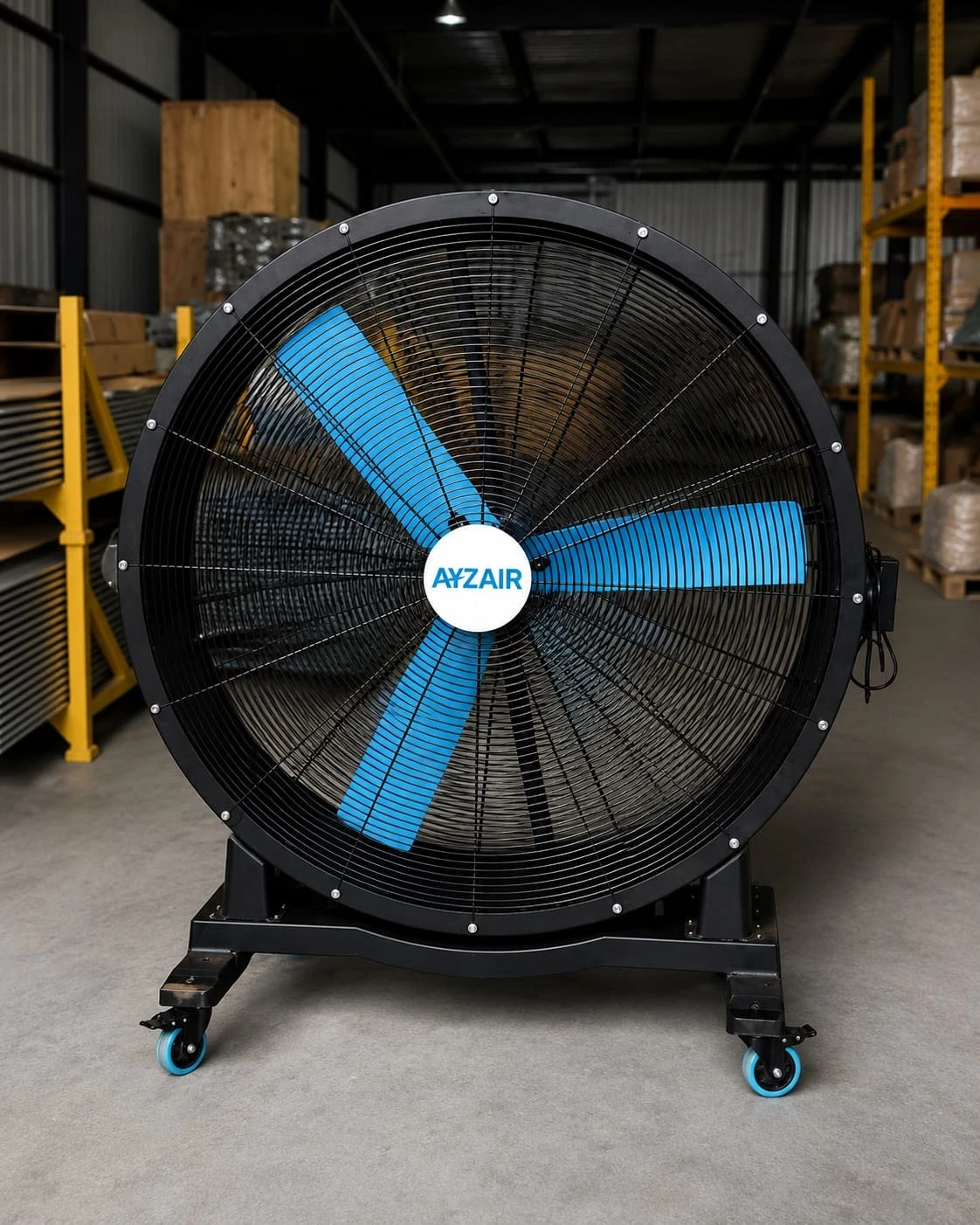
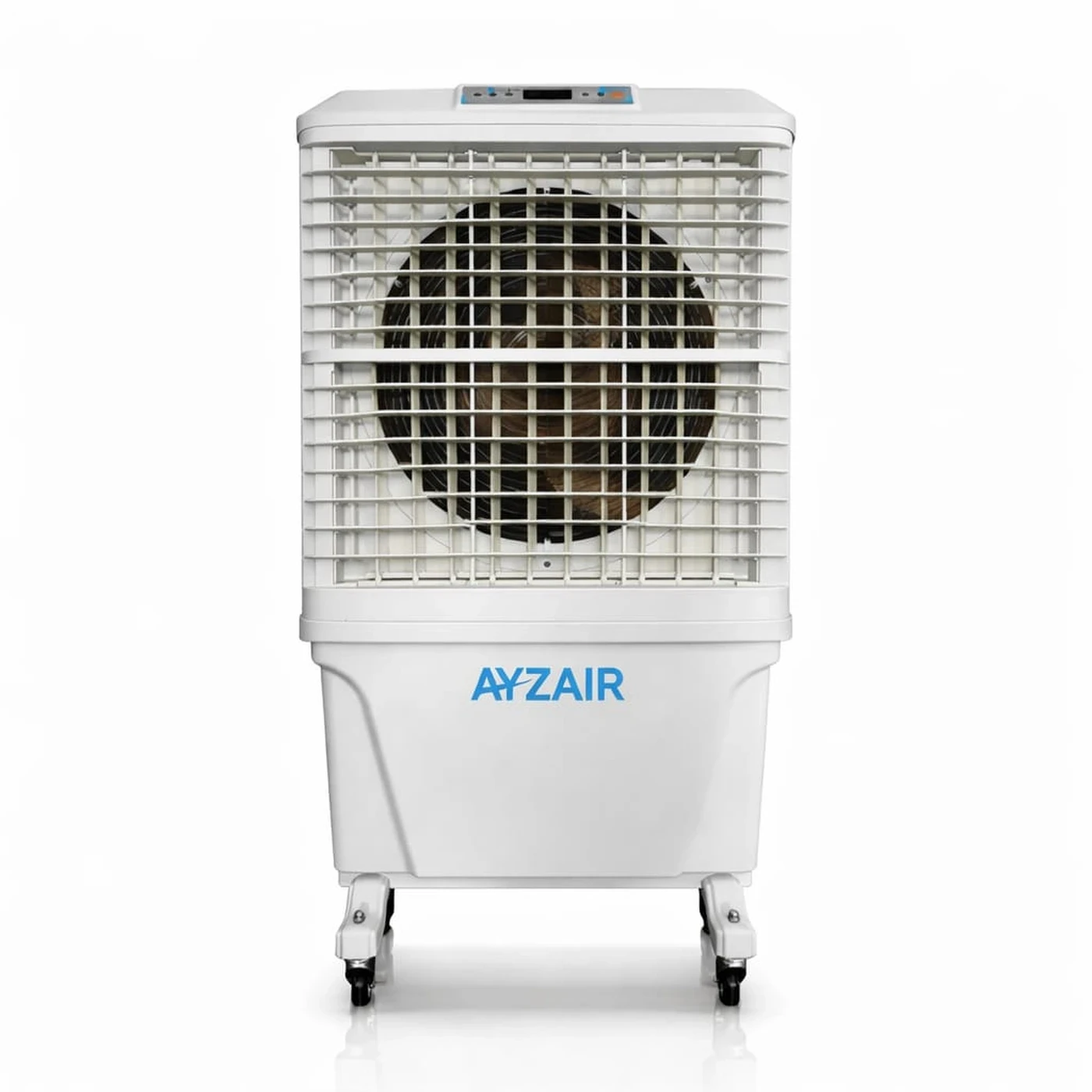
All six Ayzair families, supplied in St Petersburg.
Every product we make is available in St Petersburg. They are ordered by how well each one suits the local climate and the industries here, but nothing is off the list.
Where we supply
Industrial areas of St Petersburg.
Who buys here
Industries in St Petersburg.
- Automotive assembly and components
- Shipbuilding and marine repair
- Heavy machinery and metalwork
- Port and container logistics
- Food processing and brewing
- Printing and packaging
Worth knowing locally
- Supply is 380 V three phase 50 Hz, matching the motors as built, and the drive supplied with each HVLS fan gives the low winter speed that damp buildings need.
- EAC certification under the Eurasian Economic Union technical regulations, TR CU, is required for import, not CE marking; the importer of record arranges it and our CE and IEC test evidence is supplied to support the file.
- In unheated or intermittently heated stores the fan should run continuously at low speed through the damp months, because it is the still air in corners and under the deck that lets condensation start.
St Petersburg enquiry
Get a proforma invoice for St Petersburg.
Tell us the building — area, roof height and what happens inside — or name the models and quantities you already know you need. You will get USD pricing, your Incoterm, a container loading plan and a confirmed lead time within one working day.
Export desk
Answers
Supplying St Petersburg — common questions
Cannot find what you need? Call +91 80871 10156 or WhatsApp us — an engineer, not a call centre, picks up.
Ask on WhatsAppCan air movement really reduce condensation in a Baltic warehouse?
It reduces where and how often it forms. Condensation appears when moist air meets a surface below its dew point, which happens most readily in still corners and against cold roof sheets. Continuous gentle mixing evens out surface and air temperatures across the building, and paired extraction removes the moisture brought in with goods instead of letting it recirculate.
Which certification applies to equipment imported into Russia?
EAC marking under the Eurasian Customs Union technical regulations, usually referred to as TR CU. CE marking has no legal standing for this import. The Russian importer of record holds the certificate or declaration, issued by an accredited certification body, and we supply CE, IEC, LVD and EMC reports, wiring diagrams and motor data as the technical evidence behind it.
Are these fans suitable for a shipyard or a heavy fabrication shed?
Yes, in the covered halls. Fabrication bays, paint preparation areas, plate stores and assembly sheds all stratify badly and all generate fume that needs moving, so a combination of large diameter ceiling fans and wall extraction is the normal specification. Open slipways and quaysides cannot hold conditioned air, so only extraction and local spot fans make sense there.
Nearby
Also supplied across Russia.
Next step
Shipping to St Petersburg?
Send your requirement and we will confirm the freight route, transit time, landed cost and whether our equipment genuinely suits St Petersburg conditions — before you commit to anything.