
Poland
Industrial cooling and ventilation in Katowice
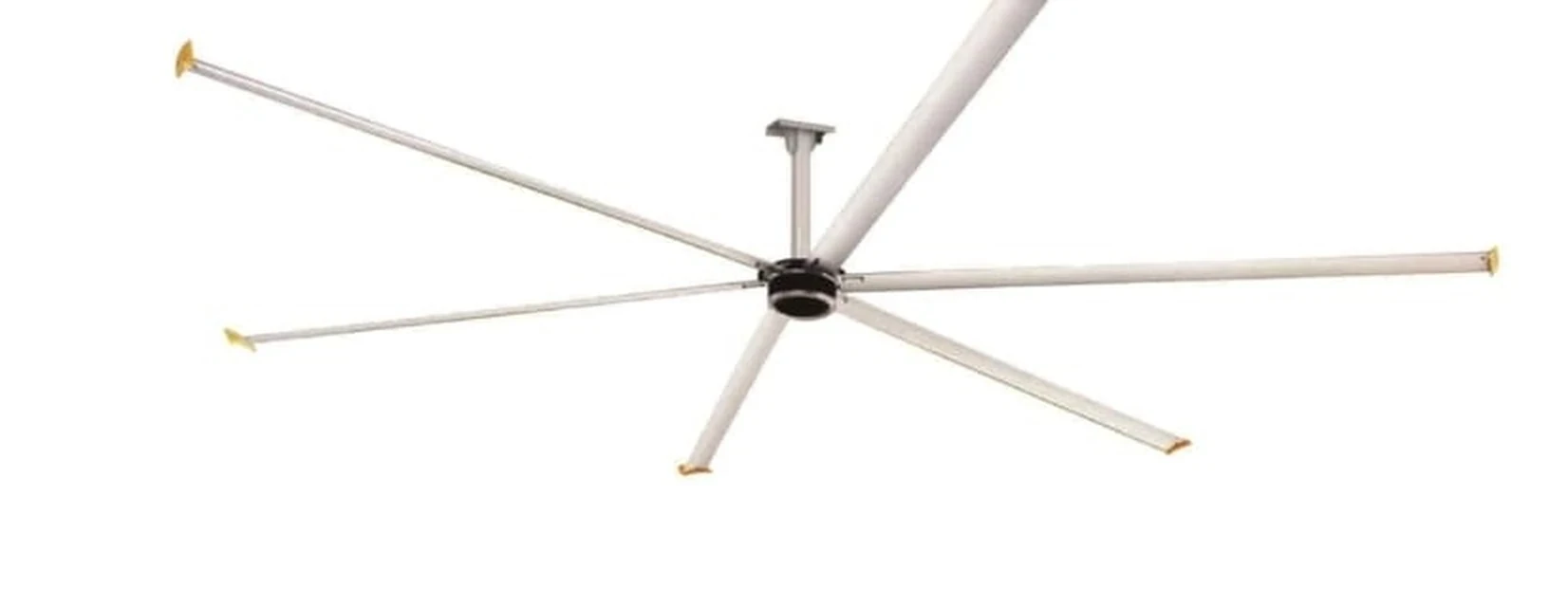
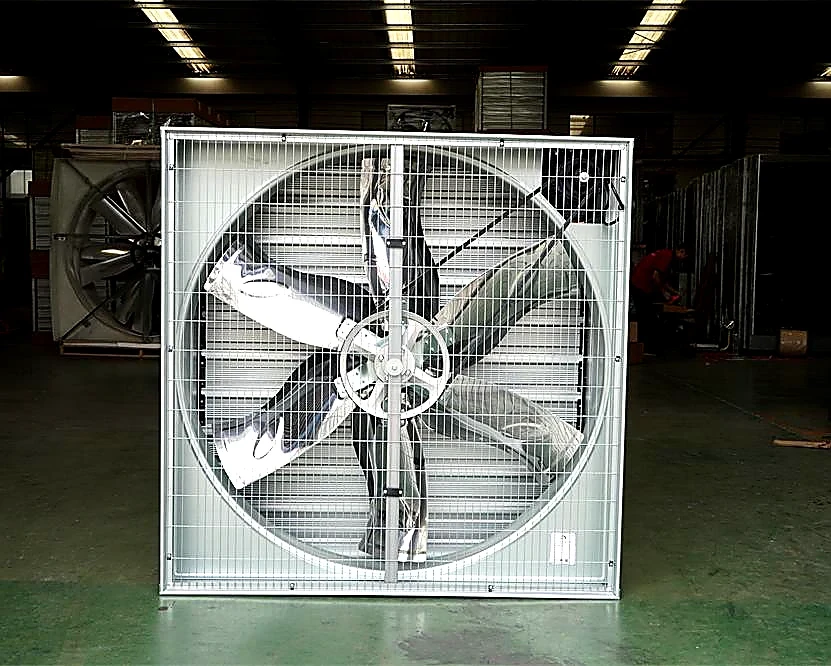
Upper Silesia is the densest industrial region in Poland and its buildings are old, tall and hot in the wrong places. The Katowice Special Economic Zone spreads across Gliwice, where Stellantis assembles vans, Tychy with automotive and brewing plants, Sosnowiec, and Dąbrowa Górnicza where the steelworks and coking operations sit. Around them are coal handling yards, foundries, rolling mills, wire and tube works and machine shops under roofs of 15 metres and more. Two arguments apply at once here, and they pull in opposite directions. In a mill building the first job is extraction, because welding fume, foundry smoke and hot process air have to leave before anything else helps, and large diameter wall or gable exhaust fans do that at a cost per cubic metre nothing else matches. In a heated assembly hall, parts store or paint prep area the requirement inverts: hold warm air down at working level instead of paying to heat roof steel twice over.
Katowice climate — the honest version
Upper Silesia combines a cold continental winter near -3 °C with a dense industrial basin where summer air stagnates and smog inversions form, so the year divides between heating months when warm air escapes to the roof and warm months when process heat has to be pushed out of the building.
Cargo lands at Gdańsk or Gdynia about 25 to 32 days out of Nhava Sheva, then moves 500 km south on the A1 motorway or by container rail shuttle into the Silesian terminals, adding one to two days · CIF and CFR both available.
6families
Complete range supplied here
34models
Every model available to order
10–20days
Production lead time
24hrs
Sizing and quotation
The complete range
All six Ayzair families, supplied in Katowice.
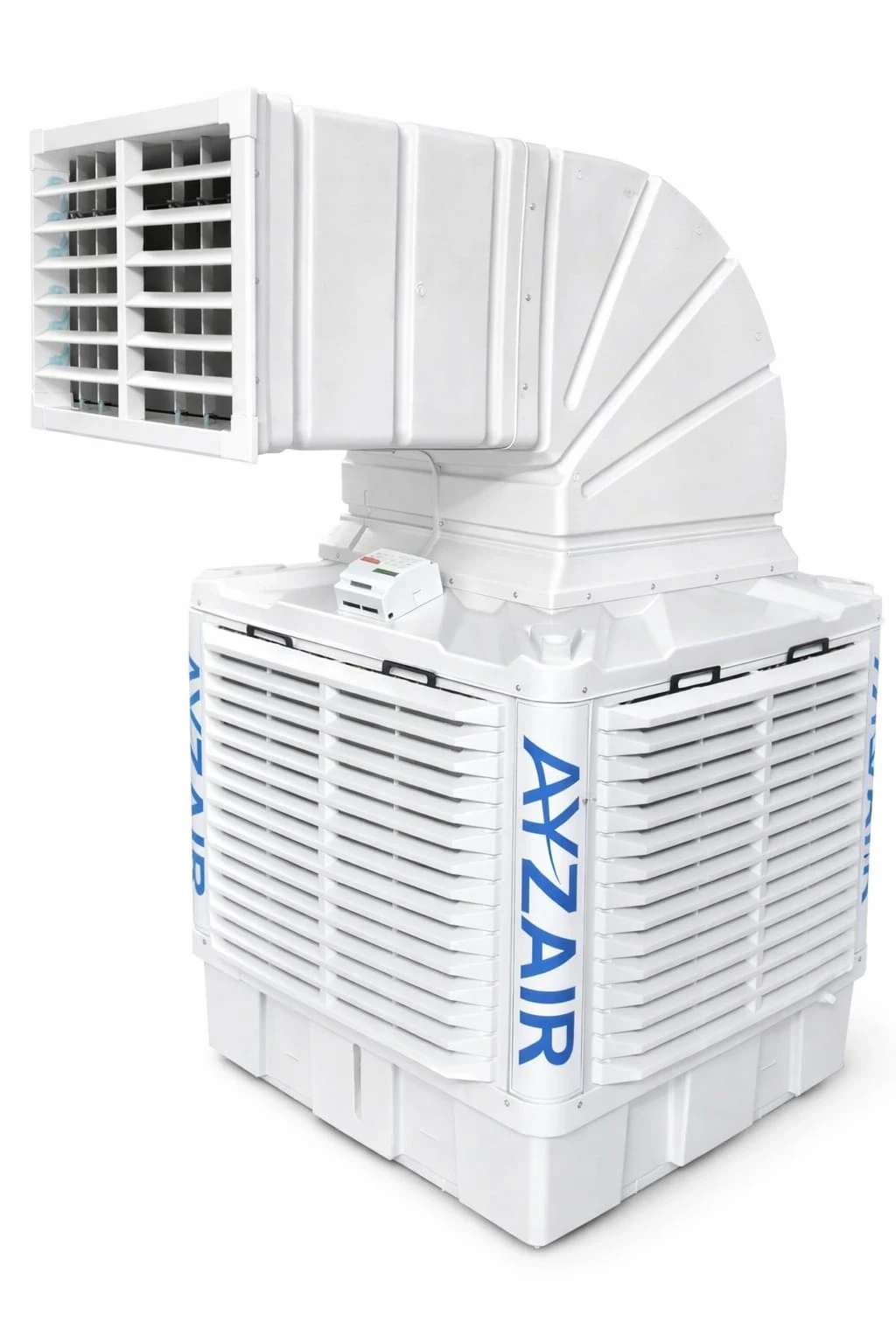
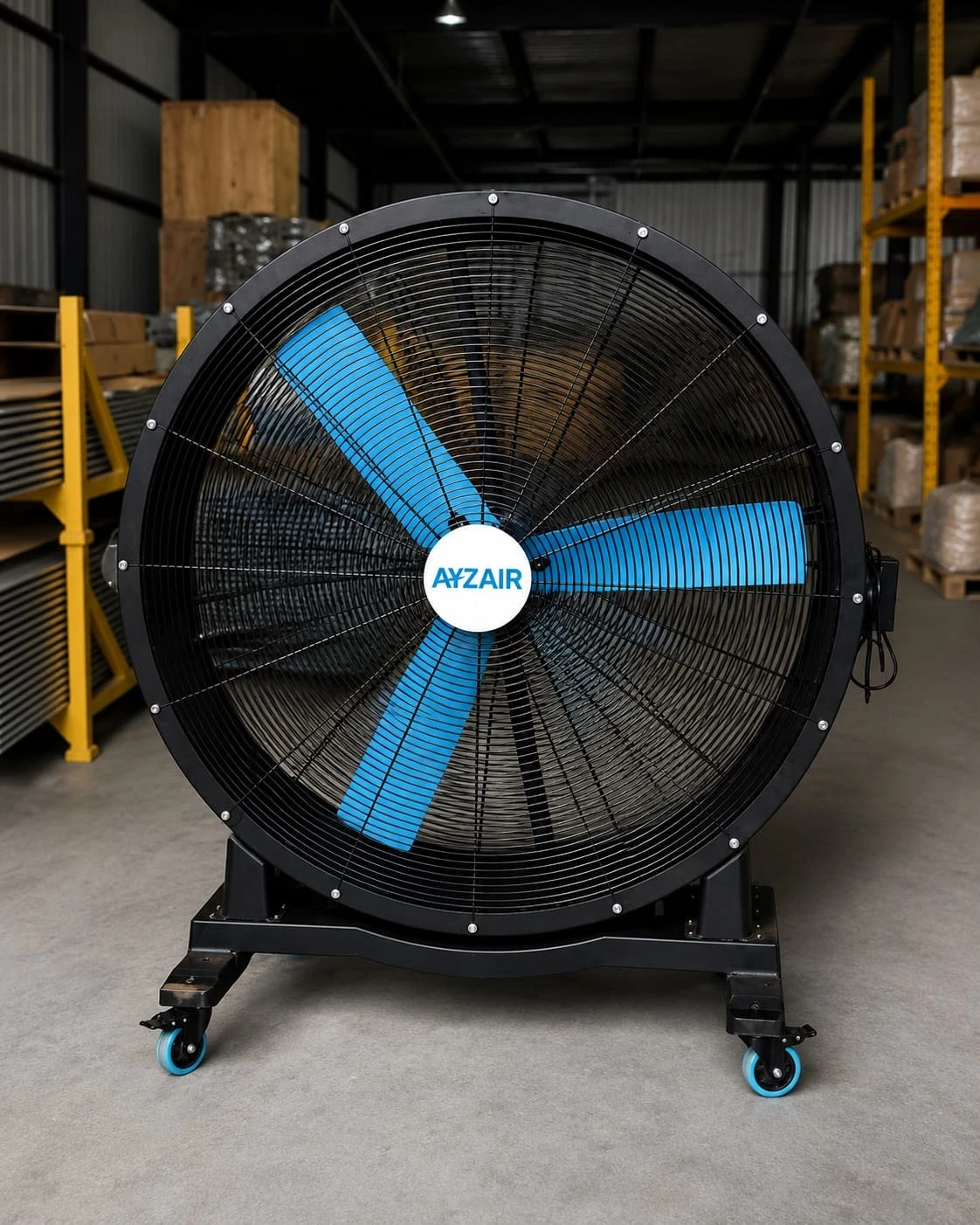
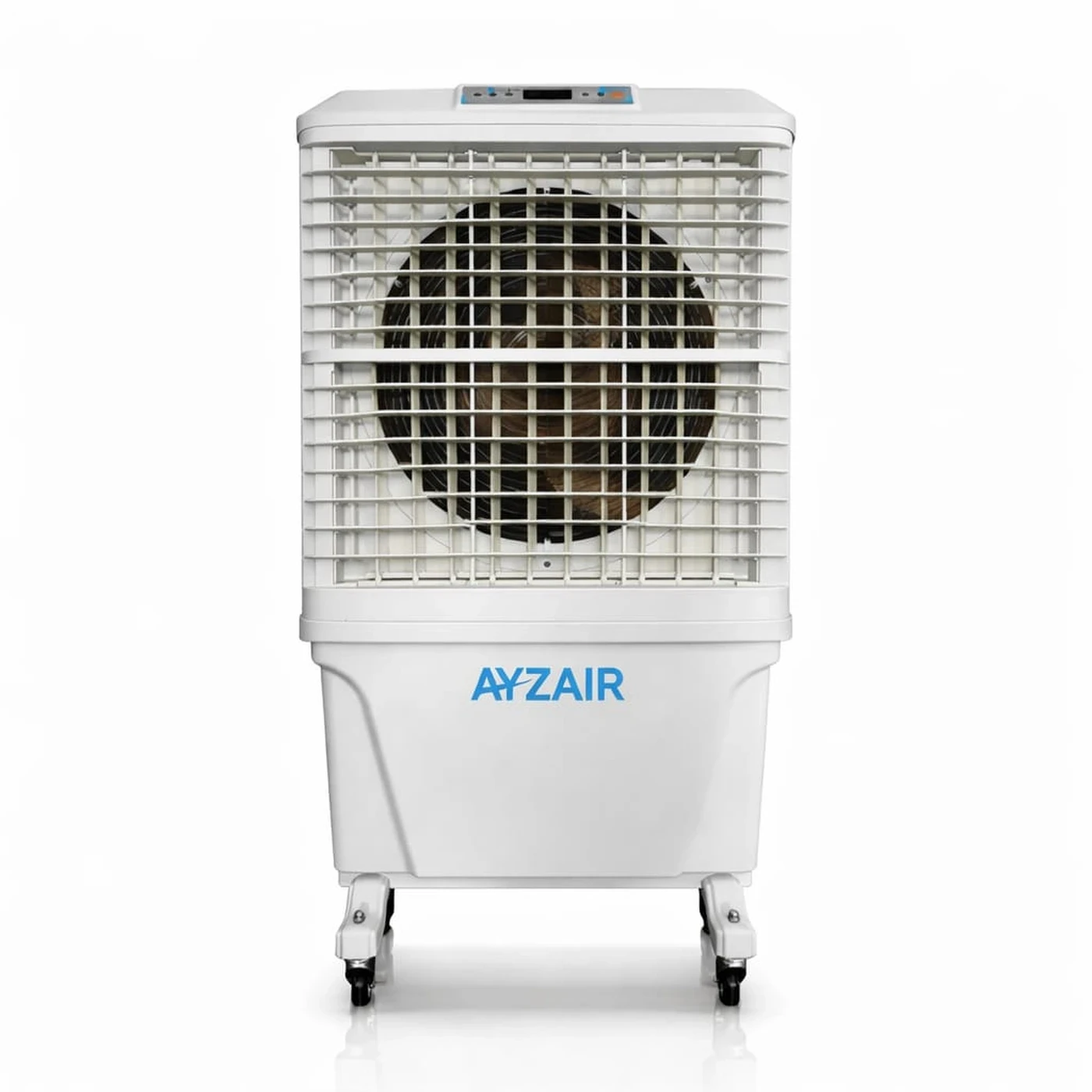
Every product we make is available in Katowice. They are ordered by how well each one suits the local climate and the industries here, but nothing is off the list.
Where we supply
Industrial areas of Katowice.
Who buys here
Industries in Katowice.
- Steel, coking and rolling mills
- Foundries and heavy engineering
- Automotive assembly and components
- Coal handling and mining equipment
- Brewing and food manufacture
- Logistics and warehousing
Worth knowing locally
- Silesian plants run 400 V three phase 50 Hz, matching the motors as built, and heavy users frequently already have the spare starter capacity a 1.5 kW fan needs.
- Import is under EU rules with CE marking and a Machinery Directive declaration of conformity, which also satisfies the documentation a plant safety engineer files for a new fixed installation.
- In foundries and mills the extraction duty should be calculated from air changes per hour for the hot bay rather than from floor area, because process heat, not occupancy, sets the volume needed.
Katowice enquiry
Get a proforma invoice for Katowice.
Tell us the building — area, roof height and what happens inside — or name the models and quantities you already know you need. You will get USD pricing, your Incoterm, a container loading plan and a confirmed lead time within one working day.
Export desk
Answers
Supplying Katowice — common questions
Cannot find what you need? Call +91 80871 10156 or WhatsApp us — an engineer, not a call centre, picks up.
Ask on WhatsAppWhich comes first in a foundry or rolling mill, extraction or destratification?
Extraction. Where a process releases heat, fume or smoke continuously, that air has to leave the building before any mixing strategy makes sense, so high volume exhaust fans on the gable or ridge are specified first. Destratification fans then earn their place in the adjoining heated spaces, the assembly bays, stores and maintenance workshops rather than in the hot bay itself.
How large can a Hammer exhaust fan be for a Silesian mill building?
The range runs from 200 mm up to 1750 mm. For mill and foundry work the 1250 to 1750 mm sizes are the usual choice, since a small number of large slow fans is quieter, cheaper to run and easier to maintain than many small units. The final count is set by the air change rate required for the hot bay.
Do older Silesian buildings pose any installation problems?
Frequently. Pre-1990 halls have heavy roof trusses, crane rails, gantries and services at awkward heights, so we ask for structural drawings and a clear height under the lowest obstruction before fixing diameters. In many cases two or three smaller fans set between crane runs work better than one large unit that cannot be centred where the heat actually collects.
Nearby
Also supplied across Poland.
Next step
Shipping to Katowice?
Send your requirement and we will confirm the freight route, transit time, landed cost and whether our equipment genuinely suits Katowice conditions — before you commit to anything.