
Philippines
Industrial cooling and ventilation in Manila
Manila’s manufacturing sits in a ring around the capital rather than in it. Valenzuela and Caloocan to the north are packed with food and beverage plants, plastics moulders, packaging converters and steel merchants, Pasig and the Ortigas fringe hold printing, light assembly and distribution, Parañaque and the Sucat corridor run cold stores and freight depots feeding the port and airport, and the Cavite Economic Zone to the south takes export oriented electronics, garments and food processing. A great deal of this stock is older low rise shed with sheet roofing, no insulation and roller shutters that stay open all day. Add typhoon season, coastal salt and a grid running at a frequency most exporters get wrong, and the specification matters as much as the product. What works is overhead air movement, honest extraction rates and corrosion resistant housings.
Manila climate — the honest version
Metro Manila holds 31–35 °C with humidity between 75 and 90 percent for most of the year and a monsoon season that brings typhoon rain rather than cooler air, so evaporative cooling has almost nothing to work with and ventilation carries the whole burden.
Containers discharge at the Port of Manila, either Manila International Container Terminal or South Harbour, after 14 to 19 days from Nhava Sheva or Chennai · road delivery to Valenzuela or Cavite is a day, though city truck ban hours shape the schedule.
6families
Complete range supplied here
34models
Every model available to order
10–20days
Production lead time
24hrs
Sizing and quotation
The complete range
All six Ayzair families, supplied in Manila.
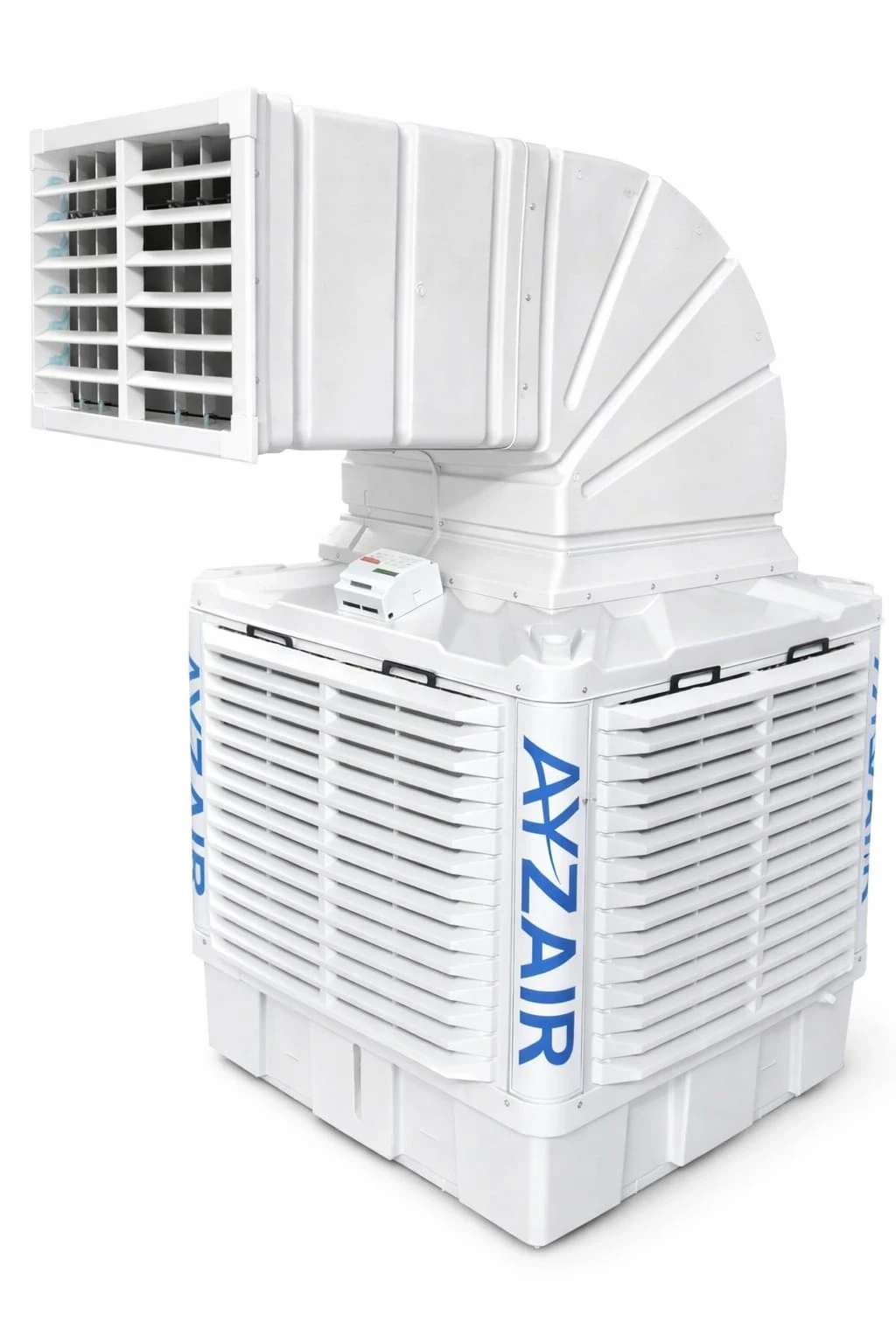
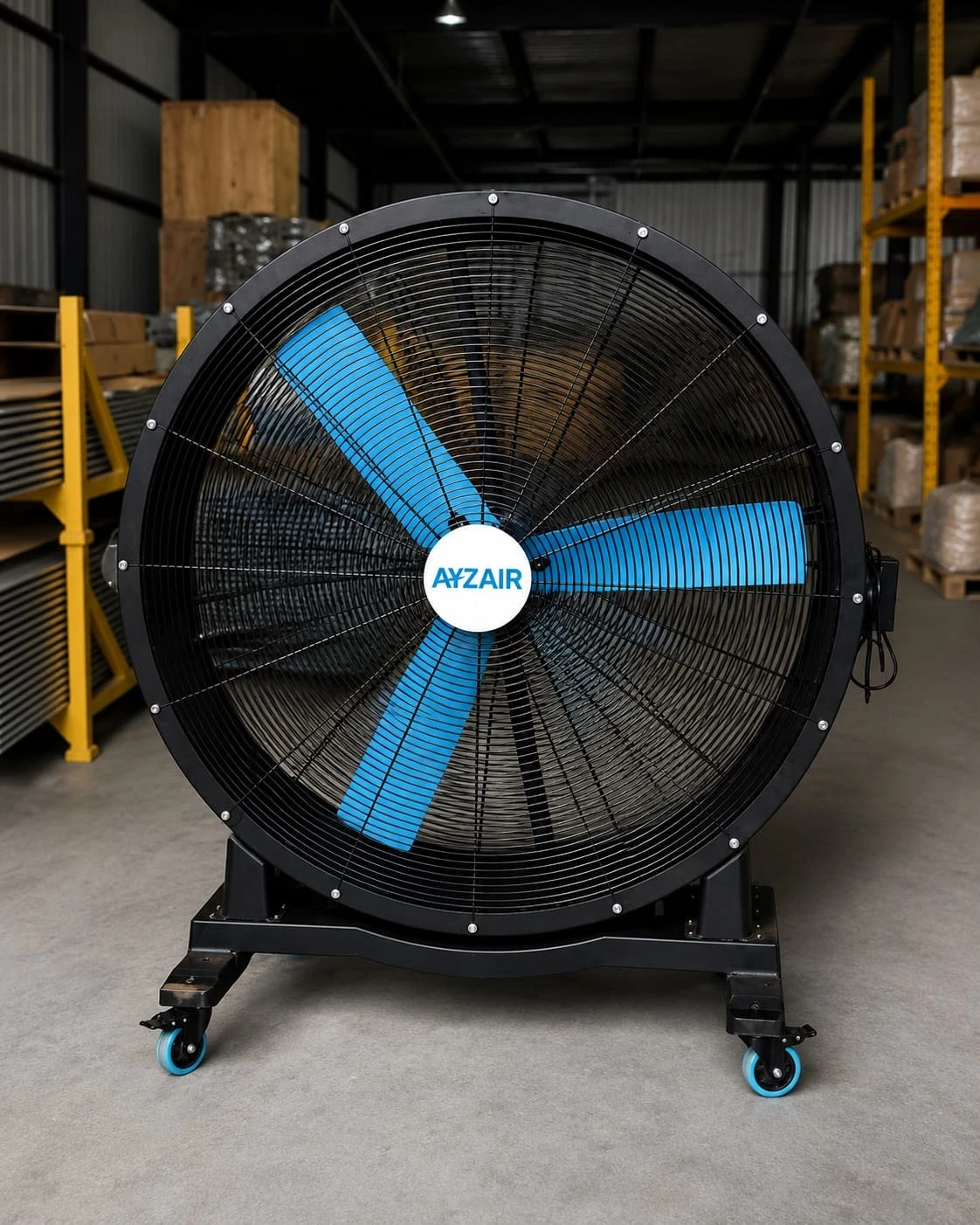
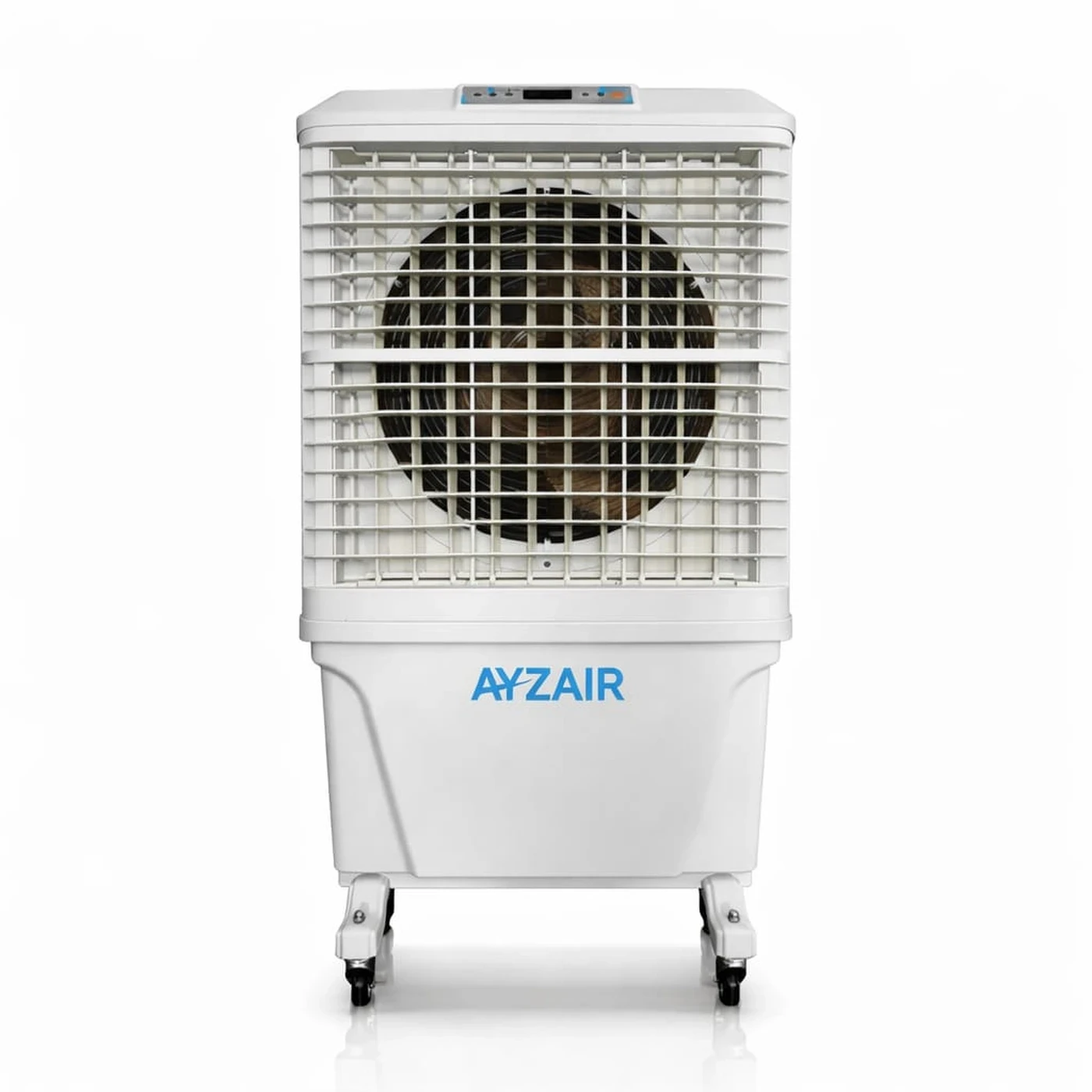
Every product we make is available in Manila. They are ordered by how well each one suits the local climate and the industries here, but nothing is off the list.
Where we supply
Industrial areas of Manila.
Who buys here
Industries in Manila.
- Food and beverage manufacture
- Packaging, cartons and containers
- Warehousing and distribution
- Plastics and injection moulding
- Commercial printing
- Cold chain and frozen storage
Worth knowing locally
- The Philippine grid runs 220 V single phase and 380 V three phase at 60 Hz, not the 50 Hz used across India and the Gulf, so every motor on a Manila order is wound specifically for 60 Hz before despatch rather than adapted afterwards.
- Electrical products need the PS or ICC mark administered by the Bureau of Philippine Standards under the Department of Trade and Industry. The CE declaration, IEC test reports and factory test certificate supplied with the goods are the technical basis for the ICC application your importer files.
- Coastal and semi open sheds around Parañaque and the port area should be specified with epoxy coated housings, stainless fasteners and sealed IP55 motors, because salt air and typhoon driven rain reach equipment that looks sheltered.
Manila enquiry
Get a proforma invoice for Manila.
Tell us the building — area, roof height and what happens inside — or name the models and quantities you already know you need. You will get USD pricing, your Incoterm, a container loading plan and a confirmed lead time within one working day.
Export desk
Answers
Supplying Manila — common questions
Cannot find what you need? Call +91 80871 10156 or WhatsApp us — an engineer, not a call centre, picks up.
Ask on WhatsAppWhy does the 60 Hz supply matter when ordering fans?
A motor designed for 50 Hz and run on 60 Hz turns roughly 20 percent faster, which raises the power drawn by the fan sharply, overloads the winding and shortens motor life. It is the single most common mistake made importing air movement equipment into the Philippines. Ayzair builds Philippine orders to 60 Hz from the start, so the rating on the plate is the real duty.
How should equipment be specified for typhoon exposure?
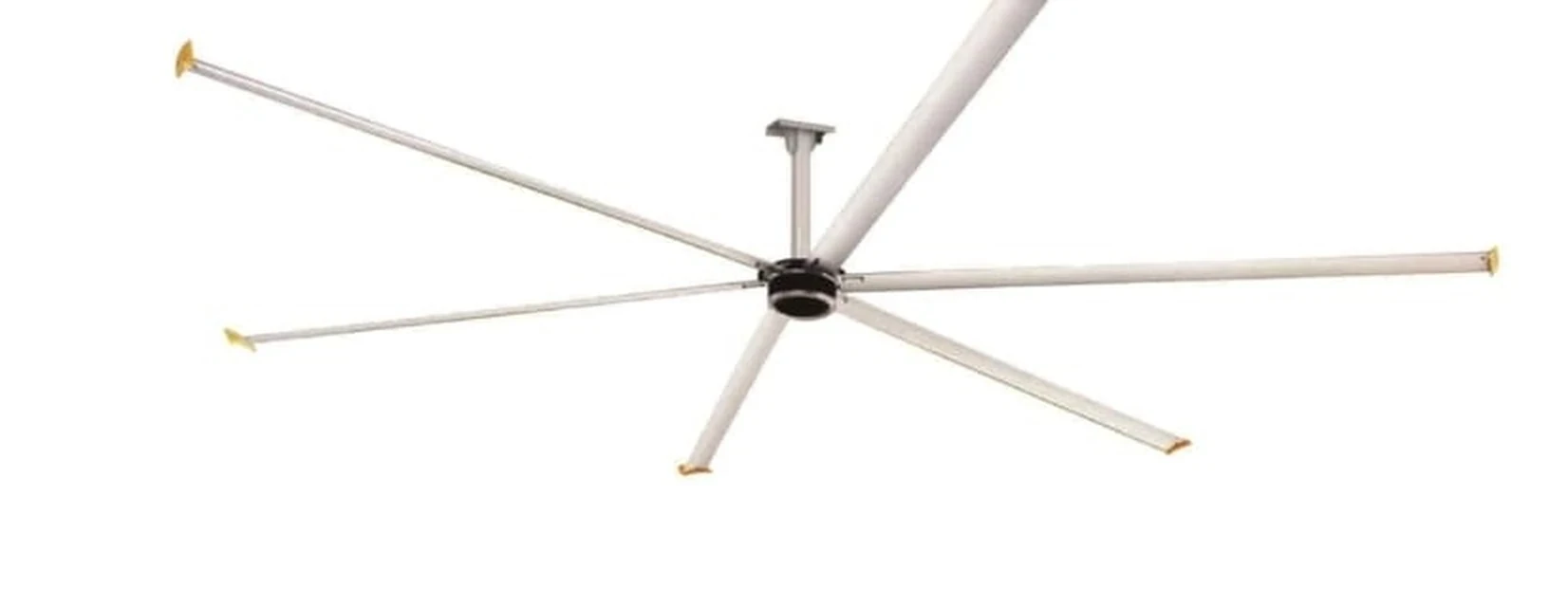
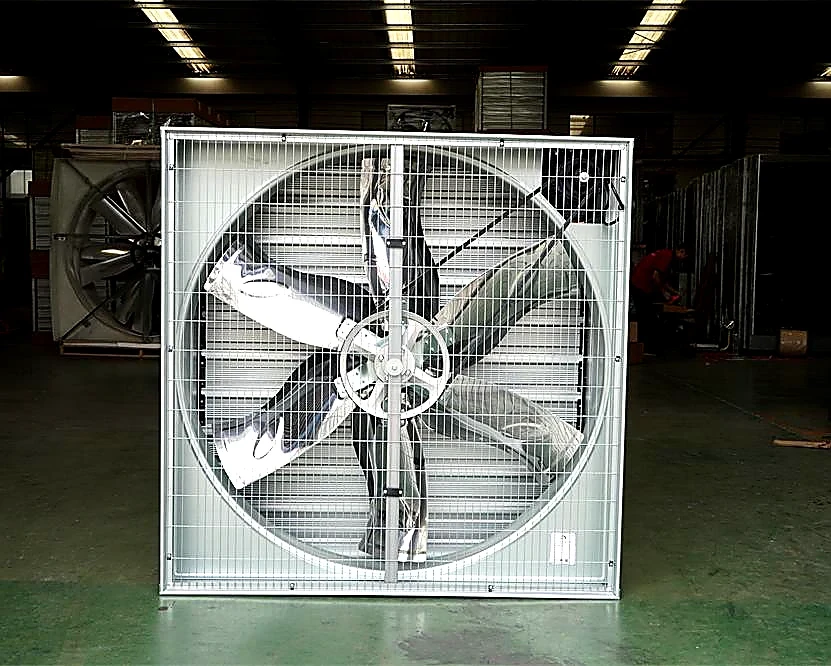
Exhaust fans on external walls need the housing fixed to a properly designed opening with weather louvres and a back draught shutter, so wind driven rain cannot enter when the fan is off. HVLS fans are inside and unaffected, but the safety cable and mounting to the roof steel should be checked against the building’s own wind loading, especially on older sheet roofed sheds.
What is the right approach for a cold store loading dock in Parañaque?
The dock is where humid outside air meets chilled air, so the aim is to control mixing rather than to cool. An HVLS fan at low speed stops the warm layer stratifying above the dock, high volume exhaust fans clear engine heat and moisture from the dock apron, and door air management does the rest. Evaporative cooling would simply add water where condensation is already the problem.
Nearby
Also supplied across Philippines.
Next step
Shipping to Manila?
Send your requirement and we will confirm the freight route, transit time, landed cost and whether our equipment genuinely suits Manila conditions — before you commit to anything.