A fan does not cool air. Strictly, it warms it very slightly, because the motor's losses end up as heat in the airstream. What a fan does is move air across skin, and moving air carries away sweat and body heat far faster than still air does. The thermometer does not move; the person feels several degrees cooler.
That distinction decides whether a mobile fan is the right purchase. If the problem is that the building is hot, a fan will not fix it. If the problem is that the people in it are uncomfortable, a fan fixes it directly, cheaply, and without touching the structure.
What air movement is actually worth
The cooling effect of moving air is well documented and surprisingly large. Still air in a warm workshop feels its full temperature. Half a metre per second takes roughly a degree off the perceived temperature. One metre per second is worth around three degrees, and two metres per second — a noticeable breeze — is worth four to five.
Beyond about three metres per second the returns flatten out and the nuisance begins: paperwork lifts, welding shields flutter, light components move on the bench. For most industrial work the useful band is one to two metres per second at the person, not as much air as the fan can possibly produce.
| Air velocity at the person | Feels cooler by | Typical use |
|---|---|---|
| 0.2 m/s (still) | — | Office, storage |
| 0.5 m/s | about 1 °C | Light assembly |
| 1.0 m/s | about 3 °C | General workshop |
| 2.0 m/s | 4–5 °C | Hot process, welding bay |
| 3.0 m/s + | little further gain | Drying, loading bays |
← Swipe the table sideways to see all columns
Where a mobile fan is the right tool
The case for a mobile unit is strongest when the heat problem is local and the layout is not fixed. A single machine that runs hot, a welding bay used three days a week, a loading dock that only suffers in the afternoon, a seasonal peak that does not justify permanent plant — all of these are better served by a fan that can be wheeled to the problem and wheeled away again.
It is also the right answer in a rented building, where anything bolted to the structure has to be negotiated with a landlord and left behind at the end of the lease. A mobile fan is equipment, not a building alteration. It needs an ordinary socket and no installation.
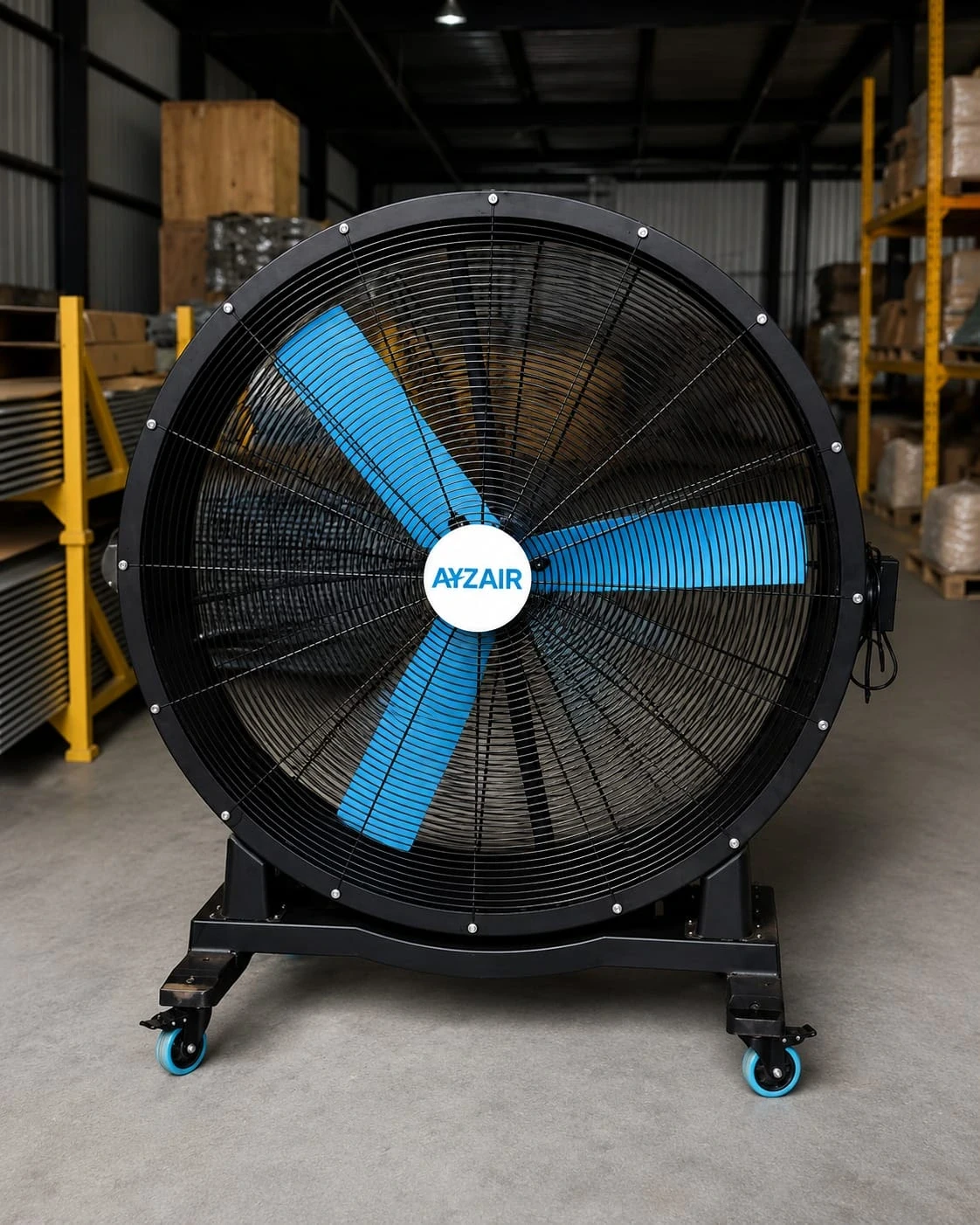
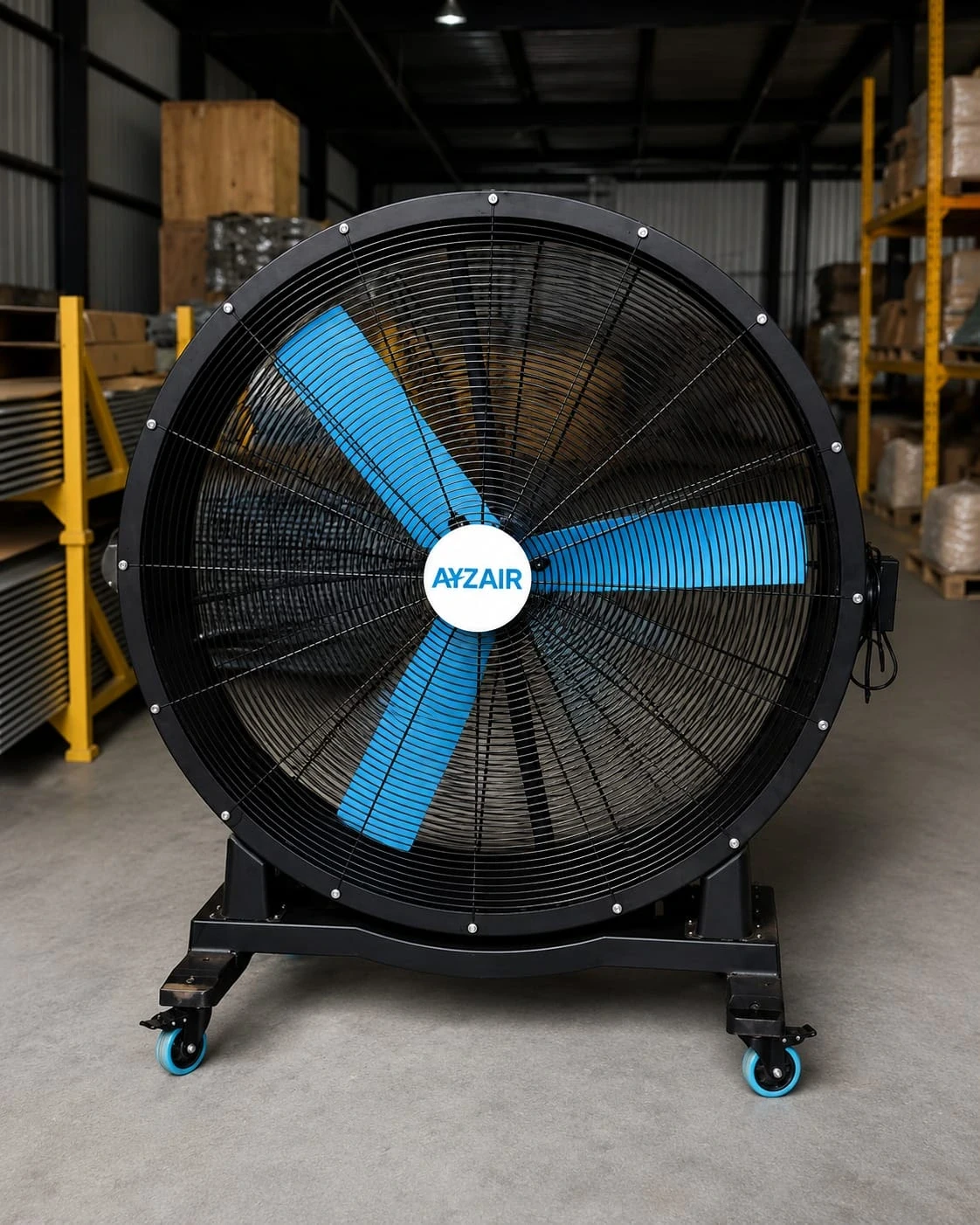
The AYZAIR 1500 is a 1.5 metre blade moving 38,000 m³/h on 370 W. That is a large volume of directed air for less power than a domestic hairdryer, from a single-phase socket, on a braked caster base.
- Heat is local — one machine, one bay, one shift
- Layout changes, or the building is rented
- Need is seasonal and does not justify fixed plant
- No budget or no shutdown window for installation
- Ceiling is too low for HVLS, which needs about 7 metres
Where a fixed installation wins instead
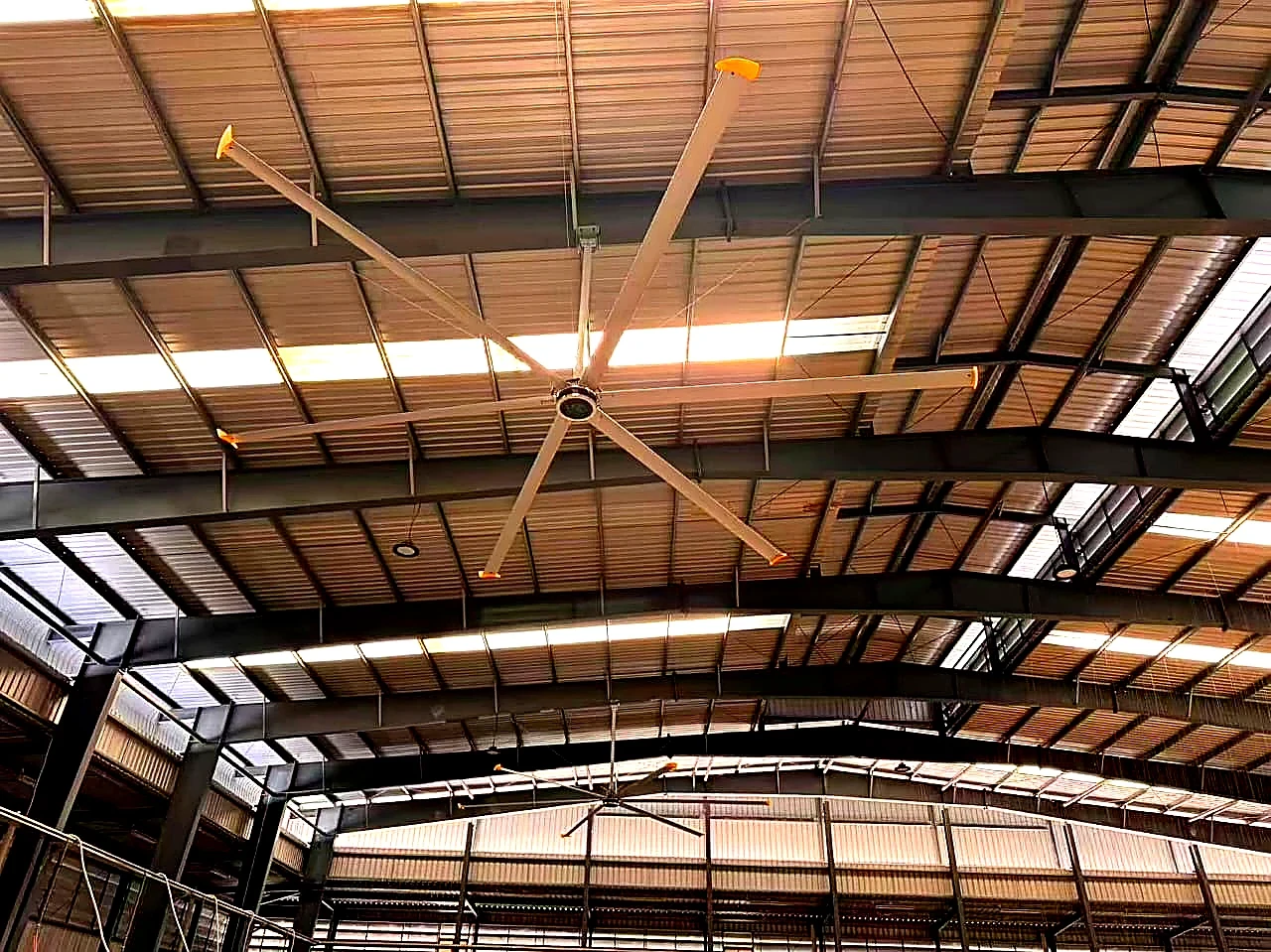
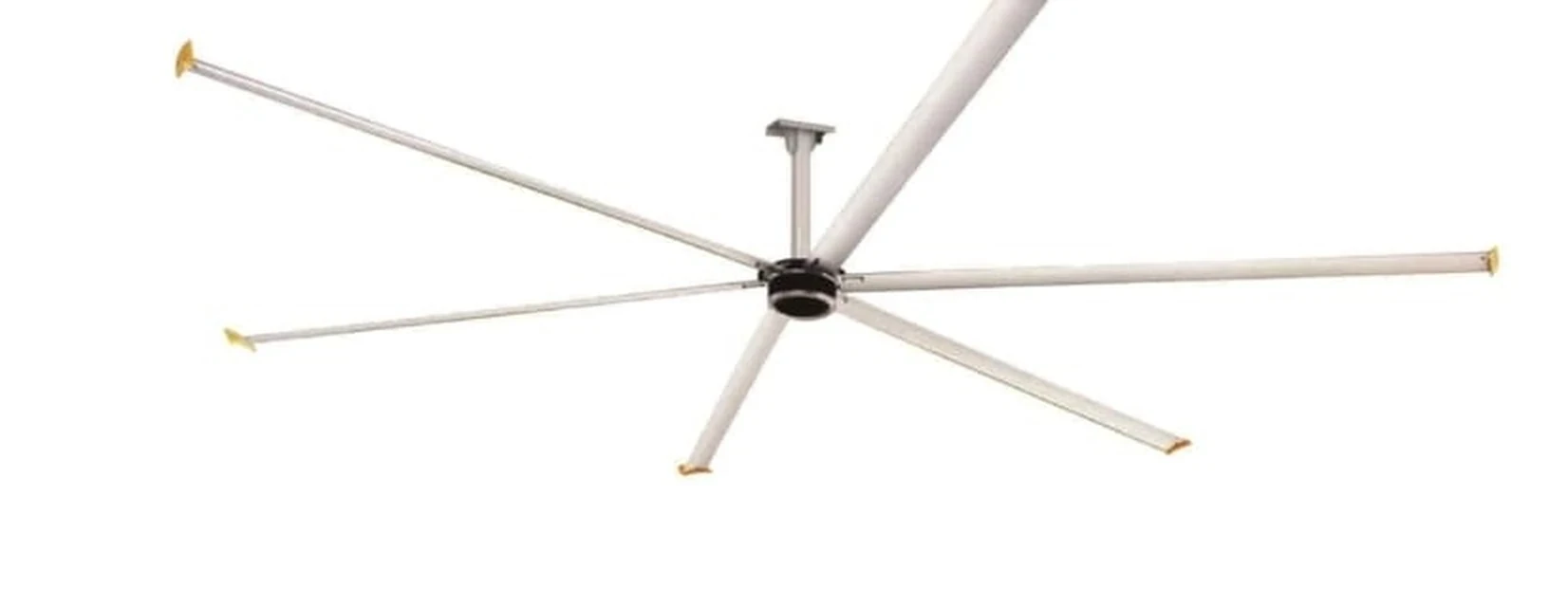
Once the whole floor is uncomfortable rather than one corner of it, mobile fans stop being economic. Covering a 4,000 m² shed with mobile units means a great many motors, a great many trailing leads, and nobody in charge of where they end up. One HVLS fan overhead covers up to 1,200 m² and leaves the floor clear.
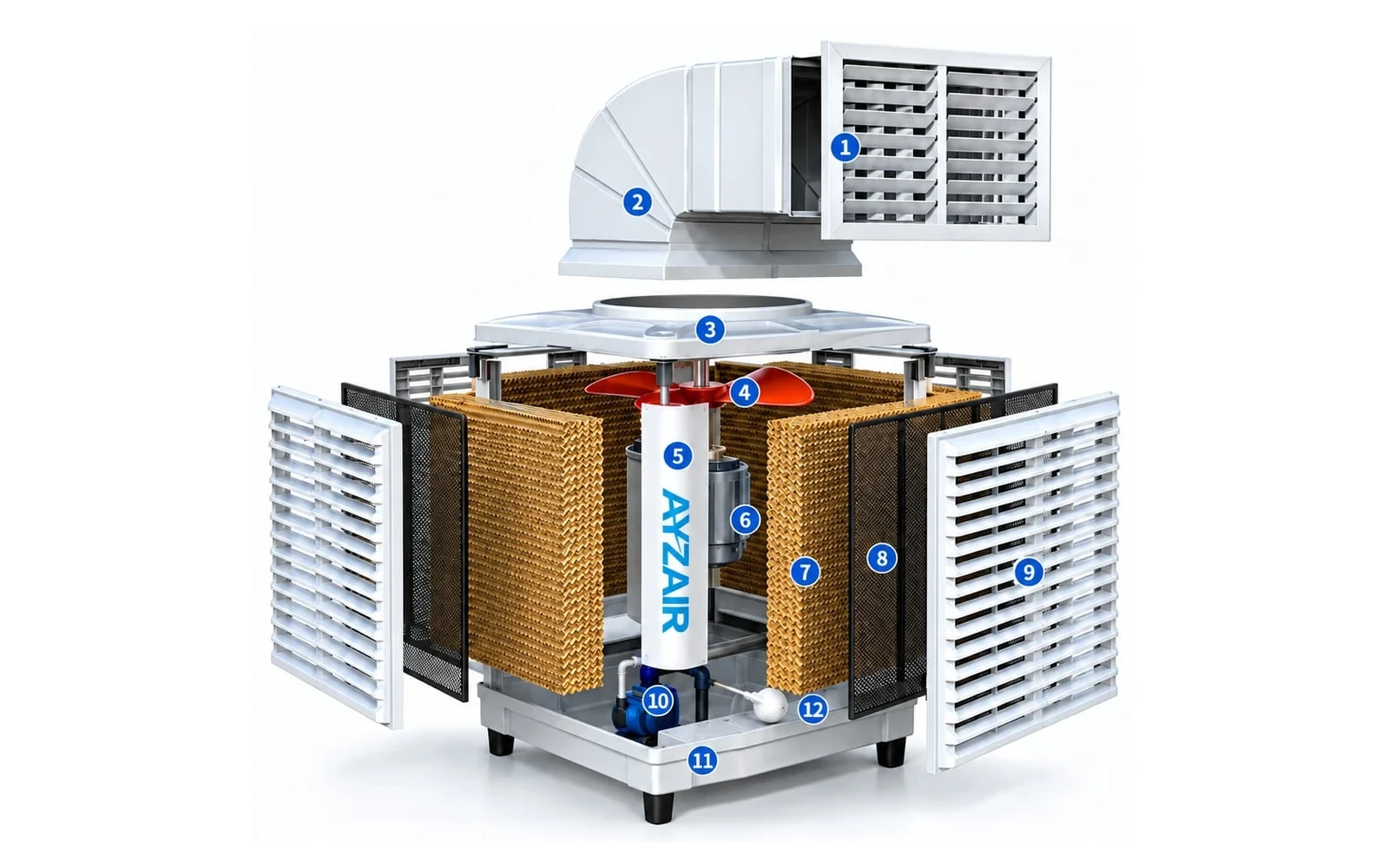
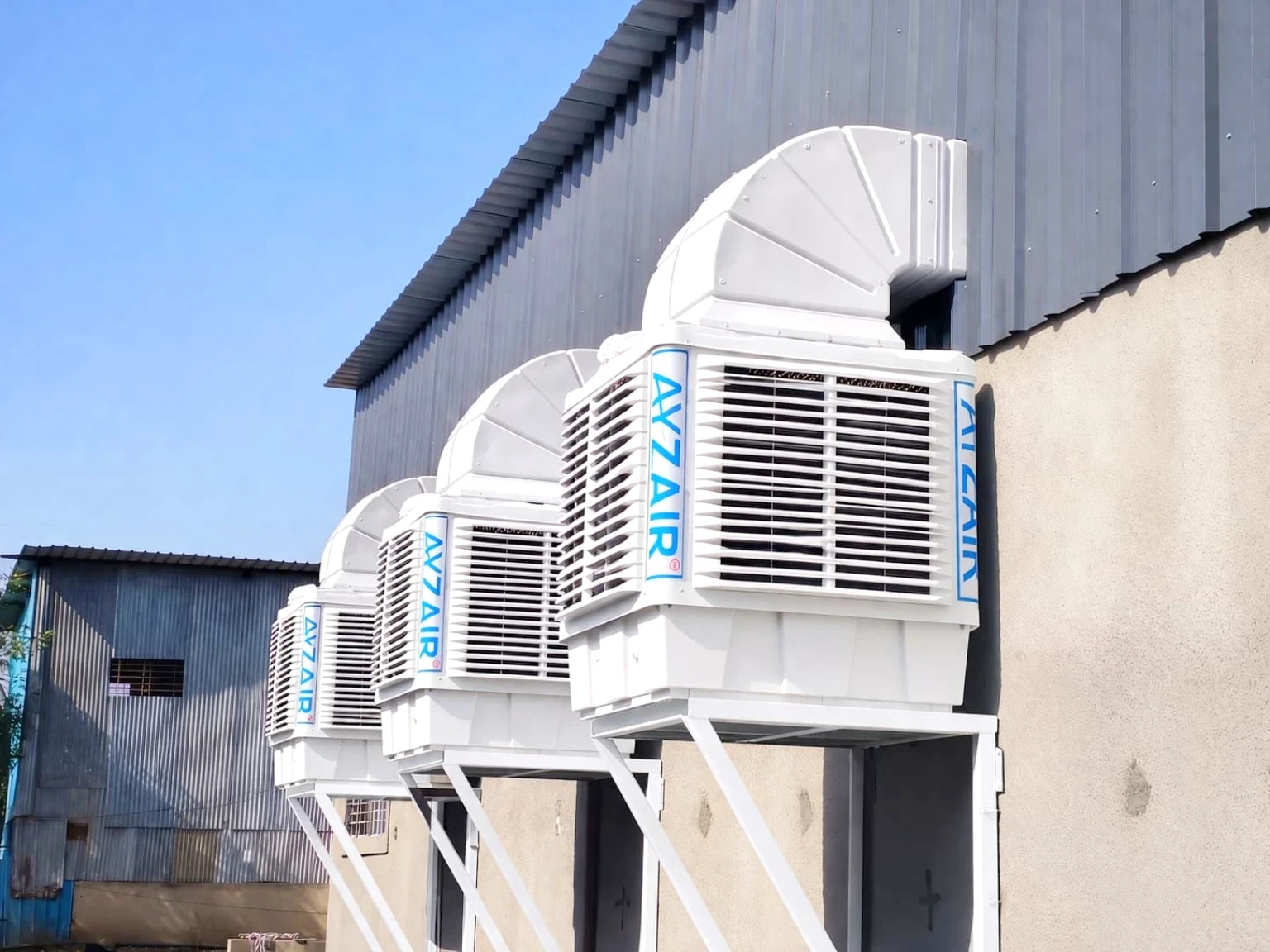
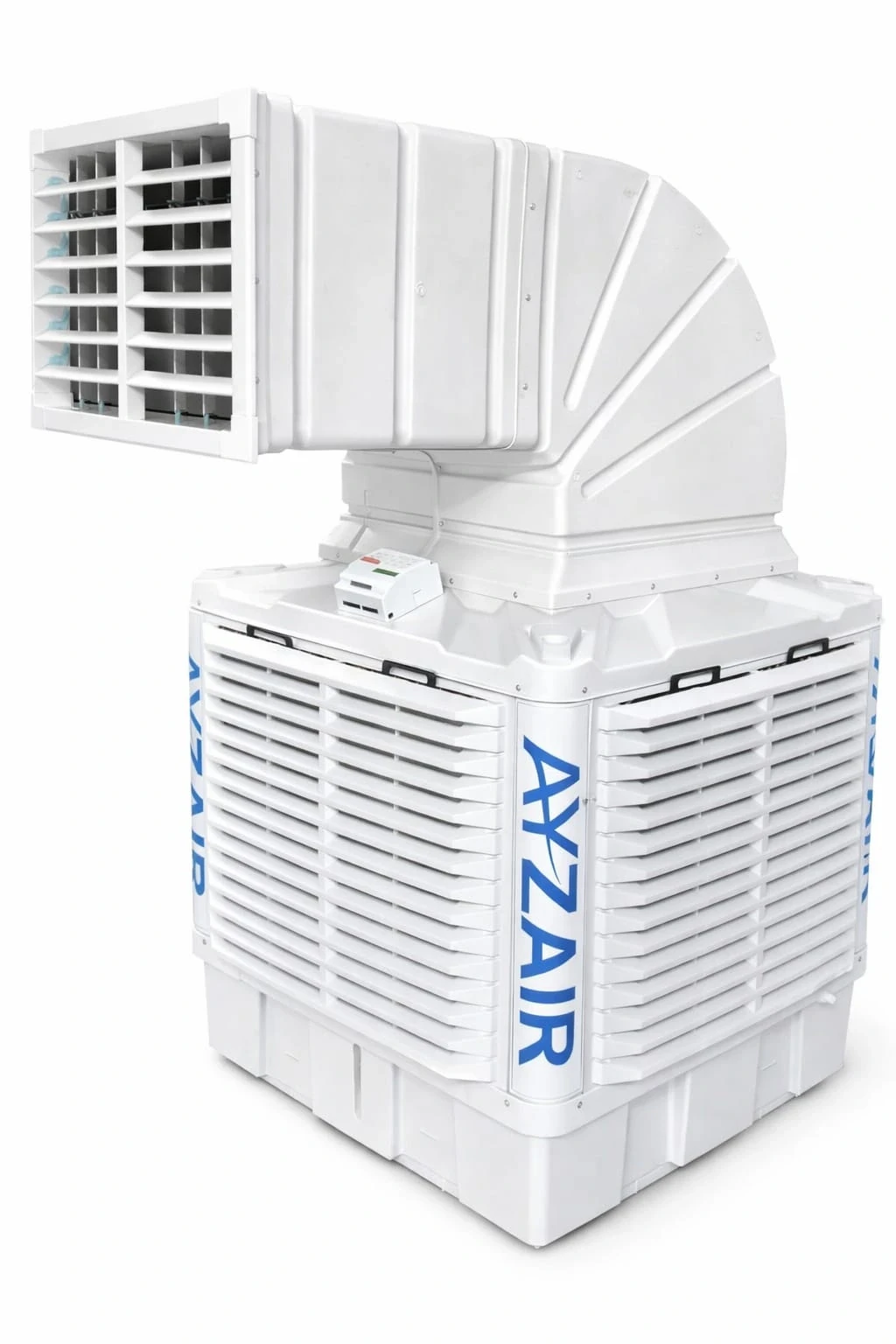
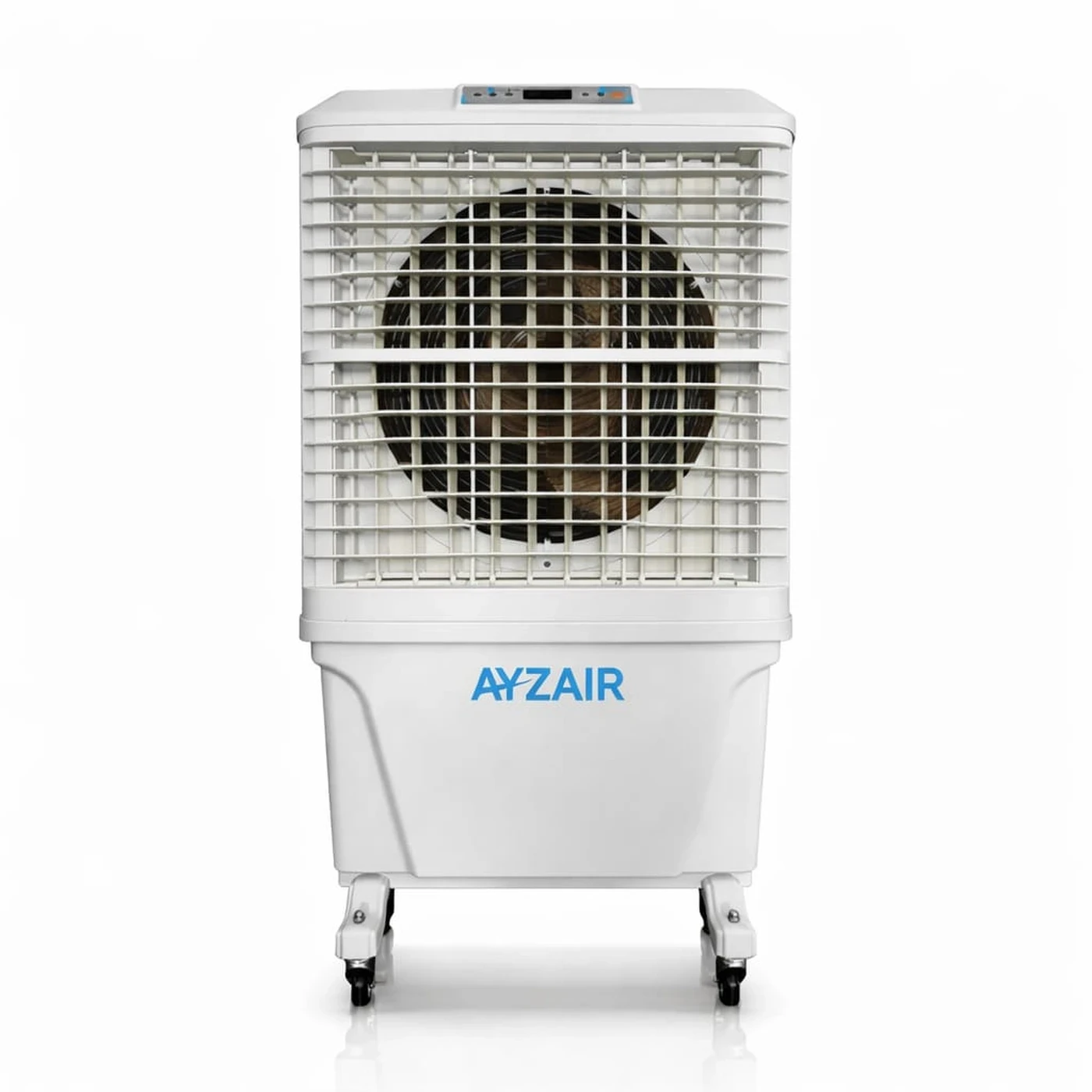
Fixed also wins where the air has to be treated rather than just moved. If the outside air is hot and dry, evaporative cooling genuinely lowers supply air temperature, and that needs ducted coolers, not fans. If the problem is fumes, moisture or process heat that has to leave the building, that is exhaust ventilation. Moving hot air around a sealed room makes the people in it feel better and does nothing about the building.
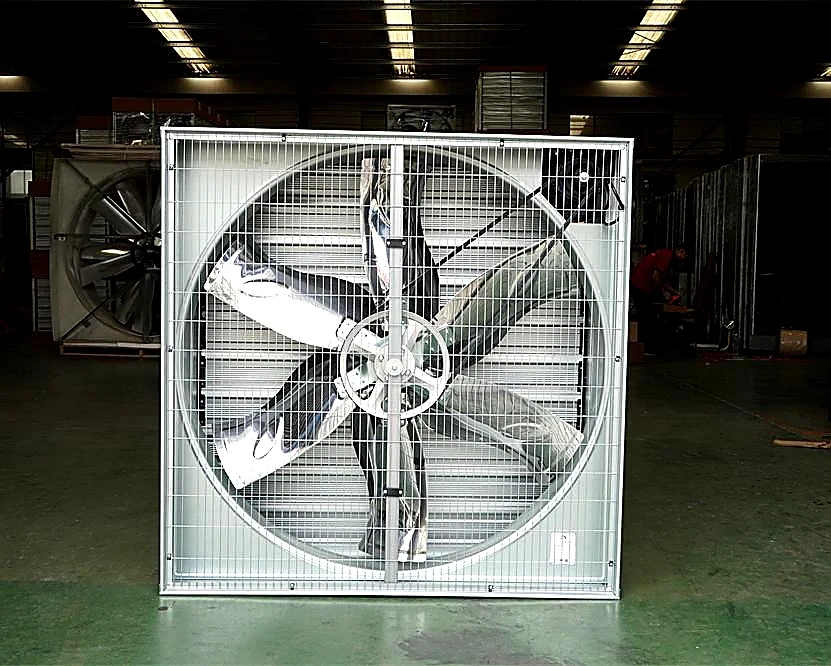
The honest version is that these are not competitors. Most working factories end up with exhaust fans to change the air, HVLS overhead for the open floor, and a mobile unit or two for the bays where someone stands in one place all shift.
Sizing and placement
A 1.5 m mobile fan produces a usable air column for roughly 25 to 30 metres in open space, narrowing and slowing as it goes. Plan on one unit per work area rather than per square metre, and position it to blow along the length of a bay, not across it.
Point the fan at the person, not at the machine. The cooling effect is on skin; air aimed at a hot casting mostly just moves hot air somewhere else. Where the heat source is genuinely large, position the fan so the air sweeps past the operator and then towards an opening, so the heat leaves rather than circulating.
Keep fans out of the path of forklifts, and use the brakes. A 1.5 m fan on free casters in a busy aisle finds its way into a traffic route within a week.
Not sure whether you need fixed or mobile?
Tell us the floor area, the clear height, where the heat comes from and whether the problem is the whole floor or one bay. An engineer will tell you which of the three approaches suits — including when the answer is that you do not need our most expensive product.
Ask an engineer