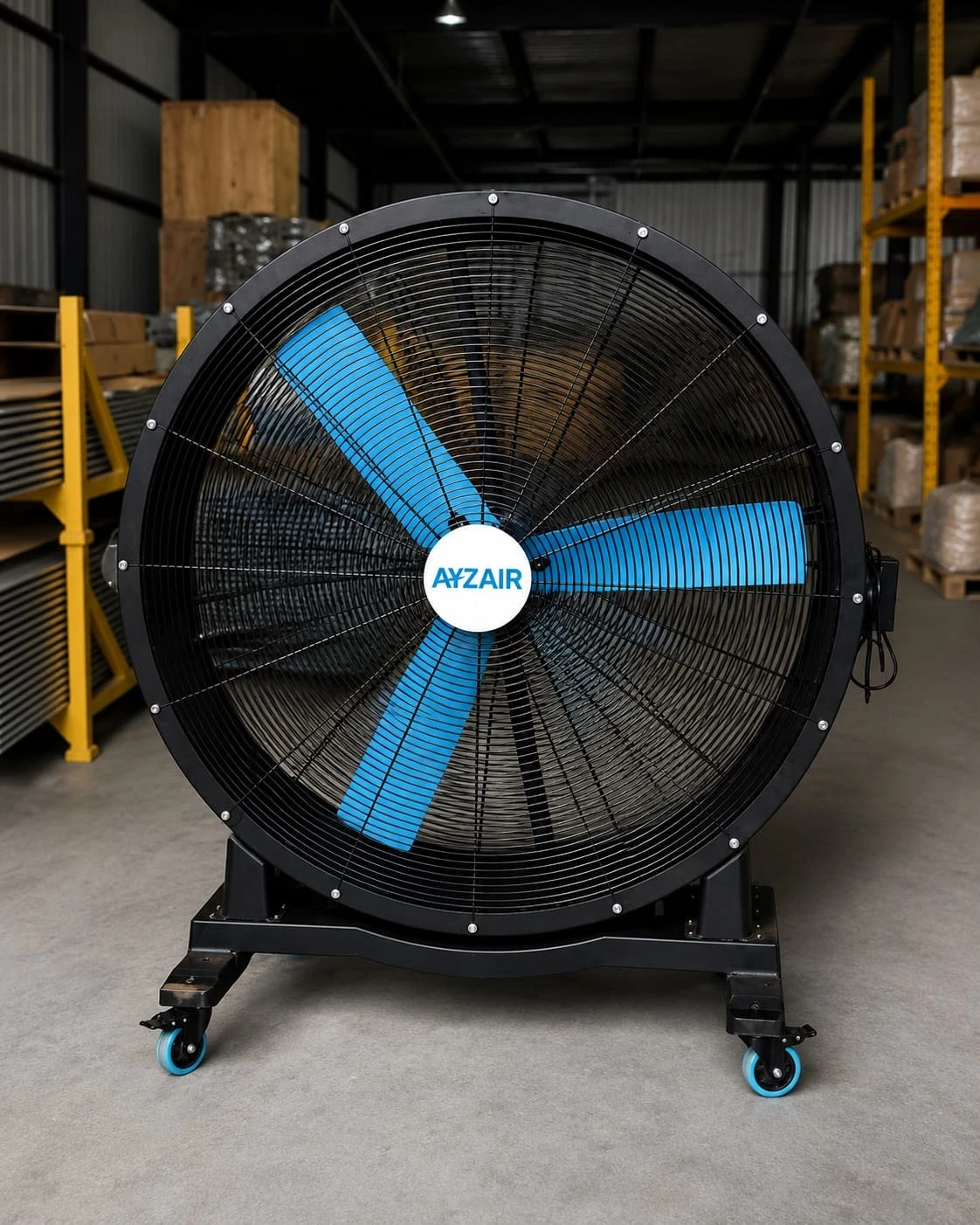
Most factory owners ask for a price before they know the quantity. It is the wrong order. A 12,000 sq ft shed does not need one large duct air cooler — it usually needs eight or nine medium ones, and that quantity, not the unit price, is what decides the project cost.
This guide shows how the number is arrived at, using two independent methods that should agree with each other. If a supplier's quantity does not survive both checks, ask why before you order.
What a duct air cooler actually is
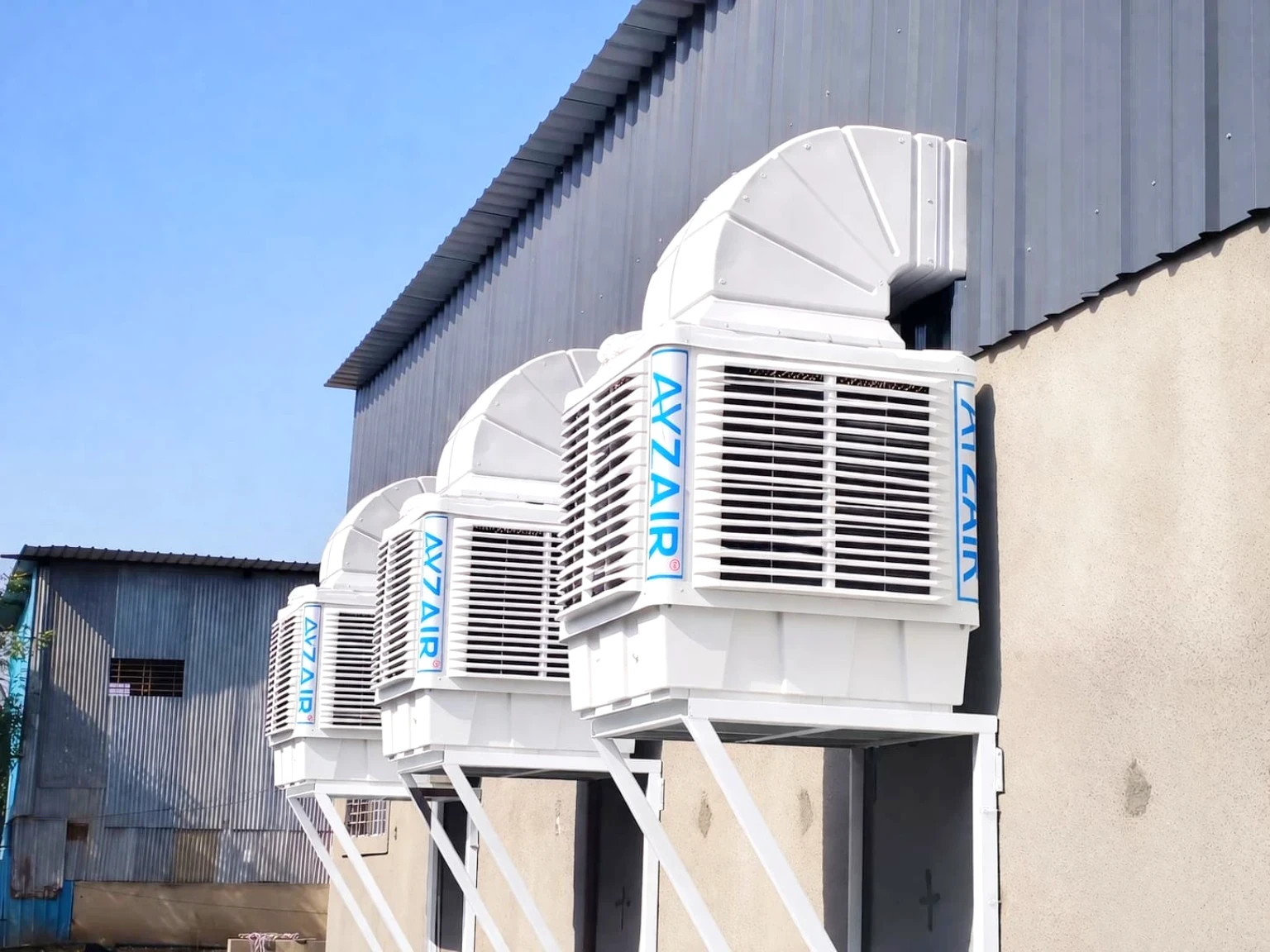
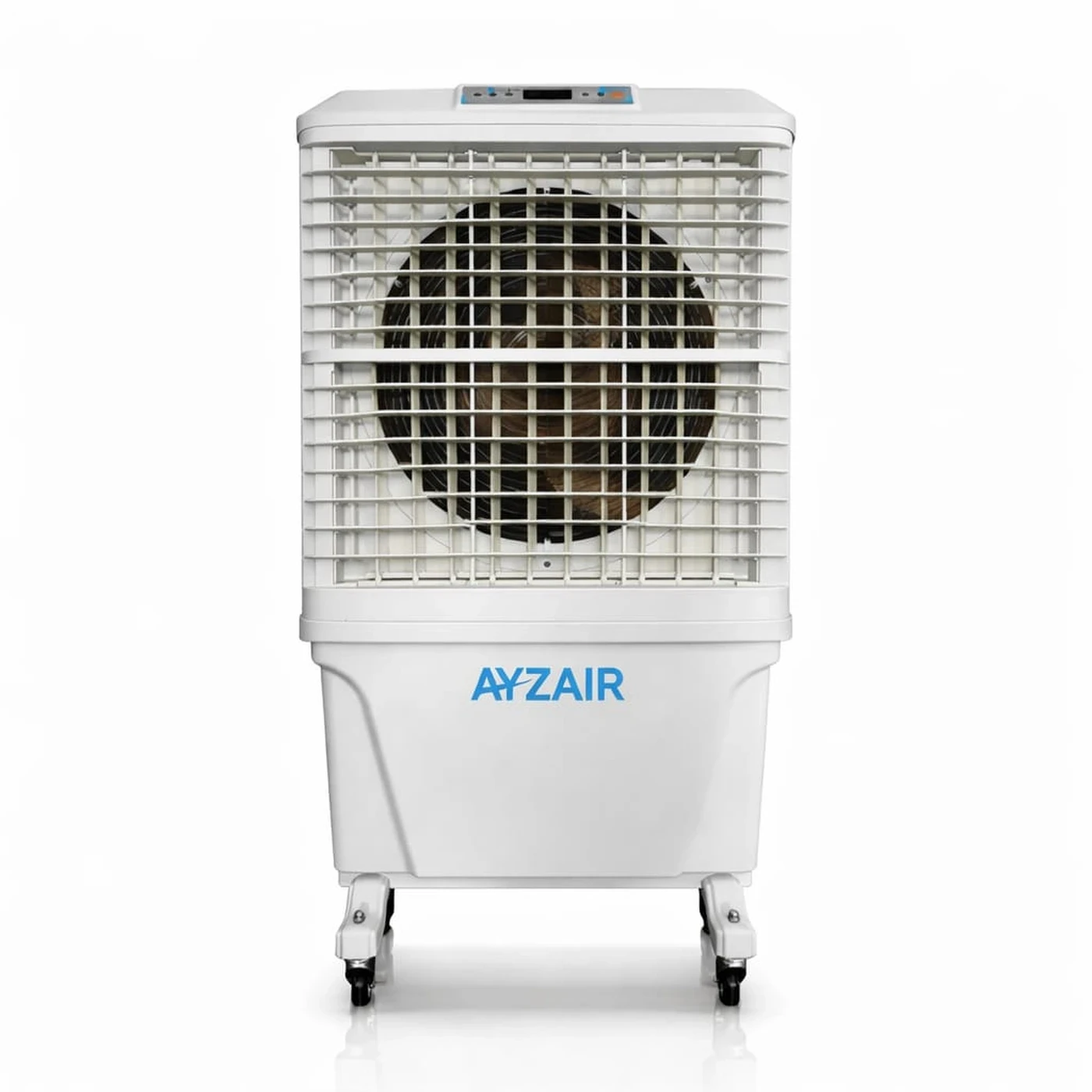
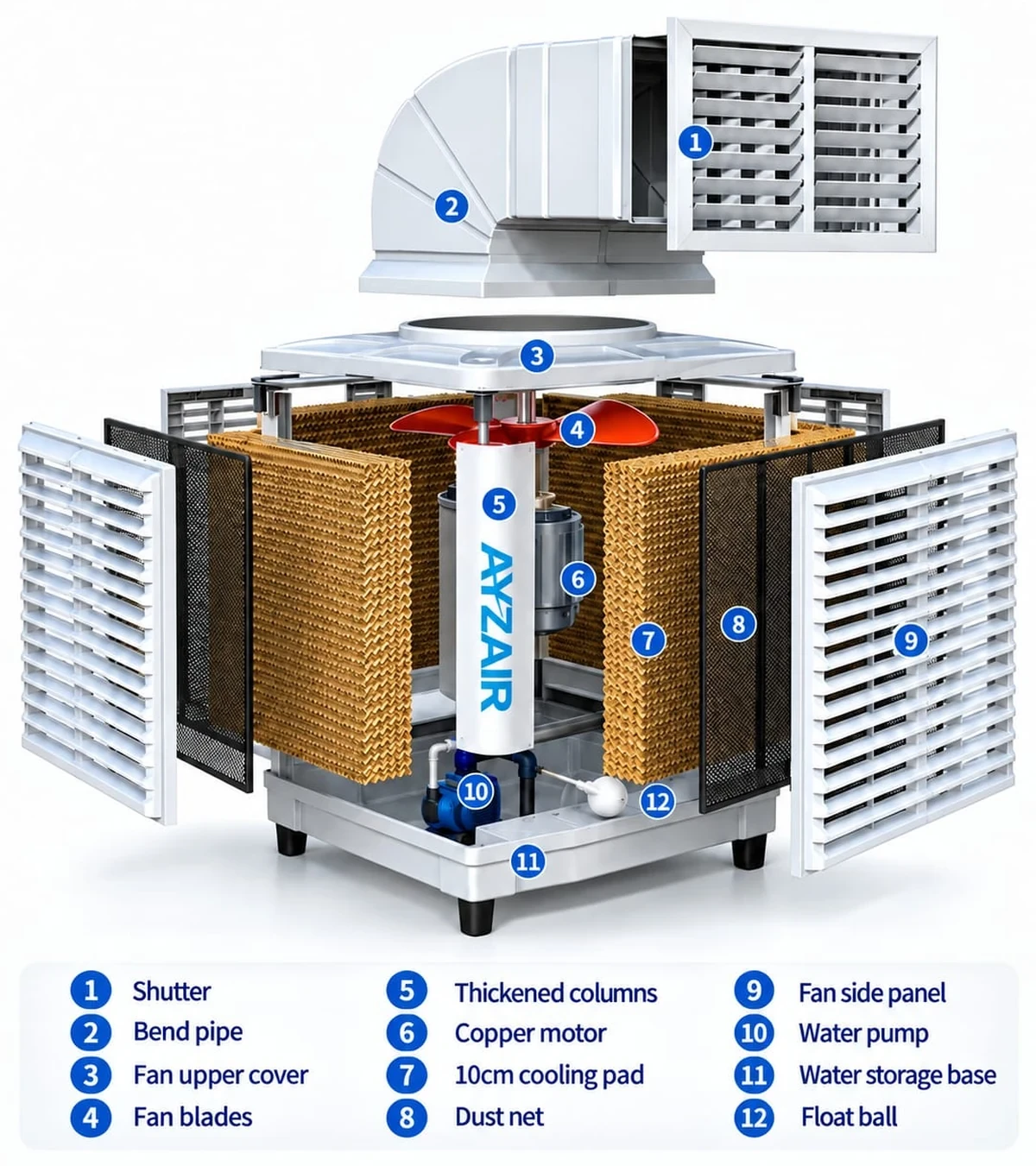
A duct air cooler is an evaporative cooler that does not stand inside the space it cools. The unit is mounted outside — on the roof, on a wall bracket, or on a platform next to the shed — and only its ducting comes indoors.
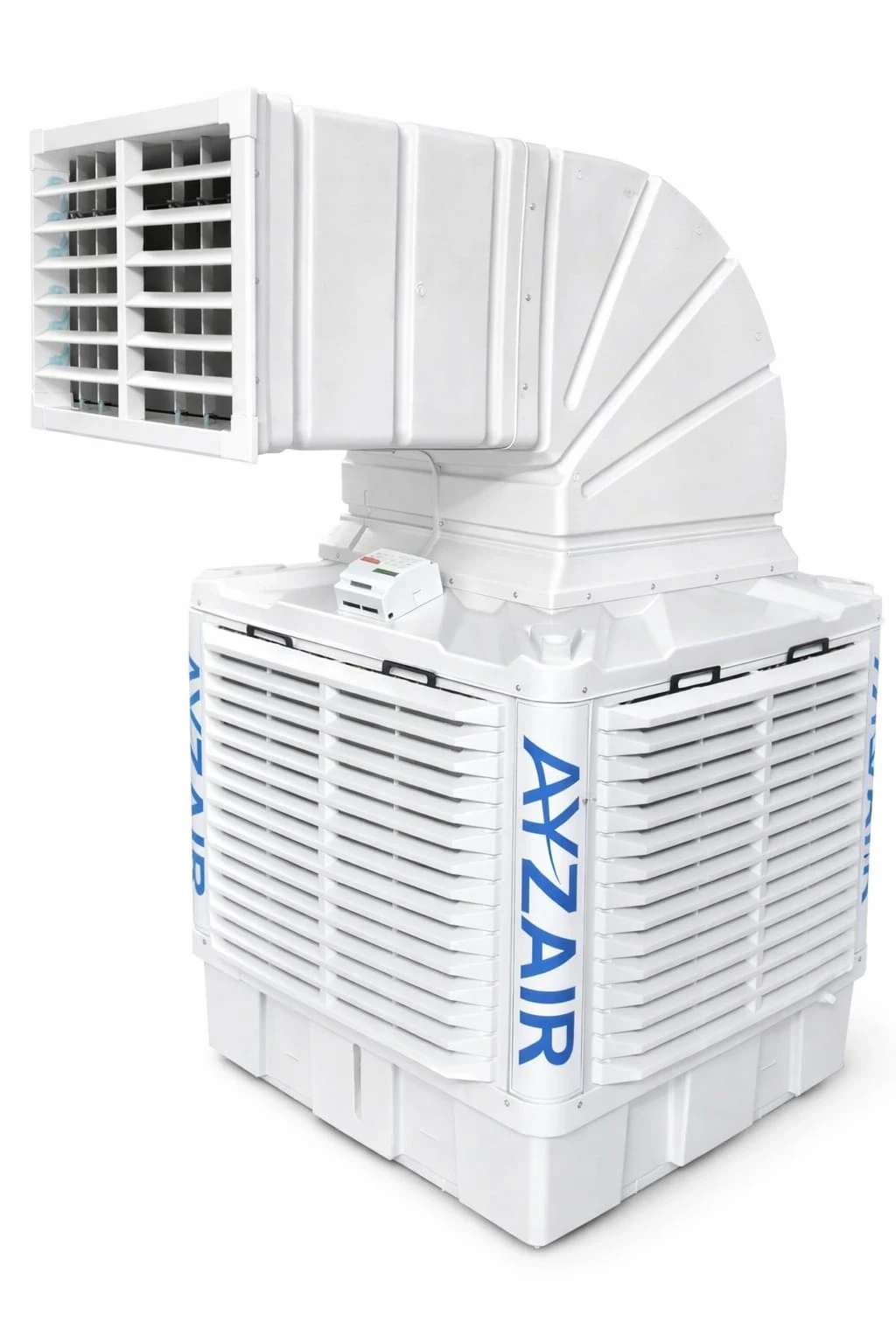
Inside the casing, a fan draws hot outside air through honeycomb cooling pads kept wet by a small circulating pump. As the water evaporates it takes heat out of the airstream. The air leaving the pads is cooler, filtered of coarse dust, and completely fresh — none of it is recirculated shed air. That air is then pushed through ducting to outlets placed directly over the work areas.
The word people usually search for is duct air cooler; catalogues also call the same machine a ductable air cooler or an industrial duct cooler. They are the same product.
Why a normal air cooler stops working past about 2,000 sq ft
A room cooler throws air perhaps four to six metres, and only cools whoever is standing in that stream. Put four of them in a 10,000 sq ft shed and you get four cool patches and a hot building.
There is a second problem that matters more in a factory. A room cooler sitting inside the shed recirculates the same air the shed is already heating — welding fumes, grinding dust, oven heat and thirty people's body heat all stay in the building. A duct air cooler brings in 100% outside air, which pushes the old air out through ridge vents, louvres or exhaust fans. That air change is often worth more to the workforce than the temperature drop itself.
Method 1 — air changes per hour
This is the method an engineer will use. It asks: how many times per hour do you want to replace every cubic metre of air in the building?
For a general engineering or assembly shed, 20 air changes per hour is the working figure — one complete change roughly every three minutes. For hot processes — foundries, forging, heat treatment, plastic moulding, commercial kitchens — go to 30 or more. For a warehouse with no heat-generating process, 12 to 15 is enough.
The calculation is: floor area × roof height = building volume, then volume × air changes per hour = the total airflow you need in CMH (cubic metres per hour). Divide that by the airflow of one unit to get the quantity.
Worked example. A 12,000 sq ft shed with a 25 ft roof holds 300,000 cubic feet, which is about 8,500 m³. At 20 air changes per hour that is 170,000 CMH. Using AYZAIR-22 units at 22,000 CMH each: 170,000 ÷ 22,000 = 7.7, so eight units.
Method 2 — the coverage cross-check
Every duct cooler has a rated coverage area. AYZAIR-18 covers about 1,075 sq ft, AYZAIR-22 about 1,345 sq ft, and AYZAIR-30 about 1,615 sq ft. Dividing the floor area by that figure gives a second, independent quantity.
For the same 12,000 sq ft shed: 12,000 ÷ 1,345 = 8.9, so nine units.
Eight from the airflow method, nine from the coverage method. That is the result you want — the two numbers landing within one unit of each other. When they disagree badly, something in the brief is wrong: usually the roof height was guessed, or the building has a heat source nobody mentioned.
In practice you would install nine and be comfortable, or eight if the shed has good natural ventilation and the process runs cool.
Top, bottom or side discharge — which one you need
Discharge direction is decided by where the unit sits relative to the ducting, and it is worth getting right at the drawing stage because it cannot be changed later without rework.
Top discharge suits a cooler standing on the ground or a low platform, with the duct rising and then running along under the roof. Bottom discharge is the common choice for roof-mounted units, where the duct drops straight down into the shed. Side discharge suits wall-mounted units feeding a duct that runs horizontally just inside the wall.
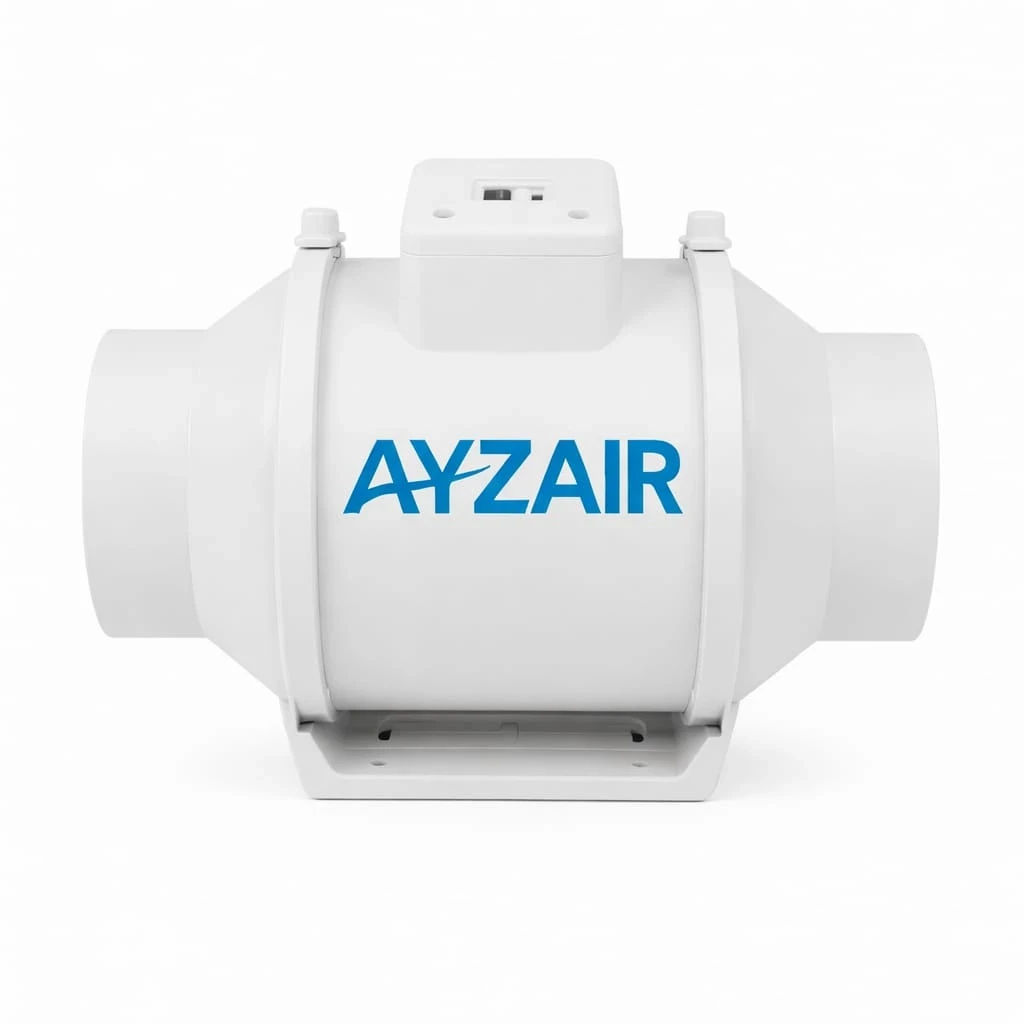
The duct connection itself is 620 mm diameter on the AYZAIR-18 and AYZAIR-22, and 690 mm on the AYZAIR-30. Keep duct runs as short and straight as the building allows — every bend costs airflow at the far outlet.
What the site has to have ready
Power. Each unit draws its rated motor power continuously: 1.5 kW for the AYZAIR-18, 2.0 kW for the AYZAIR-22, 3.0 kW for the AYZAIR-30. Nine AYZAIR-22 units is 18 kW of connected load for the whole shed — low enough that most plants absorb it without applying for a sanctioned-load increase.
Water. Budget 20 to 25 kg per hour per unit. Nine units running a ten-hour shift is roughly 2,000 litres a day. That is a plumbing decision, not an afterthought: a dedicated line with a float-controlled feed is far more reliable than someone filling tanks by hand.
Drainage. Pads need periodic bleed-off and seasonal flushing, so each unit needs somewhere for that water to go.
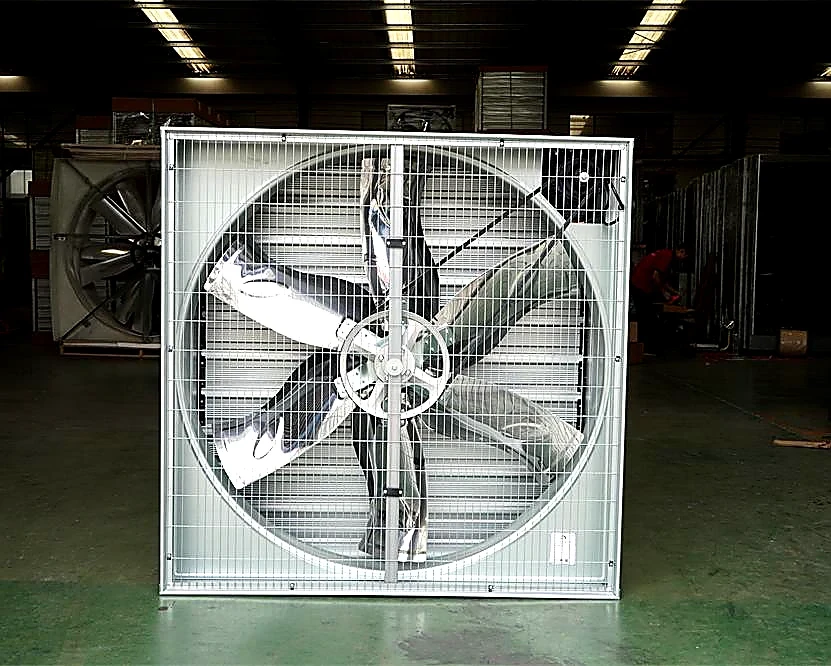
An escape route for the air. This is the step most often missed. If you push 170,000 CMH of fresh air into a sealed building, the pressure builds and airflow collapses. The shed needs ridge vents, high-level louvres or exhaust fans sized to let that air out. Without them, even a correctly sized cooling system underperforms.
When a duct air cooler is the wrong answer
Evaporative cooling works by evaporating water into the airstream, so its effect shrinks as the air gets more humid. Through most of the Indian summer — the hot, dry months when cooling matters most — that is not a constraint. During peak monsoon humidity the temperature drop narrows and the unit is doing more ventilation than cooling.
There are also processes that cannot accept added moisture or outside air at all: precision electronics assembly, some pharmaceutical and food-grade clean areas, paint booths with tight humidity windows, and any conditioned space that has to hold a fixed temperature and RH. Those need air conditioning, and we will say so rather than sell you the wrong machine.
For everything in between — fabrication, machining, plastics, packaging, textiles, warehousing, workshops, banquet halls, gyms — a duct air cooler does the job at roughly a tenth of the connected load of air conditioning.
Tell us the building, we will tell you the quantity
Send the floor area, roof height and what happens inside. An engineer will return a full equipment schedule — model, quantity, discharge type, connected load and duct layout — within one working day, at no cost and with no obligation.
Get a free sizing assessment