
New Zealand
Industrial cooling and ventilation in Auckland
Auckland holds about a third of New Zealand industry and almost all of its import distribution. East Tāmaki and Highbrook form the largest industrial precinct in the country, full of modern 10 to 14 metre warehouses and light manufacturing units, Wiri and Māngere sit around the airport handling freight, food and third party logistics, Penrose and Mount Wellington are the older estates with engineering shops, plastics, printing and food plants in buildings that date from the sixties and seventies, and the marine trades cluster around the harbour. The complaint in these buildings is rarely extreme heat. It is a stuffy first floor mezzanine in February, condensation on a cold morning, and a gas or electric heater working hard all winter to warm air that promptly collects at the roof. Those are ventilation and destratification problems, not cooling problems.
Auckland climate — the honest version
Auckland has a mild maritime climate, with summer days of 23–26 °C on humidity that rarely falls below 70 percent and winter nights around 8 °C, so evaporative cooling has very little depression to work with and the genuine opportunities are summer air movement and winter destratification in tall sheds.
Sailings from Nhava Sheva or Chennai to Ports of Auckland or the Port of Tauranga take 21 to 28 days, normally transhipping at Singapore or Port Klang · Tauranga is often the faster berth with a 220 km road leg north · either way allow a full week for MPI biosecurity and clearance.
6families
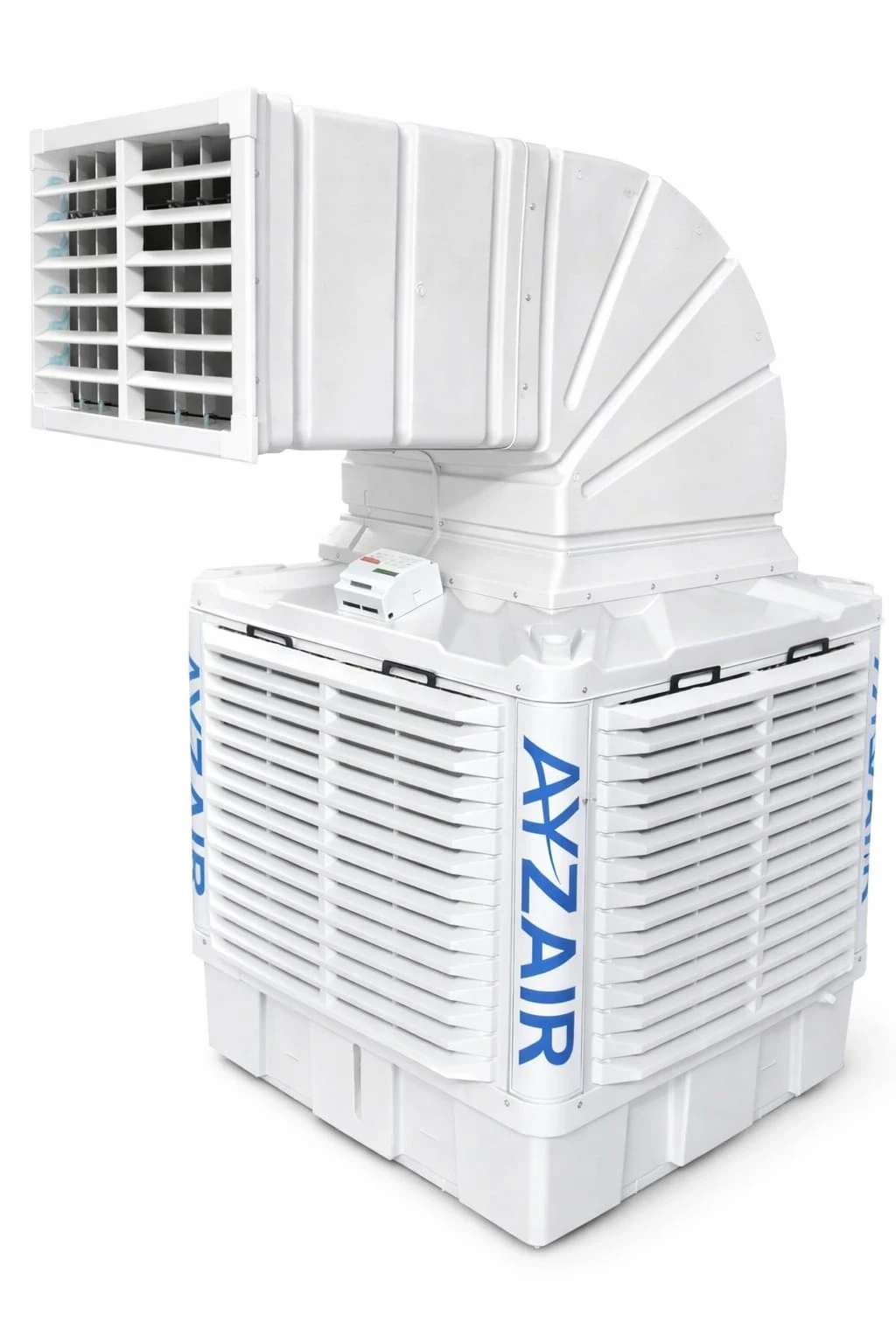
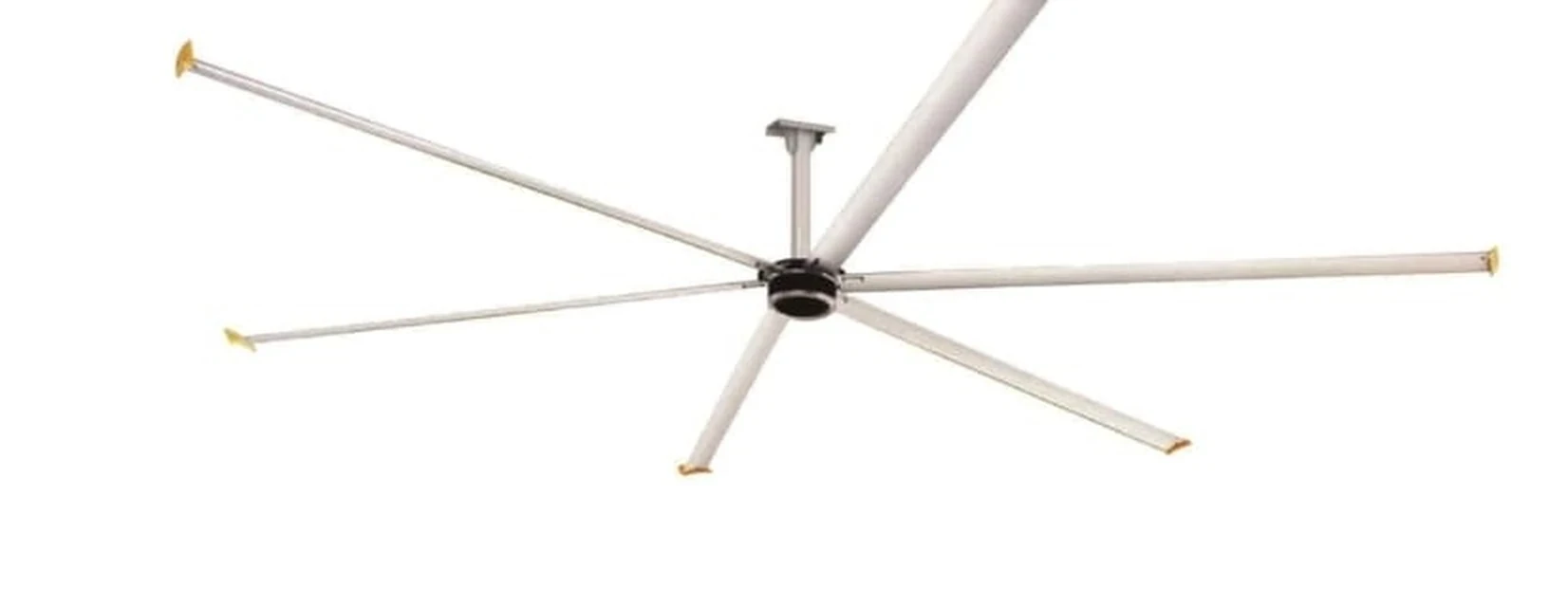
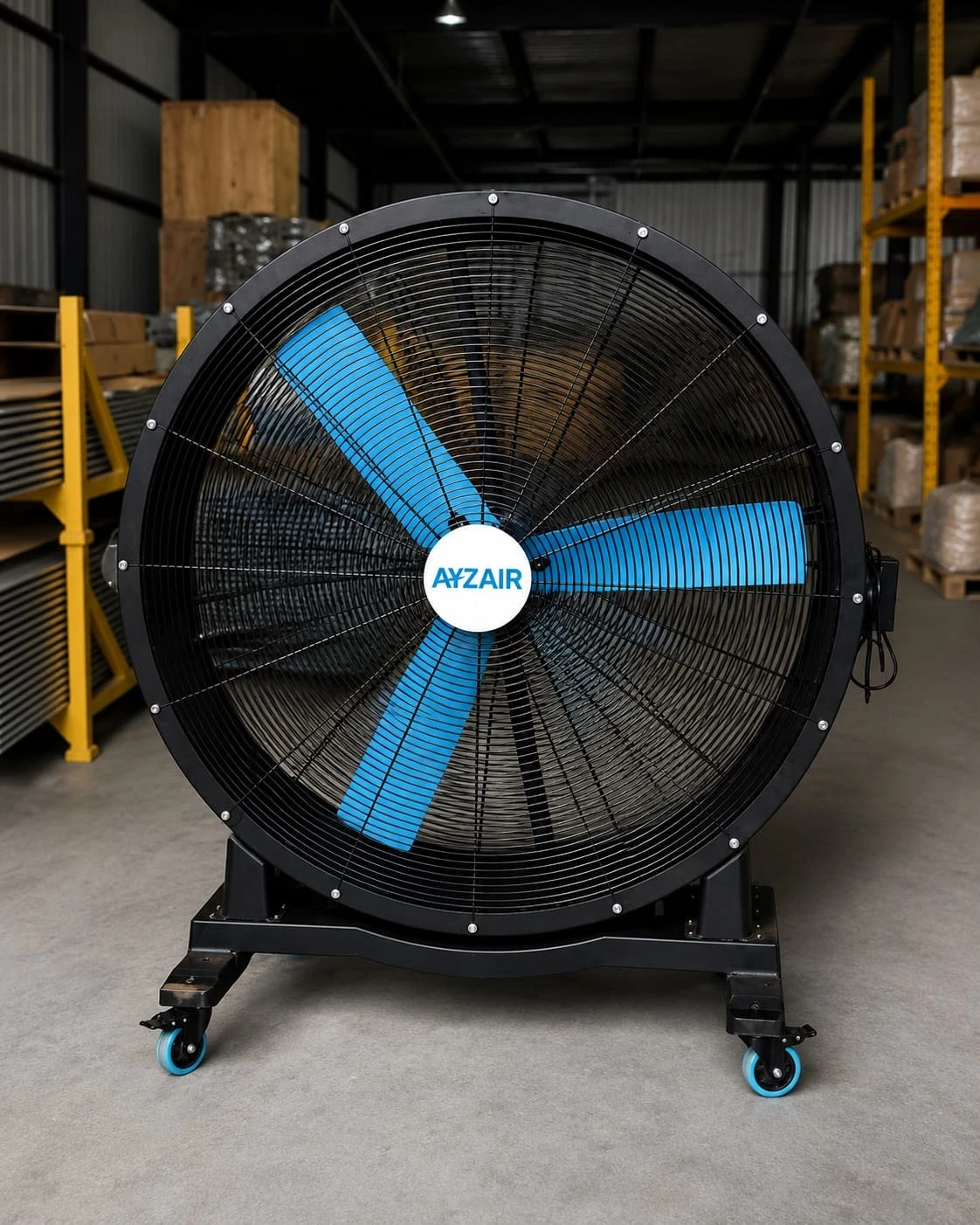
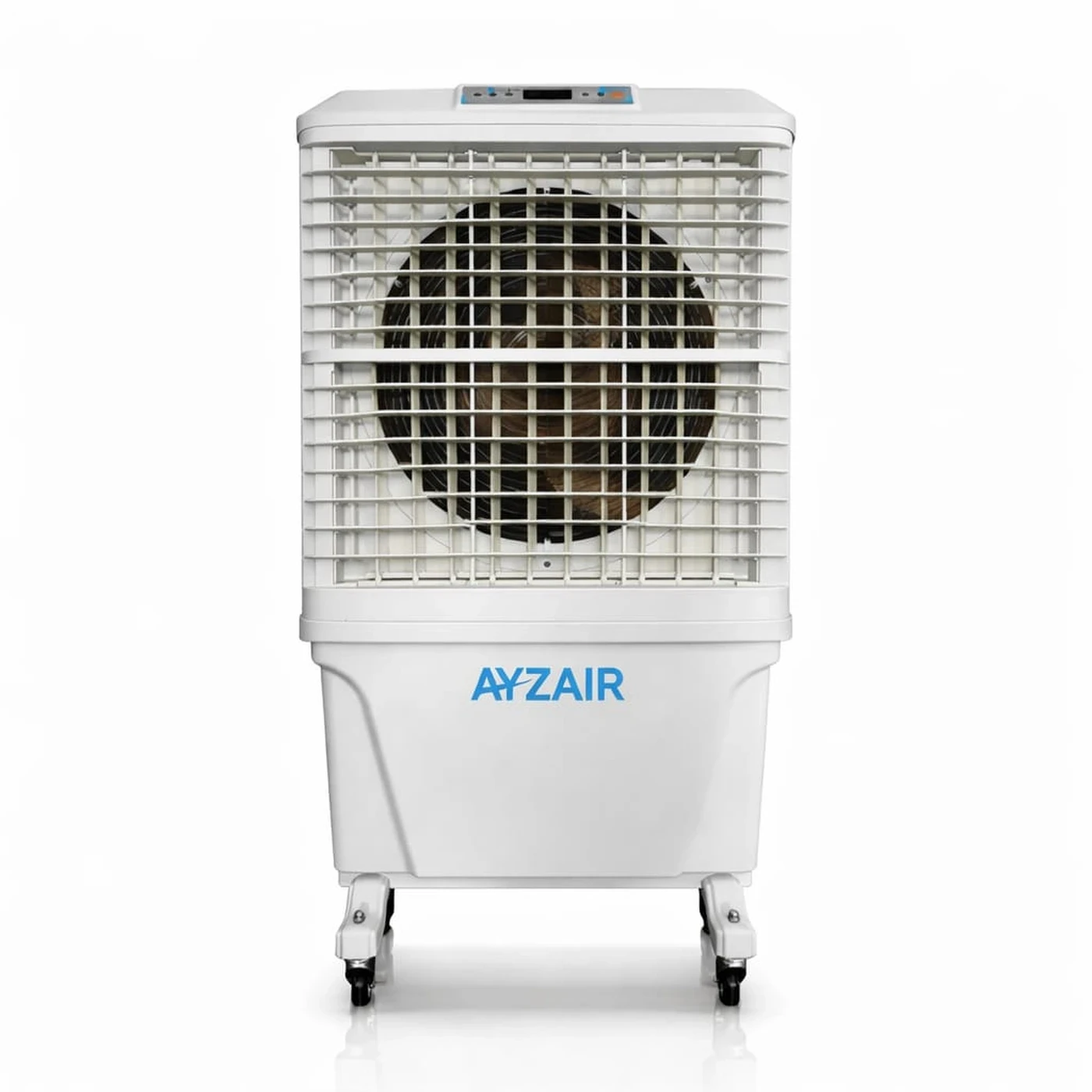
Complete range supplied here
34models
Every model available to order
10–20days
Production lead time
24hrs
Sizing and quotation
The complete range
All six Ayzair families, supplied in Auckland.
Every product we make is available in Auckland. They are ordered by how well each one suits the local climate and the industries here, but nothing is off the list.
Where we supply
Industrial areas of Auckland.
Who buys here
Industries in Auckland.
- Food and beverage manufacturing
- Plastics and packaging
- Engineering and metal fabrication
- Distribution and third party logistics
- Commercial printing
- Marine and boat building
Worth knowing locally
- Supply is 230 V single phase and 400 V three phase at 50 Hz, which matches the Ayzair build standard so no electrical modification is needed.
- New Zealand does not operate a CE style mark. Electrical equipment requires a Supplier Declaration of Conformity under the Electricity (Safety) Regulations, held by the responsible supplier, together with an RCM mark for electromagnetic compatibility. Ayzair supplies the CE and IEC test evidence the SDoC is built on, but the declaration itself must be held in New Zealand.
- Evaporative coolers are not recommended for Auckland. Humidity sits above 70 percent year round, so the achievable drop is small and the added moisture is unwelcome in buildings that already deal with condensation.
Auckland enquiry
Get a proforma invoice for Auckland.
Tell us the building — area, roof height and what happens inside — or name the models and quantities you already know you need. You will get USD pricing, your Incoterm, a container loading plan and a confirmed lead time within one working day.
Export desk
Answers
Supplying Auckland — common questions
Cannot find what you need? Call +91 80871 10156 or WhatsApp us — an engineer, not a call centre, picks up.
Ask on WhatsAppIs there any point buying air coolers for an Auckland warehouse?
Very little. Auckland air carries too much moisture for evaporative cooling to produce a meaningful drop, and the few genuinely hot days each summer are better handled by air movement. The products that make sense here are large diameter fans, which cut heating cost in winter as well as helping in summer, plus exhaust fans where a process or a mezzanine needs a real air change rate.
What paperwork does a New Zealand importer need for these fans?
A Supplier Declaration of Conformity under the Electricity (Safety) Regulations, supported by evidence that the equipment meets the relevant standard, plus an RCM mark covering electromagnetic compatibility. The responsible supplier in New Zealand holds the declaration and the compliance file. Ayzair provides CE marking, IEC 60335 and EMC test reports and factory test certificates so that file can be assembled without retesting.
How much heating can destratification actually save in a Penrose shed?
Less than in a Kazakh winter but still worth having. A 12 metre Auckland warehouse heated to 18 °C typically runs six to ten degrees warmer at the roof, and returning that air to floor level shortens burner run time. Savings of 15 to 25 percent on heating energy are realistic, and the same fans reduce condensation on cold mornings by keeping air moving.
Nearby
Also supplied across New Zealand.
Next step
Shipping to Auckland?
Send your requirement and we will confirm the freight route, transit time, landed cost and whether our equipment genuinely suits Auckland conditions — before you commit to anything.